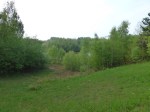
May 20th – On my way home tonight, I hopped onto the canal towpath to enjoy the pleasant evening and see if we had any cygnets yet. Sadly, the swans still seem to be sitting, but I did notice how green and lovely the new pond was looking at Clayhanger. It was wearing it’s summer jacket gloriously well.

This site used to be a spoil heap from Walsall Wood Colliery, consisting mainly of grey clay, coal washings, slack and assorted rock detritus. In the early 1980s, it was excavated and used to cap the former refuse tip on the other side of Clayhanger Lane. The void left behind was landscaped, and lined with red marl and sand. It’s very hard to see any hint of the industrial  history at all.

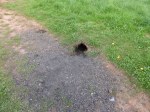
Today, that grubby history was evidenced near the canal bank. At the top of the slope, a digging animal – most likely a fox – has started to burrow, and abandoned the hole after a short dig. Just a few inches below the red clay surface, a whole spread of coal tailings has been brought out. 

Must have been a hard dig, that. History makes itself evident in the oddest of ways, sometimes.
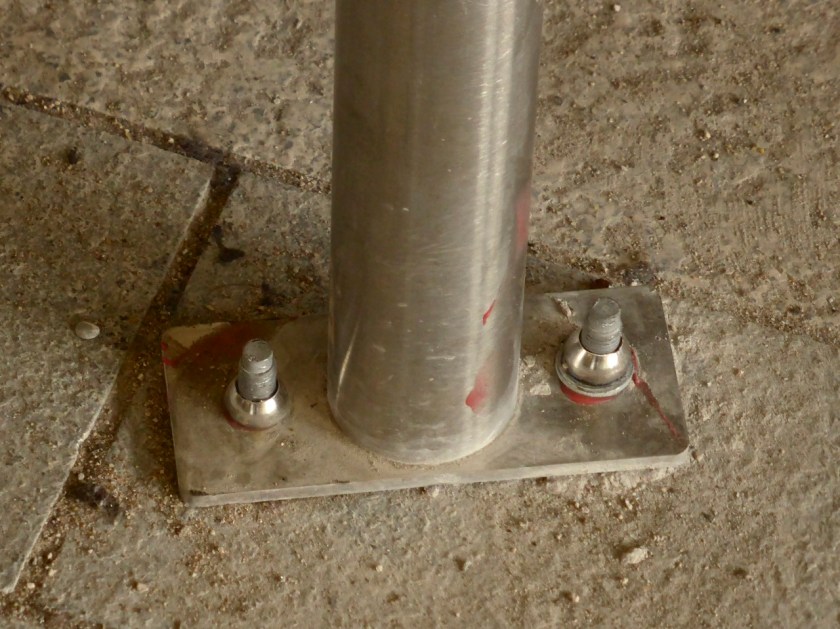
May 20th – A small result. The bike racks at Birmingham New Street Station – relocated to a dark corner on the the opening of the new concourse – were formerly only bolted to the ground and could easily be disassembled by thieves to steal users steeds. I noticed this morning that the ordinary nuts securing the Sheffield frames had been replaced with shear nuts, which are nigh-on impossible to remove. For added security, they’ve been bonded on with thread lock adhesive. This makes them much more secure.

I hope Network Rail have learned something from the bad publicity here. It ain’t rocket science really, is it?

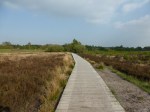
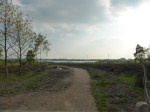
May 19th – Up on the north heath at Chasewater, something rather great has been happening. From the existing path that runs over the hill from Norton Lakeside halt to Chasewater Heaths, there’s a new one been laid towards the lake. Well finished, it bends to the east, crosses a couple of really nice boardwalks and crosses Fly Creek, whereupon it meets the eastern path from behind the Rugby Club. A lot of work must have gone into it, and it opens up the north eastern heath to walkers beautifully. 

For those interested, this is what Brownhills Common should look like: a mixture of heath grassland, deciduous copse and heathers. Not a conifer in sight and the deer absolutely love it, as do the resident maintenance crew, the cows. It varies from being wide open, to dense native woodland, and it’s teeming with life – flora, amphibian, insect, mammal and avian. It’s all here, and a fine work of conservation it is.

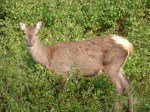
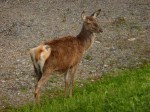
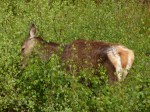
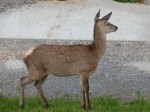
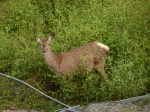
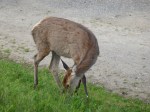
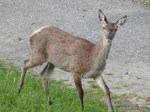
May 19th – A busy day at Chasewater. Linda Mason had posted some pictures of deer on the dam that morning, and I was surprised when I passed by late afternoon that they were still tree. Not at all nervous of their occasional audience, they browsed the scrub, nibbling the shoots off the birch saplings and generally got on with things. 

If anyone had told me 20 years ago there would be red deer here, and they’d be this fearless I’d never have believed them. Beautiful.

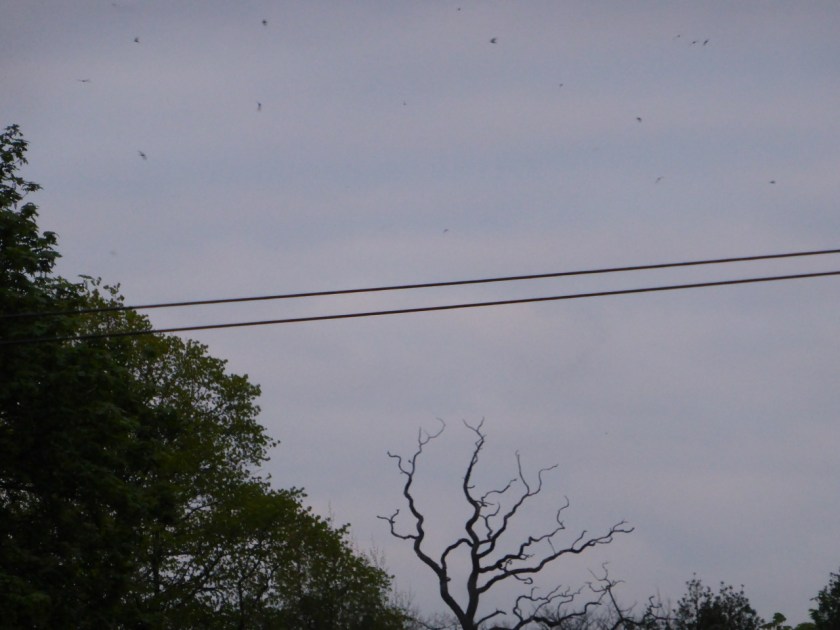
May 18th – A late evening run to the supermarket, and one of the (very few) downsides of the summer was very, very evident; riding over Chasewater Dam the air was thick with midges and other bugs, which can be seen if you click on the image above. Glasses are essential to prevent them getting in the eyes, and they get everywhere – in you shirt, ears etc. Over the next few months my protein intake will crank up by a fair percentage.

Annoying, but one of the hazards of the season.

May 18th – I’m hoping a linesman or electrical engineer can help me with this one, I’ve never noticed it before.

Approaching Anglesey Basin on the canal at Chasewater, electricity is supplied to the dam cottages by single phase overhead lines. one of the last poles in the run has an anchor cable staked to the ground to stop the change in cable angle pulling it over. The anchor cable, bolted to the top of the pole, isn’t electrically connected to any part of the system, yet has a two to three foot long insulating piece fitted, with a pair of lightning bypass probes to create a safety arc gap. 

Why would they do that? Is is a current limiter to stop lightning melting the anchor or what? Never seen an arrangement like this before.

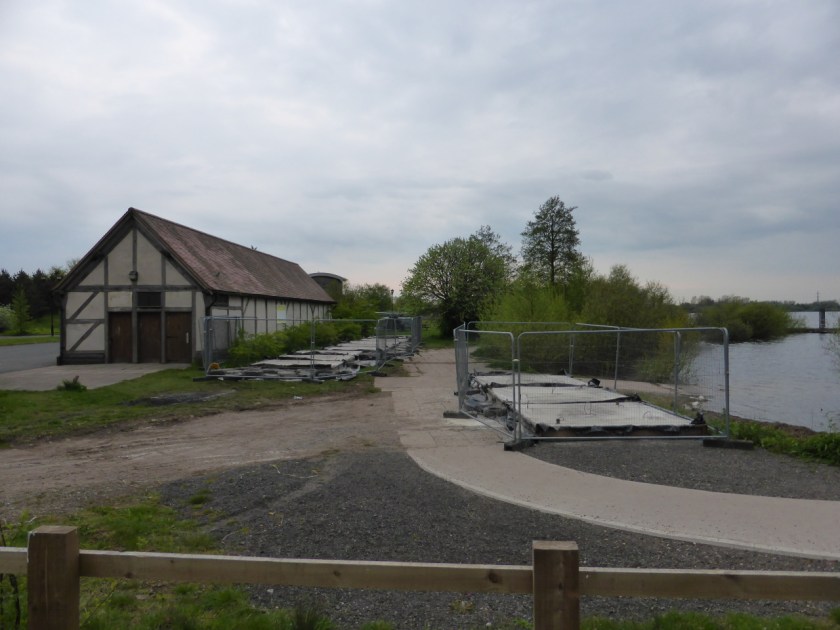
May 17th – Interesting to note that the Wakeboarding company who applied to build facilities at Chasewater have wasted no time in getting starred on building their equipment.

Presumably, these concrete bases with tethering points will be anchor weights for the lakebed.

It’ll be interesting to see how this all works out. Looking forward to seeing the pier brought back into use, at least.

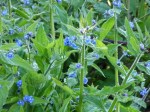
May 17th – Spring wends onward, despite somewhat indifferent weather. A late afternoon spin rewarded me with beautiful dead nettles and forget-me-nots. As a kid I can remember plucking the white blooms from the dead nettles and sucking the sweet, tasty nectar from the base of the blossom.

These days, I’d be careful to choose nettles from above dog leg height.

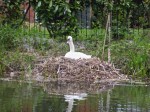
Meerash Hill at Hammerwich is a carpet of familiar, fluorescent yellow, and Mrs. Swan sits patiently with no little dignity on the nest at the Watermead in Brownhills, whilst just up the canal bank, Mr. Goose stood guard with paternal pride as his brood explored.

I love this time of year.

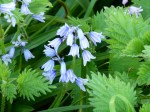
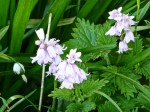
May 16th – Spring is here, too, at the verges, hedgerows and field-margins. An assortment of cowslips, bluebells, ramsons, alliums and other wildflowers are all competing for attention. This selection was growing at the side of the Chester Road, in a short, 10 years stretch near Stonnall. It’s been a long time coming, but I’m loving the spring, even when it rains…