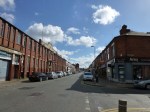
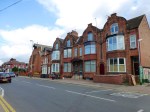
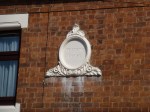
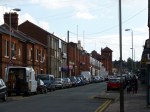
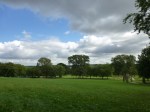
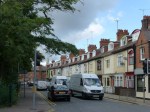
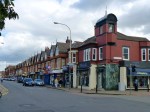
September 18th – Today, I visited Leicester. Not my usual haunt, I was up in a different part of the city. On my way, I passed through the melting pot that in North Everington and Spinney Hills. Here, there are folk of every culture and ethnicity imaginable. Asians, South East Asians, Africans, Arabs, Europeans. I saw cars with not just UK number plates, but Polish, Latvian, Irish and Lithuanian. The streets are busy with shoppers, students, kids, folk going about their everyday business. This place is buzzing, and has the frantic air of commerce one gets in all such places – the Edgware Road in London, say, or the Soho Road in Brum. What makes this spot different is the architecture. From factories to churches, mosques to terraces, there exists an incredible diversity of styles and adornments. Towers, bays, pediments and porches. All overlooked by the hillside park. Beautiful.
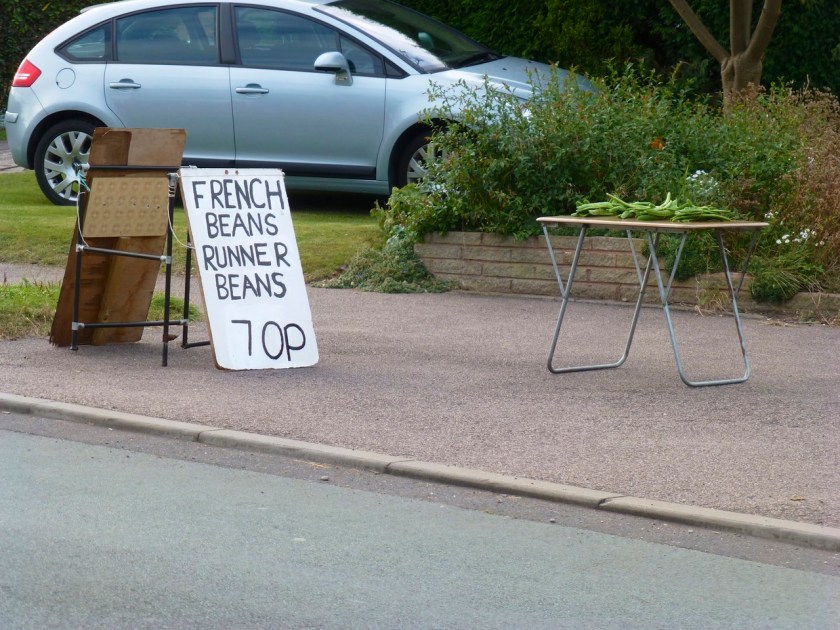
September 17th – This is a summer tradition that’s been hit by the weather. All through the growing season (and into autumn, usually), throughout rural Britain the traveller will see trestle tables of surplus fruit or veg, with an honesty box for payment. I’ve seen very few this year, which is sad, as they’re a lovely tradition. I’ve purchased everything from these roadside stalls, from cucumbers to windfallen cooking apples, from tomatoes to plums. With the weather badly affecting the growing this year, the only stall I’ve seen has been this one of runner beans, in Main Street, Stonnall. Here’s to a better year in 2013.

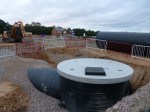
September 16th – Silver Waters (oh lord, that’s a preposterous name) is coming on apace. Most of the foundations have now been laid, and a show home has positively sprung up on the patch of wasteland off Silver Street, Brownhills. Fortunately, the doom-mongers predictions about the diggers finding the remains of the swine disease/foot and mouth cull from Swingbridge Farm in the 1960s have been unfounded (not surprising, really, as the pits for that were dug adjacent to the farm and are now lying beneath public open space).

I must say, those are massive drains, there. They seem a bit excessive for a relatively small number of dwellings. Wonder what the reason for that is?

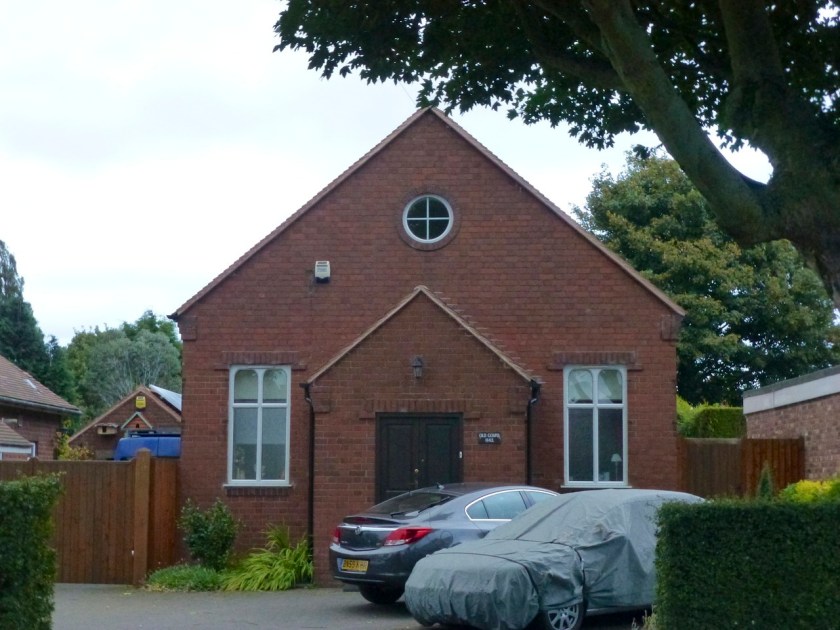
September 16th – I had a long ride planned today, but grim weather (my, it really was grey and windy, not what I’d hoped at all) and other jobs meant I didn’t get out until late in the afternoon. I spun around Brownhills and up over the common. I noticed this interesting repurposed building a couple of days ago, and haven’t had time to look into it. In School Avenue, there’s a converted chapel, called the Old Gospel Hall. Clearly now a house, I had no idea it was there. A nice looking building, it must be a remnant of old Brownhills. Must make some enquires.

September 15th – I noticed that in the fields between the A5 and the canal, the farmer was baling mown hay this evening. The device behind the tractor rakes up the sun-dried grass, rolls it into mat-like clumps, before compression and baling with twine. Completed bales are ejected back onto the pasture. Unlike straw, which has no nutritional or economic value to speak of, hay is a valuable commodity as it retains the goodness of grass, and becomes expensive during a bad winter.

Hay making is one of the great traditions of the rural summer, and speaks of provision and preparation, as well as the rotation of the season’s wheel. What better place to do it that in pasture in the evening sunshine?

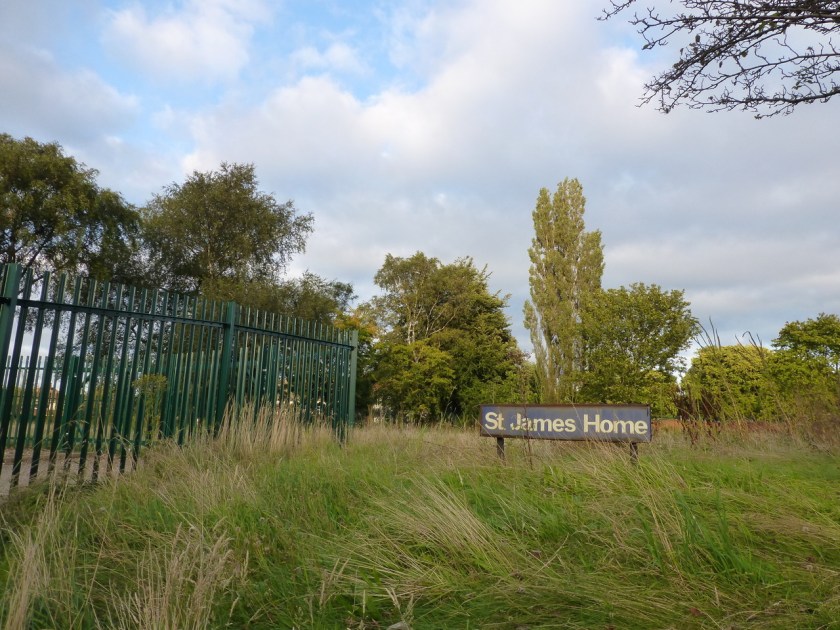
September 15th – On this site in Short Street, Brownhills, stood St. James old people’s home, a modern facility built in the 1970s to serve the town. Local authority owned, it was well loved. Since the huge cuts in social care, the desire to offload the expensive care of the vulnerable has led to outsourcing. All such residential homes were closed in Walsall, some care transferred to the private sector and some to a new building run by Housing 21 at Anchor Bridge, called Knaves Court. The creation of Knaves Court is a wonderful thing, but had St. James been kept, we would have been able to care for more vulnerable folk, not less as is now the case. All such homes that were closed were demolished very quickly, presumably to prevent a reversal of policy.

The land once busy, now lies derelict and unloved.

A little known scandal. 

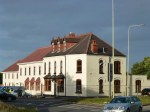
September 14th – I hauled myself up from Lichfield slowly, fully loaded with shopping, against a horrid wind and with little energy. I was feeling grim, and Muckley Corner at rush hour is no place for old men. Having traversed it, I pulled over on the far side of the junction and took a look at the old Muckley Corner Pub/Cornerhouse Hotel. It’s been beautifully converted into dwellings – it’s clear now that there will be no form of commercial afterlife for this pub. In a way, it’s all gone full circle, as originally, the building was a corner pub and associated terraced houses. 

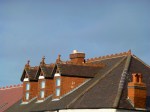
A number of folk have pointed out the attention to detail in the reuse of the decorative coping tiles, ridge pieces and finials. They look wonderful. Shame about the chimneys, though…