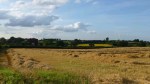
August 20th – Leicester again today, and South Wigston station – usually a place of vague, unfocused hatred for me, continues to surprise and delight. Last time it was roses and foxgloves. This time, sweet peas, I think. Just growing wild on a patch of unloved scrub, wildflowers and weeds being beautiful, for no other reason than to attract bees and make me realise what a fine country I live in.

A Monday morning delight to the soul.

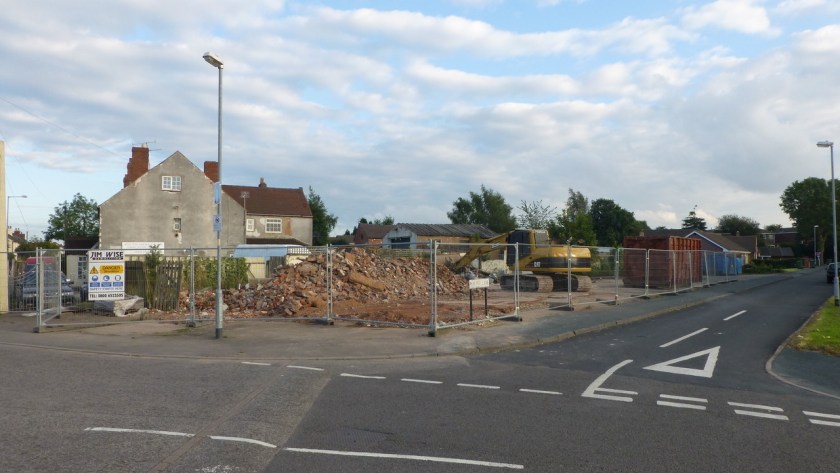
August 19th – It’s too late now, it’s gone. The Pear Tree Inn, on the corner of Pear Tree Lane, Albutts Road and Hednesford Road in Brownhills West will be fondly remembered by many, me included. At various times in its life this pub was a fine house; I drank here several Christmas lunchtimes and often took a walk up from town to get a decent pint. Derelict for 4 or 5 years now, the owners sought permission to demolish, citing the building as being beyond repair. An application to build a store here has been refused, but rumours abound of a new express-style store opening. 

It’s sad the pub could not live on. Another part of my past gone under the bulldozer’s tracks.

19th August – I again sneaked out in the early evening. I’d been working all weekend, and was aching for a bit of freedom. I spun up the canal in a lovely golden hour, and I noted the hedgerows and greenery that’s just exploded with growth since the warm weather came. Ferns, hawthorn and nettles are staging a battle to reclaim the towpath along the stretch from Anchor Bridge to Ogley Junction. It’s beautifuly green, lush and verdant.

Later, at Chasewater, I noted how the birds were returning to their old haunts on the main lake – The jetty from the waterski club is now serving as an impromptu gull roost.

A gorgeous evening.

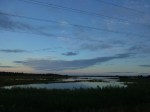
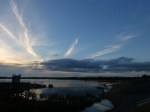
August 18th – I left the house in the early evening to get some shopping in and pick up a takeaway. On my return, I crossed Chasewater. It’s really filling up now, and the recovery continues. The depth gauge on the pier now is only about 500mm clear of the water, and slowly, inexorably, the water is reclaiming the reed-beds and willows that populated the dry bed. I’d forgotten the joy of seeing a fine sunset reflected in the lake surface. Majestic.

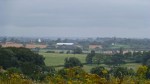
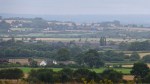
August 17th – It was very grey and spotting with rain as the heavy wind blew me back up Shire Oak Hill later in the day. Oddly, the gates to Shire Oak Landfill – the former quarry at Sandhills – had been left open, and I took the opportunity to have a play with the zoom mode on the camera. The view from this spot is always great, although hard to capture in photos, but despite the grey murk of the day, the images weren’t too bad. Springhill, Hammerwich, Wall and Lichfield were all clearly visible. 

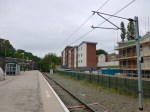
August 17th – Some development decisions baffle me totally. Out again at dawn to Four Oaks station, I found myself early and hanging around. I studied the apartment blocks that had been built on the former builder’s yard next to the station. The yard was originally railway sidings last used to serve MotorRail, and is cut into the hill back towards Mere Green. That means a very narrow strip of land with an oblique retaining wall one side, and a view over a commuter railway station at the other. Into this narrow dog-leg, builders have squeezed bland, characterless boxes. 

Presumably, the Mere Green/Four Oaks adress sells them, and the commuter links. I find them utterly hideous, with a dreadful outlook.

August 16th – It is time again for the annual warning: there’s a killer in the hedgerows right now. These stalks of what will become bright red berries grow in hedges, woodlands and other scrub, and grow 6-10 inches tall. Very distinctive, Lords and Ladies is very attractive, particularly to kids, but is one of the most toxic plants in the British Isles. This still ripening example is growing on the woodland water margin of the River Arrow in Redditch.
The berries of Arum Maculatum, also known as Devils and Angels, Cuckoo Pint or Wild Arum contain a poison that causes swelling of the mouth and throat and sickness. Fatality is rare, as the berries are very acid and consuming enough to kill would be a challenge, but the plant causes most admissions to A&E for plant poisoning in the UK.
It’s a gorgeous thing to look at, just don’t touch it, and keep small children away.

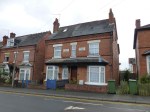
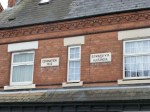
August 16th – Redditch, despite its tedious, unrelentingly bland modernity, has an old quarter of sorts. Heading from Church Green down to Abbeydale on the cycle route that passes trough town, I recently noticed this unusual pair of house plaques. Celebrating the coronation of Edward VII and his queen Alexandra in 1902, it’s an unusual thing. Edward was the classic long time king in waiting, Victoria’s son, he spent years in waiting, a situation resonant today. He did, however, more or less invent the modern Royal Family, encouraging his mother to make public appearances, attend openings and suchlike. In the end, the king they called The Peacemaker died in May, 1910 after being on the throne only eight years. Edward was widely considered to be a decent, good monarch and was nicknamed ‘The Uncle of Europe’, due to his scholarly love of peace and foreign affairs.
All reflected in one house in a bland street in a new town.
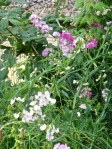
August 15th – Meanwhile, back at Springhill, near Stonnall, the harvest continues apace. Two days ago, this field behind the pumping station was a ripe crop of wheat. Now, all traces of grain have been stripped by the remarkable efficiency of modern grain harvesting machines. All that remains are the neat rows of straw, waiting for baling.
Straw in this state is described as being ‘in swath’ and is often auctioned for the buyer to come and bale it themselves. Straw has near zero nutritional content, and is mainly used as bedding, and therefore carries a low commercial value.