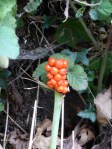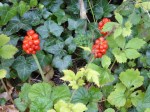
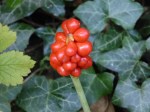
September 3rd – Arum Maculatum is a common sight in hedgerows and woods at this time of year. Known variously as Wild arum, Lords and Ladies, Devils and Angels, Cows and Bulls, Cuckoo-Pint, Adam and Eve and even Naked Boys, it’s a very unusual plant which sheds it’s foliage before fruiting leaving a 6 to 12 inch high column of bright orange-red berries. These berries are highly poisonous and this is the plant responsible for most hospital admissions due to accidental ingestion in the UK.

The berries contain a toxin which makes the oral tract tingle, and causes sickness and swelling of the throat. Always avoid touching it, although the temptation to do so us great, it has an almost artificial appearance that renders it grimly fascinating.

What always worries me about this plant is that it’s at a perfect height, and so brightly attractive, that young kids may be drawn to it. What yours if you’re out walking.

This example is growing, along with lots of others, on the riverbank near the Arrow Valley cycle path in Redditch.

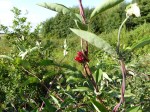
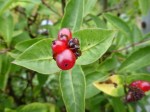
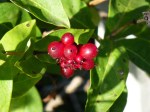
July 30th – It still seems too early to me, but it’s the time of the fruiting and berries now. I’m very familiar with the sticky red berries of honeysuckle – the glaze attracts dust and grime and makes them look grubby – but birds and bugs love them, although they’re mildly toxic to humans.

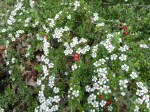
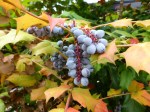
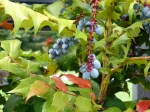
The white berry here I’m familiar with, but have no idea of the name. These used to grow on the front of a house I’d pass on the way to school, and the berries popped delightfully when thrown at the ground; this is what’s making me think they’re early. I’d have been plucking them in September, at the start of a new term. It’s barely the beginning of the summer holidays right now.

Anyone know their name?

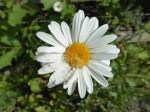
May 19th – In Telford for the day, and what a day it was. Bright, warm and sunny, the flowers and greenery have come on here apace. I noticed my first ox eye daisies of the year, replete with spiders, and cotoneaster in flower, still with some berries from last year. I’ve never seen that before – the fruit is beloved by blackbirds and other songbirds, but the shrub is so prolific here, and the crop so abundant last year that I just don’t think there were enough birds to eat it all.

It makes an attractive display, for sure…

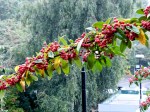
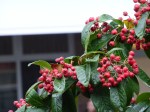
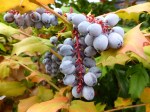
October 11th – I was in Telford for the day, and a commute that started in bright sunshine ended in steady rain at my destination. I noticed as I stood on the covered walkway waiting for the rain to pass that the northbound platform was lined with a tree with bright, orangey red berries, yet leaves a bit like those on a cherry tree. I have no idea what this is, and the birds don’t seem to be very interested, either.

It put me in mind of cotoneaster, but the leaves and berries are way too big.

Anyone help me out here, please?

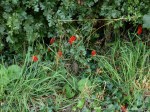
August 26th – It is time again for the annual warning: there’s a killer in the hedgerows right now. These stalks of bright orange-red berries grow in hedges, woodlands and other scrub, and grow 6-10 inches tall. Very distinctive, Lords and Ladies is very attractive, particularly to kids, but is one of the most toxic plants in the British Isles. These examples were growing in the hedgerows of Hamstall Ridware and Hoar Cross.

The berries of Arum Maculatum, also known as Devils and Angels, Cuckoo Pint or Wild Arum contain a poison that causes swelling of the mouth and throat and sickness. Fatality is rare, as the berries are very acid and consuming enough to kill would be a challenge, but the plant causes most admissions to A&E for plant poisoning in the UK.

It’s a gorgeous thing to look at, just don’t touch it. This one worries me, as it grows at a height such that small kids spot straight away, and the beautiful colour is very attractive to them. Be careful.

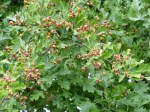
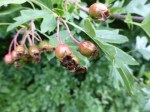
August 20th – another fruit that’s set to be in abundance this autumn are haws, the berries of the hawthorn. Bright red, bitter and woody, they’re not toxic and can make decent jams and wines; but to me, their primary purpose is to provide sustenance for the birds, who flock for their goodness in winter. At the moment, these copious tiny berries are orange-green, and these fine examples were spotted in the hedgerow at Green Lane.

Enough sun and they’ll be pillar-box red, another fine sight and indicator of the passing year.

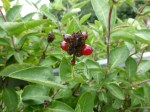
August 13th – Honeysuckle berries are unpleasant, and in most varieties of the plant, slightly toxic to humans. The berries of the most common hedgerow species I see are crimson and sticky, and beloved of birds and bugs. If you can catch them before they’re devoured, they’re beautiful, like jewels, almost. These are growing near the cycleway in Pelsall, where it crosses Mill Road. Note the airborne grime stuck to the surface of the fruit – this is why foraged stuff should always, always be washed.

But don’t forage these, they’ll make you ill…

August 29th – The honeysuckle I noted growing wild alongside the road near the Black Cock Bridge, in Walsall Wood is still in bloom, as it is in many places I’ve noted it. Just another symbol of the weird season, flowers seem to be almost everlasting at the moment. I notice the same bush has also grown handsome, deep crimson berries, which must be good for the birds, but not humans as they’re poisonous. A pleasant reminder of the joys of summer, even if we didm’t get one…