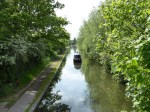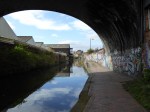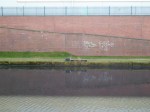
May 30th – I spent the morning at work, then late afternoon, cycled into Birmingham to meet with a couple of colleagues. I headed down to the canal at Tyburn for a decent run, and followed the canal into central Birmingham.

One of the little-known features of canals that helped keep them open for years after their commercial value declined was the fact that under their embankments and towpaths, utilities found a direct route through cities for their pipelines and cables. By laying services alongside the waterways, many of the issues with traffic and complexity of installation could be avoided.

Along the canals here in Birmingham run gas, high voltage electricity, fibre optic telecommunications links, and petrochemical fuel pipelines. The keen-eyed explorer can often spot the evidence on the surface in the form of markers, bulkheads, valve access chambers and other infrastructure.

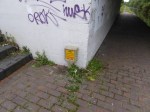
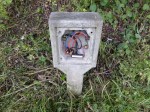
These small, concrete gas pipeline markers indicate a high pressure gas pipeline runs below, but also serve another purpose, as can be seen in this example which has had the cover prised off. The pipeline is metal, and to prevent corrosion, a system of cathodic protection is applied; a low voltage DC supply is connected between the pipe and electrodes – called anodes – in the ground nearby. The flow of current between the anodes and the pipe means that the anodes corrode sacrificially instead of the metal they’re protecting.

A similar system is being fitted to metalwork in the supports of Spaghetti Junction to protect it from water damage.

The markers – about 50m apart along the towpath – house junction boxes for the protection wiring and test points, and contain a magnetically operated switch for test purposes. Large brass studs in the side allow connection of test equipment. 

You can find out about cathodic protection here.

May15th – I finished up early, had something to eat and then returned to Birmingham on the Snow Hill line. I used to trave that service a lot, but for five years now I’ve barely troubled it. Many of the landmarks from the line I knew have gone, or changed. 

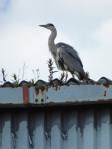
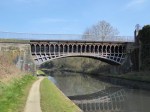
When I got to Brum, it was too nice to hop on another train, so I dropped onto the canal, and rode home through Bordesley, under Spaghetti Junction, over to Pipe Hayes and along the Plant’s Brook Cycleway to Sutton. From there, I rode through the park home. A great ride – Brum canals are at their best in sunshine, and even the heron was out sunning itself. The dogroses at Tyburn were beautifully scented, and the canal limpid and lazy. 

Plant’s Brook cycleway is lovely, and I shall use it more often. Even the rabbits in Sutton Park performed for the camera. 

A wonderful afternoon.

May 9th – I popped into Birmingham to run a few errands and cycled in via Roman Road, Sutton Park, and then onto the North Birmingham Cycleway down past Witton Lakes. I returned via Plants Brook and Sutton, but more on that later.

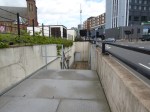
I had business up at Constitution Hill, and on the way, I remembered these odd utility blockhouses marooned in the centre of the recently rebuilt St. Chad’s Circus. These substation-like buildings are the one solid remnant of the old subterranean subway complex; overlooked by the Catholic Cathedral, they are a chilling reminder of the cold war.

They are plant and ventilation installations for Anchor Exchange, a huge, sprawling, underground nuclear blast-proof telecommunications exchange beneath the streets of Birmingham. Mostly now abandoned, Anchor only exists as cable tunnels, having been rendered obsolete by the end of the communist threat and advent of the internet.

Anchor was built at the same time as Birmingham built the inner ring road, or ‘concrete collar’; the hated gyratory system that consisted of flyovers and tunnels called queensways. Birmingham City Council have spent 20 years now destroying the concrete collar, and putting traffic on the same level as the human city, but Anchor is still ever-present.
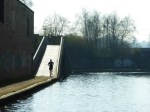
There were several entrance points to Anchor from these tunnels, and the complex was an open secret for decades. 

It’s telling that long after its usefulness ended, Anchor still requires maintenance and support; this closed stairwell with it’s original rails on the right and peculiar textured facing is one of the only pieces of evidence left on the surface, belying what lies beneath.

May 9th – Also introducing their offspring to the big, wide world were Birmingham’s Canada geese. I saw a couple of families on the canal in central Birmingham, each with 3 goslings. These charming yellow chicks are gorgeous, but fiercely guarded by mum and dad who hiss and head-bob at me while I take pictures.

Late spring – multiplication, it’s the name of the game. Delightful to witness.

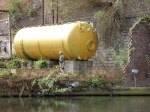
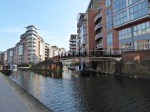
April 9th – I had a meeting in Sutton in the morning, then had to pop down to Tyseley. Leaving too late to head anywhere else, but too early to go straight home, I cycled back along the canal home. I love the bit of canal through Bordesley. The stretch past The Bond – so many architectural and technological periods in one shot. I have no idea what’s going on with the statue and the large yellow tank at Typhoo junction, but the cowslips on the embankment were a real treat. 

A really nice afternoon.

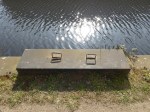
March 14th – This is for Richard Burnell. Last autumn, he was exploring the canals of Birmingham, and he happened upon these boxes, mounted either side of the canal in Ladywood. He asked what they were, and I told him – to some incredulity – that they were a traffic counter. I vowed that next time I passed, I’d take a picture or two.

In the tall metal box is a mains power supply and a counter. In the long, flat one next to it, two photo electric beam switches (made by specialists Sick), which detect a light beam reflected from a target in the box on the opposite side of the canal. When both beams are broken together, it’s most likely by a boat, so the count increases. By using the two beams, this filters out false signals from curious hands, waterfowl etc.

Measuring boat traffic is important. Similar systems on cycle routes count bikes, and we’ve all seen the temporary ones that count traffic.
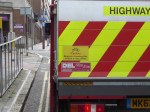
March 14th – In Birmingham, Newhall Street junction by the old Remploy headquarters. A great safety warning on the back of a truck. I only have two issues with it:

  • It should be twice as big
  • It should say ‘Do not pass this vehicle’

Regardless of how cycle lanes are marked, don’t come up the lefthand side of traffic folks. It’s not big, not clever, and is what kills most of the adult cyclists involved in road accidents in the UK.

March 14th – I escaped work in Tyseley at lunchtime, and headed onto the canals of Brum on a fine sunny afternoon. From the Soho Loop, Winson Green; polyanthus in Centenary Square; the canal mural opposite The Bond in Digbeth; Galton Bridge and Ludgate.

Sometimes, this city still feels like it’s mine. A cracking ride.

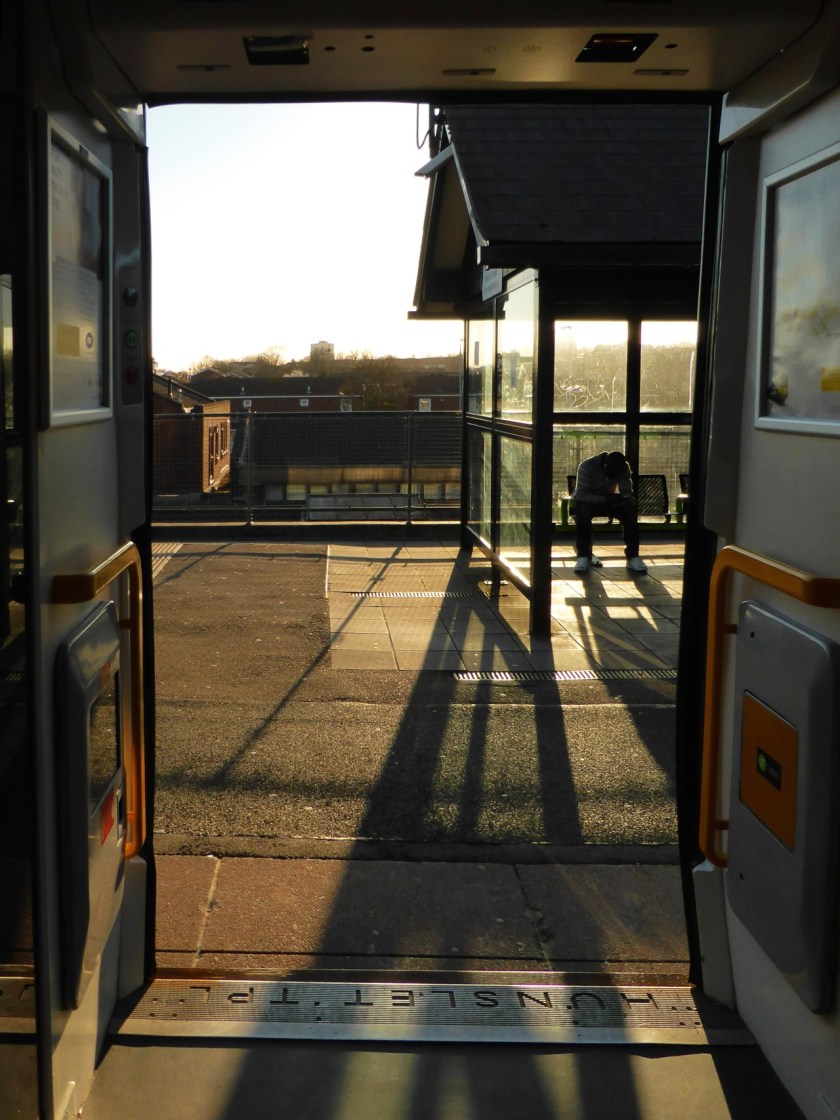
March 11th – On the way home on a sunny, spring evening, with a low sun shining long over Aston. The train stopped and was held for a few minutes, dwelling on a service coming in the other direction before the points could change – as often happens. The doors were open, and I was stood in golden light, frozen. 

It’s a snapshot of Birmingham, and why I love it so.

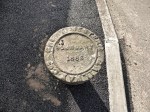
March 10th – I’ve not seen anything like this before. Today, I was travelling from Acocks Green to Tyseley, as I often do. One of the routes I take includes a shortcut down an alley that used to be Rockwood Road, which crosses the railway between Alexander Road and the Birmingham City Mission. On the footpath, just as you leave the railway bridge, there’s an pecuiar, improvised bollard made of cast iron and steel, about a foot high and 8 inches diameter. It bears the legend ‘Great Western Railway Co. Boundary 1888’.

It doesn’t take the brain of Sherlock to work out what it is, but why? I’ve never seen railway property delimited like this before. Further, I must have passed this scores of times without noticing. How did such a trip hazard survive 126 years? Is it listed? Are there more? Is it important historically, or just a curio?

Comment invited.