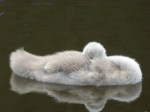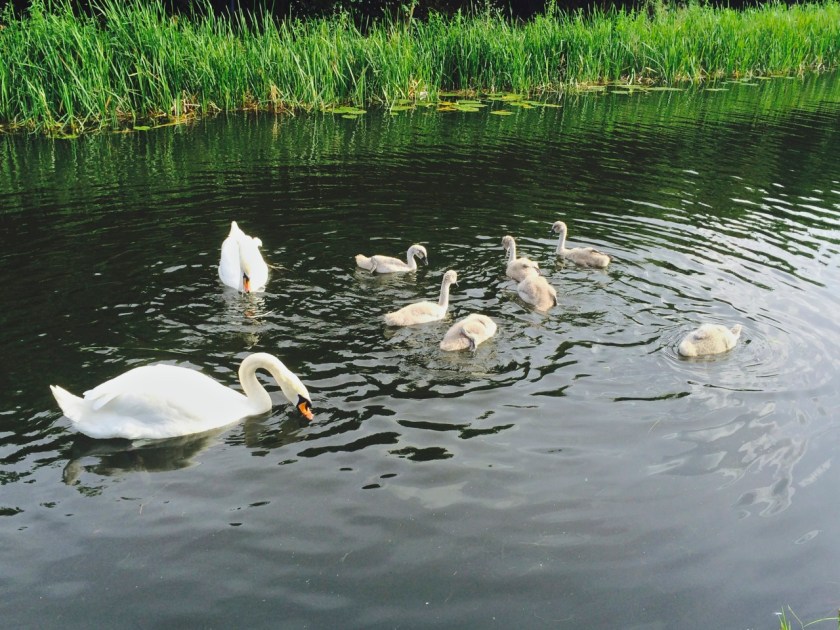
June 11th – The swan family are definitely down to seven from the original eight, but that’s still a large family, and they all look healthy. now four or five times the size they were just a few weeks ago, the cygnets are now around the size of an adult coot or moorhen.

They’d been loafing on the opposite bank of the canal from the towpath, near Clayhanger Bridge, where they seem to have a hidey hole. Obligingly, they all came out when I showed an interest. If they’ve been roosting there overnight, I’m surprised they’ve only lost one cygnet; that area is a busy thoroughfare for Brer Fox, who at this time of year, wouldwelcome of the easy pickings for the cubs’ lunch.

As they get older, they get harder to take and more worldly wise, so hopefully the remaining offspring will survive. They were certainly very relaxed today, preening, grazing and just scudding around with mum and dad.

I was glad to see them, I’m starting to feel an attachment to these grey balls of fluff…
June 7th – Bad news, I’m afraid, but not totally unexpected. 

I dived out in the rain, got something to eat, and as I left, the sun came out. As the landscape gently steamed, I headed to Chasewater along the canal. I saw the swan family, who had numbered 8 cygnets with mum and dad, were now down to 7. The lost one could have been predated by a fox, stoat or mink, or could have died of illness or other cause. 

One of the reasons swans have large broods is due to the loss that’s somewhat inevitable. It’s very sad, but an unfortunate fact of nature. 

The remaining family seemed happy and well enough.

Don’t be too alarmed, but it is sobering and a reminder that nature is red in tooth and claw.

May 28th – With most of the other local swan broods hatched, I’m thinking that possibly the pair at Catshill have had another unproductive year. I could be wrong, but the female seems to be losing interest, like she did last year. That time, they did actually have eggs, but they didn’t hatch; the is year, I can’t see anything in the nest at all.

I’ve been told that swan pairs do a dry run for a few seasons before they actually breed – does anyone know if this is true? I’m kind of attached to this couple, I’d love to see them with cygnets. Don’t think it’s going to happen this year, though.

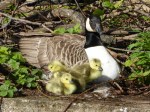
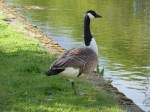
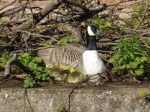
May 11th – As I returned, I passed a particularly intemperate Canada goose on the towpath, standing sentry on one leg. He hissed and honkey at me grumpily, and I couldn’t see why. Just as I was about to squeeze respectfully past, I followed his gaze. There, upon the opposite bank was his mate, and their brood of 3 (or possibly 4) goslings. She looked like she was still sitting. Those guys had cute in shedloads, and are the first goslings I’ve seen this season. Marvellous.