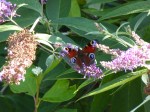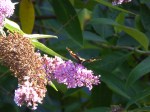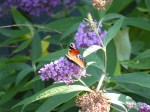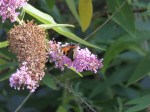
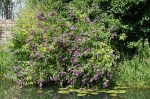
July 12th – One indicator of an advancing summer I always have mixed feelings about is buddleia. This purple-flowering, profuse shrub, sometimes known as the butterfly bush is great for bugs and bees and lepidoptera of all kinds – but the one issue I have is it’s the shrub of urban decay.

This versatile plant will grow anywhere it can find – gutters, chimneys, soot-filled fissures in brickwork, and once it takes hold it will destroy masonry as it grows. It’s the sign of dereliction in summer, growing old disused rail lines, factory yards and edgelands of all types.

A fascinating, but destructive plant.

July 3rd – It’s time for my annual heart-wrenching over the purple conundrum that is the butterfly bush. Buddleia is a prolific, very common shrub that will grow anywhere, in any scrap of earth or soot, and is synonymous with urban decay: look upwards in any town right now and you’ll see this tenacious battler growing and flowering from cracks in brickwork, lifting tiles on roofs, blocking gutters, prizing apart chimneys and crowding any embankment, towpath, disused rail line or wasteground.

It’s beautiful and very good not just for Lepidoptera, but all manner of bugs and is very, very pretty. But it is such a symbol of dereliction and decay.

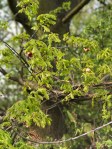
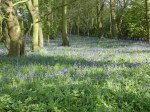
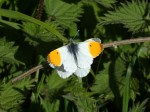
April 23rd – In the sun, it was warm, but otherwise another cold, quite windy day with very bright sunshine. I headed out on a beautiful St George’s day and found the English countryside at it’s springtime peak. Trees verdant, coconut-smelling gorse lined lanes; bluebell woods were a carpet of strident violet and orange tip butterflies mated in the hedgerows.

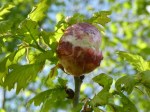
Even the oak plum galls growing in profusion near Hilton were sort of beautiful, in the slightly unnerving way only  these parasite generated growths can be.

Again, I’d appreciate a bit more warmth, but not a bad day at all, and a lovely ride.

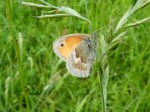
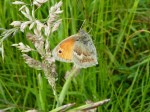
June 9th – I have no idea about Lepidoptera, but spotted this lovely moth (I think) in the flowers near the new pond in Clayhanger. It was beautiful and very active – and along with the bees and a whole host of other bugs, shows why margins and scrubs left to run wild are so very important for biodiversity.

June 4th – Here’s to the dull ones, this that blend in to the background, and perhaps even those that are hated.

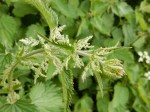
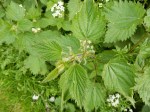
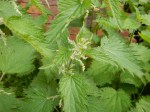
Nettles are prolific and fascinating – from the dead, non-stinging variety to those that cause sudden anguish and itching are everywhere – and they’re actually fascinating if you stop and study them.

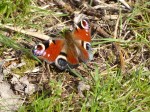
One of the most important things they do is support the beauty of peacock butterflies whose larvae feed on these lowly-regarded weeds.

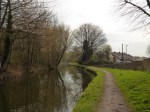
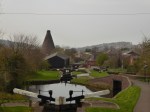
April 10th – I was in Brum early for an appointment and, on impulse, hopped on the train to Stourbridge and cycled home along the canals. I took the route along the Stourbridge and Dudley lines, through the nine locks, Brierley Hill and the Netherton Tunnel, then over to Smethwick, where I rode home through the Sandwell Valley and NCN 5. 

The Netherton Tunnel remains a psychological and sensory endurance test. I love it.
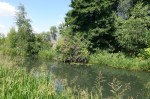
The canals and day were lovely – but I can feel the weather was just about to break. I’m glad I caught this last week; I’m rejuvenated and back in touch with places I thought were lost.

Good to see the peacock butterfly out and showing so well, and that heron was under the M5 at Oldbury: he was furious with me for spoiling his fishing.

July 22nd – The Mad Old Baggage noted the other day that buddleia was known as the ‘butterfly bush’ – and she’s right. By a busy roadside in Walsall, the purple, masonry-destroying shrub is quietly reclaiming the built, and using it to nurture the lepidoptera.

It may be a plant of the margins, scrubs and wastes, but buddleia is a bright, beautiful shrub that clearly supports a whole host of bugs – which can’t be bad.

A fantastic sight.

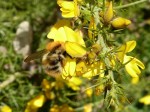
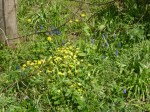
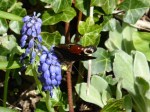
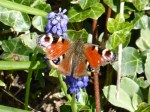
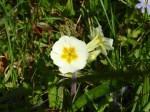
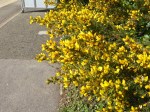
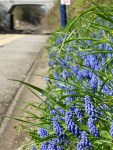
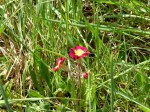
April 23rd – To be in England, in the springtime. I had to go to Leicester, and the patch of waste ground that so enthrals me at South Wigston Station was, as ever, a joy to the heart. Beebuzz and birdsong greeted me as I hefted my bike of the train in the bright, warm sun; peacock butterflies flitted about the lush flowers. Grape Hyacinth, primrose, gorse, dandelion. Performing for me, in this moment, in the middle of urban sprawl. A small wayside oasis, hardly noticed by anyone.

It doesn’t get much better than this.

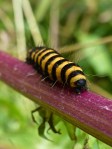
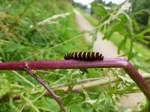
August 31st – I know bugger all about Lepidoptera. That’s not to say that caterpillars, butterflies and moths don’t fascinate me, because they do, but I never found time to read much about them. They’re very curious things. Take this fellow, for instance. 30mm long, clearly a Wolves fan, I spotted him whilst travelling at some speed down a canal towpath in Aldridge. I pulled the bike to a halt, and went back to examinee what I thought I saw crawling along a himalayan balsam stalk. How does that even work? I spotted him really easily, presumably so can his predators. How does that work on an evolutionary level? He’s certainly striking, hairy and caprivating. Anyone recognise what it is?

Edit: he appears to be a future cinnabar moth. Wonderful, black and red moths… and also rather late, it seems.