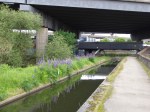
June 3rd – I headed back to Brownhills along the canal, avoiding the rain-maddened traffic. Rounding Catshill Junction, I noticed that the sculpture here ‘Cycle of Life’ by Ron Thompson & Julie Edwards, is again being consumed by the scrub. This sculpture – of which I’m not a fan, to be honest – was unveiled in 2005 as part of the canal refurbishment; the position of the artwork is so far from the towpaths that the detail of it can barely be appreciated, and it’s always felt a bit of an afterthought to me. 

Now, there’s a new development of flats and houses being constructed on the other side of the fence and the sculpture is more isolated than ever. I do hope the plans for the newbuild have taken this into account. 

Ideally, it would be nice it the piece could be moved to somewhere nearby where the public can actually see the detail in the metalwork. A bit of a missed opportunity, really.

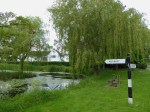
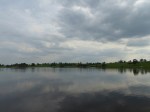
June 1st – I nipped home, then off out for a longer ride. I hadn’t been down to Blithfield Reservoir for a year of so, and thought I’d check it out. It’s still gorgeous. Stockwell Heath, with the lovely village pond was ace too. It was a day for head-down stoking the miles in, and I got a good sixty or so in and blew the cobwebs away.

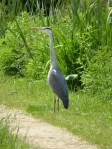
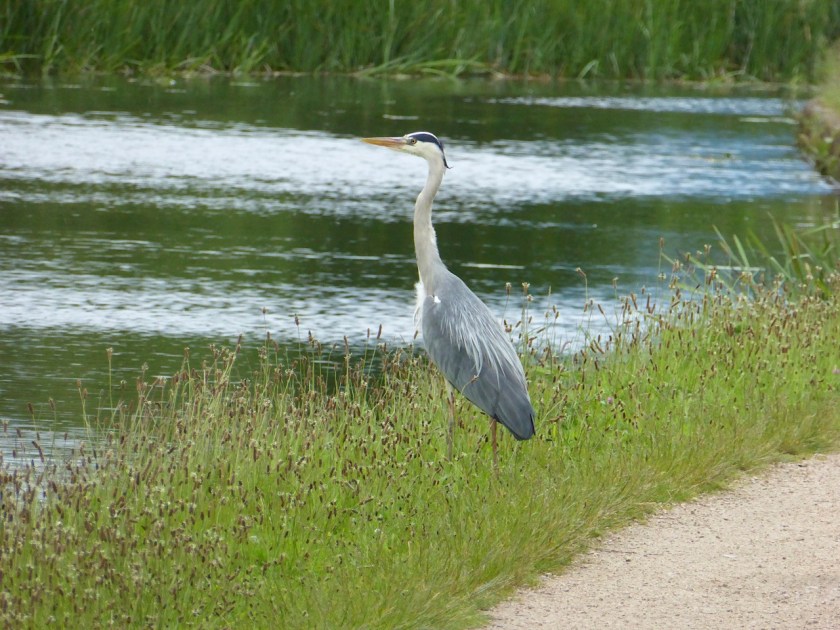
The heron was loafing about all day, and I finally got a pic on my way home. He seems to have decided the canal by the winding hole at Catshill is his territory. He’s a fine bird.

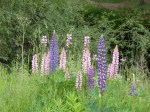
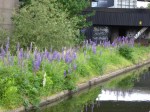
May 30th – Under the rumble and roar of Spaghetti Junction, beside a quiet, limpid canal, on an aqueduct above the River Tame, a little oasis of wildflowers in a built, otherwise hostile urban environment of steel, concrete and brick.

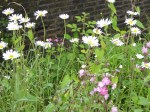
Lupins, poppies, ox-eye daisies, red campion.

That’s my Birmingham, right there.

May 30th – I spent the morning at work, then late afternoon, cycled into Birmingham to meet with a couple of colleagues. I headed down to the canal at Tyburn for a decent run, and followed the canal into central Birmingham.

One of the little-known features of canals that helped keep them open for years after their commercial value declined was the fact that under their embankments and towpaths, utilities found a direct route through cities for their pipelines and cables. By laying services alongside the waterways, many of the issues with traffic and complexity of installation could be avoided.

Along the canals here in Birmingham run gas, high voltage electricity, fibre optic telecommunications links, and petrochemical fuel pipelines. The keen-eyed explorer can often spot the evidence on the surface in the form of markers, bulkheads, valve access chambers and other infrastructure.

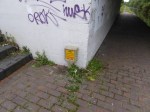
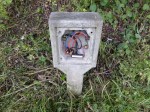
These small, concrete gas pipeline markers indicate a high pressure gas pipeline runs below, but also serve another purpose, as can be seen in this example which has had the cover prised off. The pipeline is metal, and to prevent corrosion, a system of cathodic protection is applied; a low voltage DC supply is connected between the pipe and electrodes – called anodes – in the ground nearby. The flow of current between the anodes and the pipe means that the anodes corrode sacrificially instead of the metal they’re protecting.

A similar system is being fitted to metalwork in the supports of Spaghetti Junction to protect it from water damage.

The markers – about 50m apart along the towpath – house junction boxes for the protection wiring and test points, and contain a magnetically operated switch for test purposes. Large brass studs in the side allow connection of test equipment. 

You can find out about cathodic protection here.
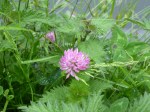
May 29th – Meanwhile, further on near the Pier Street Bridge, a chance to catch up with the flowers whose photos turned out badly the day before. Clover, the unsung hero of the pasture, meadow and verge is always beautiful, but very overlooked. Nutritious in fodder and attractive to bugs and butterflies, clover does it’s violet thing pretty much unnoticed. 

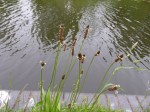
Another very common flower that goes unremarked is the ribwort plantain – it’s brown flower heads with the white corona don’t look like flowers, but they are. Exceedingly prolific this year, they’re everywhere that grass grows. As kids, we’d pick them at the base of the stalk and play conkers with them. I think they’re fascinating, and demontrate the utter diversity of plant life in the UK.

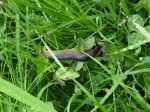
The damp conditions may not be improving my humour any, but that slug looks in fine fettle. Much misunderstood creatures, that I think are actually rather interesting.

May 28th – I took loads of photos of flowers on the canal bank tonight. They looked super in the rain.

Sadly, the lens had an unnoticed rain smear on it and they were all terrible. Such is life.

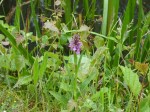
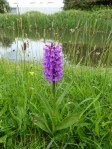
I did manage to record more marsh orchids. Not sure if they’re the same kind as the northern marsh orchids of yesterday – these are some way away – but they look similar. I’m fascinated by them, as they seem to be recent arrivals here. I’m sure I’d have noticed such a gorgeous flower before. 
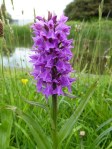
Thanks to Susan, Guest and Indesperateneedofsomeadventures for wildflower identification corrections and advice yesterday. I’ve come to the conclusion I’ll never be any cop with botany. I really am useless with the flowers.

However, I have decided my guide book is cobblers – I’m using the Collins Guide, and the pictures are too small (which explains maybe why I default to mallow!) – what guide would folks recommend? The internet isn’t much use for identifying flora and fauna.

Suggestions gratefully received!

May 27th – I got taken to task by a good pal the other day for suggesting – erroneously in their view – that the summer blooms were purples, reds and darker colours. Yes, there are some yellows and whites, but just look at these, all spotted in a 30 meter section of Aldridge canal bank.

I’m just about to make a prat of myself and name them, but welcome correction from anyone. Are you there Susan? Wilymouse, perhaps?
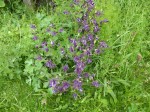
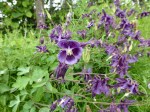
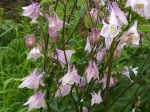
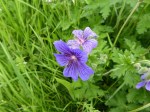
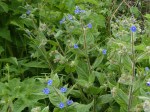
I think the top three are known as granny’s bonnet, aquilegia or columbine. I think the nest two are mallow. We have a rather excellent marsh orchid – first this year for me – then, I think, green alkamet.
Last one is a puzzle, but I’m guessing some sort of campion?

Whatever they are, they’re beautiful.

May 27th – Just on the canal in Aldridge, this skittish fellow. I gently placed the bike down to take a better picture. By the time I raised the camera again, he’d flown off.

This journal can never have too many herons. I adore these gangling, shabby and patient fishers. To me, they’re a symbol of the cleanliness of todays canals, and how far they’ve come. When I was a kid, you’d never, ever see this.

It’s a thing to treasure.

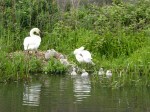
May 26th – After not seeing them for two weeks, my swan magnet was finally on again as I headed up the canal at Brownhills. On this warm but generally overcast afternoon, it was clearly time for the family ablutions and the whole family of 2 adults and 8 cygnets were preening and bathing. They’ve approximately doubled in size since I last saw them, and look healthy and contented.

So pleased the couple finally got a brood after all these years.

Please though – if you see them, and want to feed them – give them seed, not bread. Bread has no nutritional value to wildfowl like swans and ducks, and can kill the little ones.

May 24th – There’s probably some fancy photographic name for it, but some days seem naturally high-contrast. Something about the light. I spun around very wet towpaths out of Brownhills to Chasewater, and noted that part of Sandhills was dark, and another part was remaining in light. It really was quite beautiful.

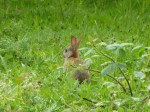
Newtown’s bunny population were out enjoying the lush wet vegetation, and could be barely bothered to run away as I approached, and the view to Hammerwich was as wonderful as ever now it’s wearing it’s summer jacket. At Chasewater, the view from the dam was remarkable, with a rather threatening sky. 

As I headed home, the heavens opened again.

But it’s summer, and warm rain is better than cold…