#365daysofbiking Colonial life:

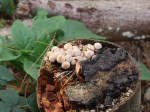
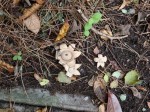
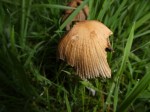
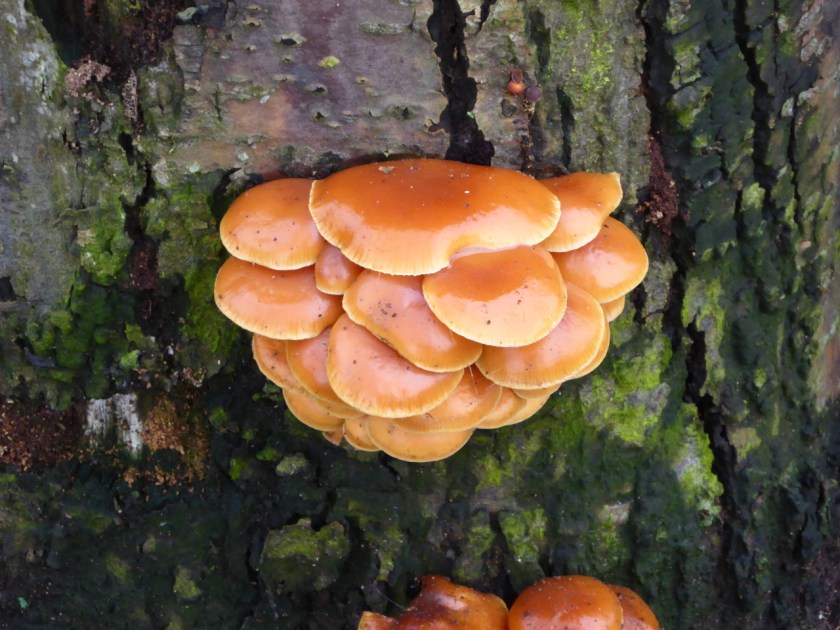
November 2nd – the fungi colonies are still doing well. The earthstars of the Darlaston Trading Estate are still showing beautifully like some petrified, child’s drawing flower, and these little buttons on a stump were fascinating. I’m not sure what they are, and welcome suggestions: Maybe slimy beech caps or roundheads?

Never tire of studying fungus.

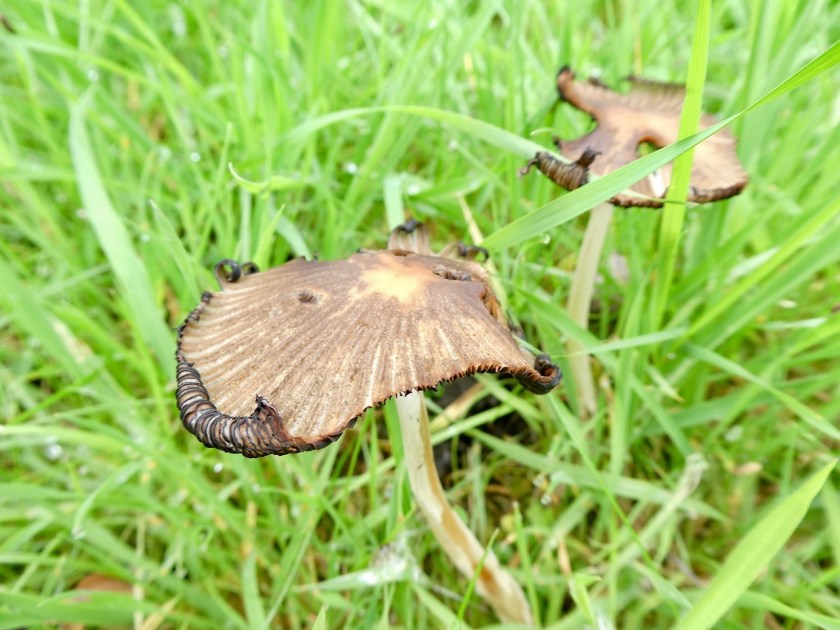
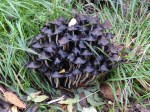
September 26th – ne of the rewards of autumn is the abundant crop of interesting fungi. Passing Clayhanger Common in darkness, I noted that some environmental trigger – damp, temperature, never sure what – has called on the glistening ink caps and they are everywhere.

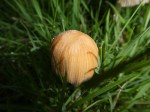
They start as perfect little ridged caps, delicate and speckled with crystals. They age very quickly, and within 48 hours they open and decay into a black goo, hence the name ‘ink cap’ – and another 12 hours, and you’re hard pressed to find any trace they existed.

Fungi are fascinating.

October 13th – On the canal bank just above the new pond in Clayhanger, two large, flat stone blocks lay in the grass, as if they’ve just landed randomly. I bet few folk ever notice these, or wonder what they are, but they are the last physical evidence of the industrial past of this peaceful place.

The path that runs from here to the west of Clayhanger follows the line of an old mineral railway, serving Walsall Wood Colliery which used to be just the other side of the canal. The line crossed the cut here via an over bridge, all trace of which has gone.

Except for these capstones, which stood at either end of the bridge parapets. 

A third is in the new pond, placed there as a stepping stone when the pool was created following the removal of the spoil heap that stood here for a few decades after the colliery closed. Like some post-industrial Brigaddon, it emerges in dry summers. 

I’ve never found the missing fourth one, but I bet it’s around, somewhere.

They are all that remains, and how many ever realise the history they belie?

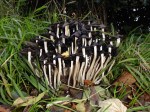
September 9th – Found in Kings Hill Park in Darlaston, a sign of the oncoming autumn. Glistening ink caps, shooting up after a night’s rain; tiny spores waiting in the ground until exactly the right combination of light, temperature and moisture. Then – ping! – instant toadstool forest.

Isn’t fungus incredible?

October 17th – I came back from Shenstone just as darkness was falling, and spotted by chance another bountiful crop of autumn. Isolated in the hedgerow at Footherley, a large, impressive and perfect group of mature glistening ink caps. These are toxic, and shouldn’t be touched, but the temptation to is huge. I love their pure white stalks and brown-black, sing caps.

I don’t think the fungi have been so good this year, maybe due to the dry weather – these are rare gems.