
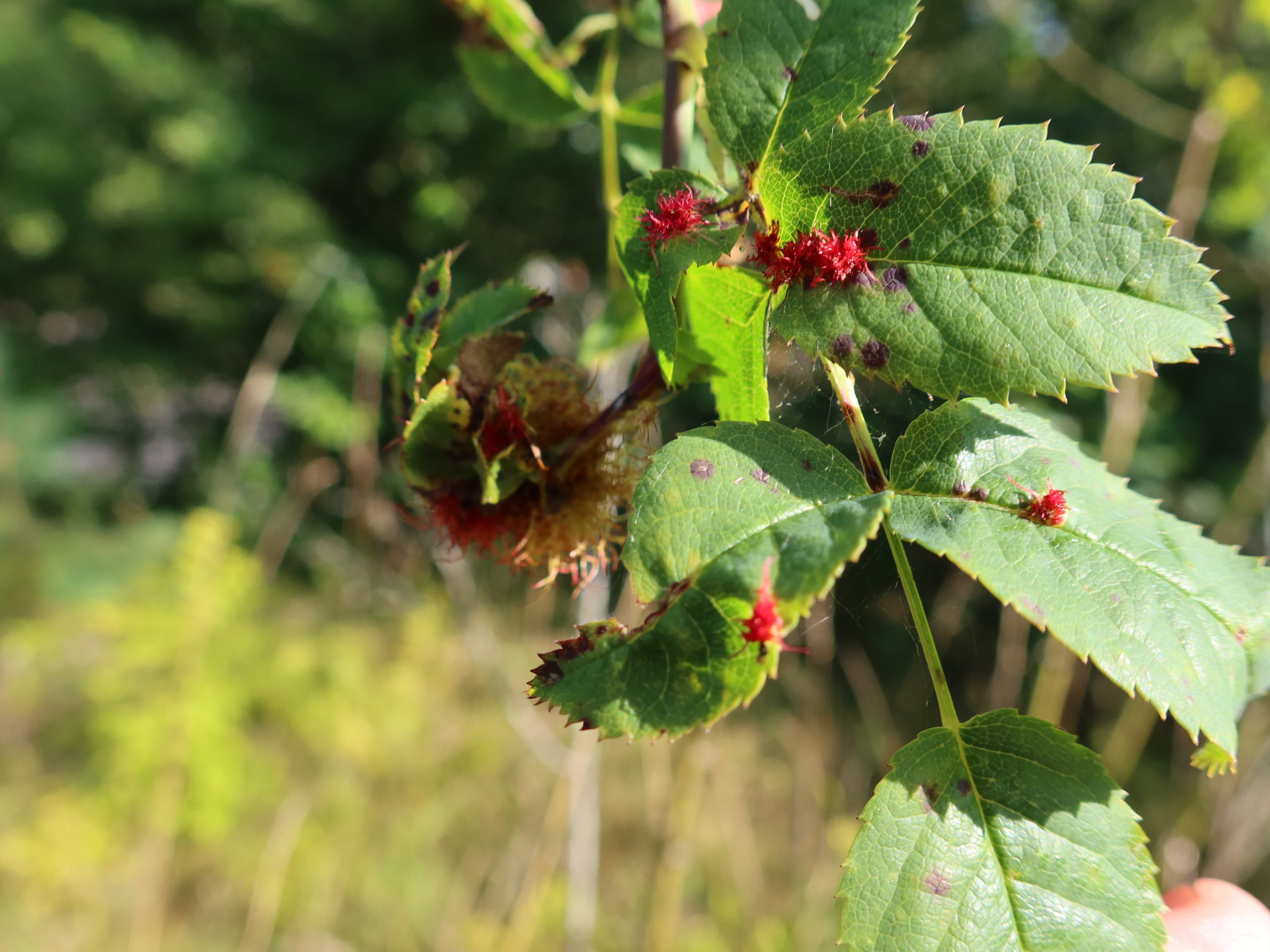
August 21st – My goodness, this is strange.
Y’all know I love and am fascinated by insect galls, right? Well the robins pincushion galls on the wild rose I’ve been watching grow for weeks just took an odd turn.
There are several galls on the same rose now, the only plant in the thicket to be affected. Most of the galls are large, colourful and dramatic. But one weedy little on at the end of a twig seems to have got into a bit of a mess.
The photo isn’t great, but one can see that corruption from the implanted wasp egg has not been concentrated in one leaf node; it’s spread to several and there are bright red patches of furry spines all over the adjacent leaves.
Wonder what went wrong there?
This journal is moving home. Find out more by clicking here.
from Tumblr https://ift.tt/31UN6rm
via IFTTT


 BrownhillsBob's #365daysofbiking