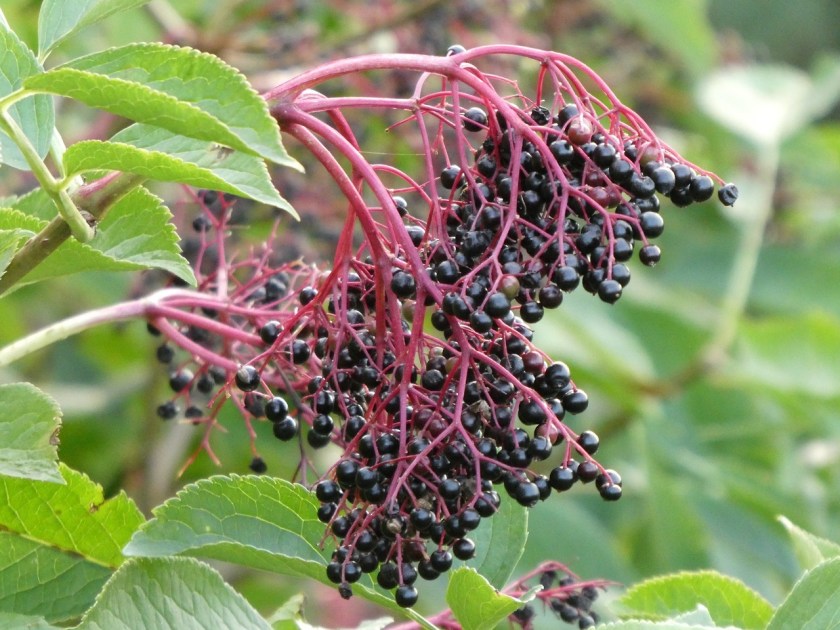
August 22nd – The Elderberry crop looks decent this year, which is always a good sign for local home-brew winemakers.

I will be out collecting buckets of these tiny back juice laden berries for a relative to perform the usual magic of transforming this bitter, black harvest into a dizzying, beautiful dark red nectar.

They also make a wonderful sight as a roll around the area. 

The oncoming autumn is lovely when you stop fighting it…

August 21st – A workday full of heavy meetings and considering answers to problems, so I took time out in the afternoon in my favourite contemplation spot – Kings Hill Park.

Nobody about with rain spotting lightly on the pavement and leaves, but the flowers were beautiful, the greens verdant and the place spotless.

I love this little urban oasis so much. And I managed to solve a couple of problems. Result!

August 21st – Back in Darlaston, the building behind the town hall – for all the world nothing but a small, brick-built, ornate garage – had had more masonry removed, and scaffolding erected.

This is a sad state for what was the town’s fire station in the earliest days of the service to be in.

The site has been cleaned out and is tidy, and the further demolition seems too neat and level to be part of a total removal, so I’m hopeful this is the start of a full restoration.

I still have no idea what happened here, I’d be interested to find out.

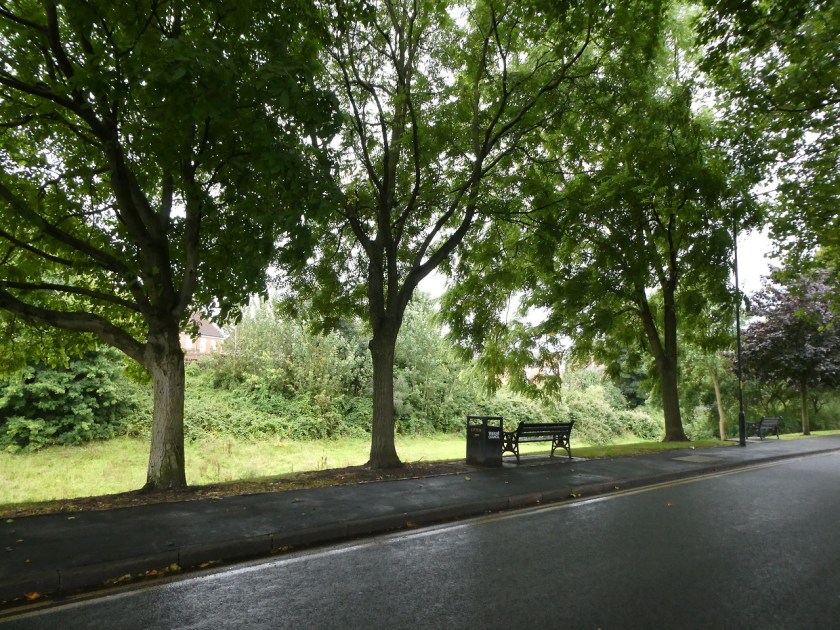
August 18th – As I got nearer to work, I realised I’d just missed a very localised downpour, I love how the rain an light made Victoria Park look as things lightened up. Dripping gently, the green was beautiful and you’d never think you were in such an urban, industrial place so close to a town centre.

One of the many reasons to love Darlaston…

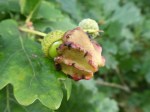
August 10th – Oak galls continue to fascinate, and on this tree in Victoria Park, Darlaston, there’s quite a display of knopper galls, the first I’ve seen this year.

Like other oak parasites, the knopper wasp lays eggs in it’s host, secreted in a chemical that corrupts the cellular DNA of the host plant matter causing the gall too grow. In this case, the target is the acorn itself, and on this tree, one can see some acorns blighted by two such galls.

As with others, the egg hatches and ithe wasp larva eats the gall and grows safe in it’s corrupted acorn, before boring it’s way out when mature.

Also on this tree, the more conventional wasp gall – the common ‘oak apple’ of folklore, a spherical gall grown the same way.

These galls don’t harm the host, but do reduce the functional acorn crop. I’d love to know just why the oak is targeted so particularly with the and not so much other trees…
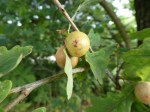
August 2nd – Travelling to work on a miserable morning in steady rain, it was nice to continue the fruit-spotting with these glistening, deep red crabapples near Bughole Bridge in Darlaston.

Crabapples – bitter, hard miniature versions of the more palatable dessert fruit – come in many varieties from green through russet to deep, deep red like these. These fruits seem uninviting to almost everything and these will remain on the tree until well into the new year, and rot on the ground untouched by birds or squirrels.

They must be awfully acid, but they are so very handsome when new.

August 1st – Also ripening well are the rosehips, the seed fruit of the various types of wild and feral rose that grow so beautifully by the towpaths and edge lands all over urban Britain. Sweet and juicy, they are sought after by birds, mammals and foragers alike.

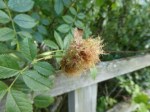
Less common and indeed, quite a find, is the odd, hairy wasp gall growing on the same bush. This is the wonderfully named robins pincushion gall, or sometimes just moss gall.

Like oak galls, this curious mutation forms from a leaf bud on the rose stem injected with eggs and a DNA corrupting chemical by a tiny wasp. The chemical causes the leaf bud to mutate into this odd growth instead, and at the heart of the woolly mass is a solid core, in which the eggs hatch, and the larvae eat their way out when ready.

the gall doesn’t harm the rose particularly and is just another fascinating example of the ingenuity of evolution, with host and parasite developing together for thousands of years.

August 1st – So, it’s August and we’re coasting steadily through high summer into autumn, as signified by a rash of sudden fruiting; the harvest has started and has been paused due to rains – but everywhere, blackberries are darkening, apples are swelling, berries are becoming plump and all manner of hips, haws and funny are maturing nicely.

On my way to work on a pleasant, sunny morning, I noticed the crimson red of hawthorn berries darkening in the hedgerows and thickets. Bitter and woody, these berries will last long enough to carry many songbirds through winter.

I just have no idea where this year has gone…

July 28th – A sunny morning, but dreadfully wet return from work made for an odd day. I’m increasingly aware now of summer and time marching on and this shows in the shift from flowering to fruiting.

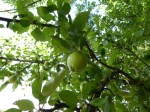
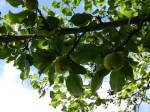
The apples near the scrapyard at Bentley Bridge are looking wonderful again this year. Such a shame nobody can get close enough to pick them!

Looks like it’ll be another fruitful autumn…

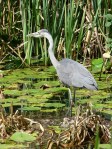
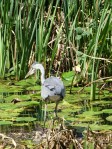
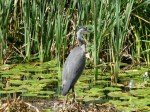
July 27th – Pottering along the canal on the way to work through Bentley Bridge, I noticed this juvenile heron; I can’t tell if it’s the same one I spotted a few weeks ago, but it’s clearly hunting well. 

Quite bold and determined I wouldn’t disturb it’s fishing activities, the bird kept an eye on me but didn’t flinch when I stopped to take a photo or two.

I love these mad looking birds and like the deer, I can’t believe we have them now; it’s a sight I marvel at as I’d never have seen these on the canals when I was a child. A real sign of environmental improvement.