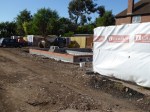

June 5th – I returned via Walsall Wood, and checked out the site of the recently demolished St. John’s School, where building work on a new development has now started and is progressing well.

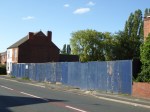
Further on, on the Brownhills Road opposite Walsall Wood School, the site of the long-derelict terraces finally seems to be seeing some action. The ‘sold’ sign has gone, and someone has been surveying judging from the datum marker on the opposite pavement. Utility marks on the other pavement suggest someone is planning on digging there. 

I heard reports earlier in the week that there were people milling around on site with drawings and surveyor’s kit.

Hopefully soon, this long vacant site will see some positive movement.
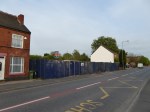
April 30th – I returned from work late, in the evening, just before dark. I stopped at the Co-op in Walsall Wood for some groceries, and then noticed that the land where the derelict terraces was, opposite Walsall Wood School, has now been sold.

Planning permission was obtained for a new development here a couple of years ago, the eyesore abandoned homes here demolished, and then, surprisingly, the site was put up for sale again. 

Hopefully, this might see the end of a long period of dereliction for this site – which would be ideal for housing, it has to be said. I think this could be one to watch in coming weeks.

March 31st – I hopped on the canal to check out if the swans were nesting yet at the new pool at Clayhanger, but I couldn’t get a close enough look properly. As I pressed on homewards to Brownhills, I noticed that the land where the Bayley House towerblock used to stand near Catshill Junction is being prepared for the newbuild development planned there, with plant clearly operating and equipment arriving.

This land has been idle for a decade this May. It’s good to see it come back into use.

November 8th – I’ve noted before, that at night Stonnall is a different place. Darkness has a remarkable effect on the dormitory commuter village that I find puzzling. By day, it’s a nondescript, but pleasant place; old houses mingle with postwar new build and a few ex-council houses with neat gardens and an open, if slightly characterless atmosphere. 

At night, however, I’m not sure why, but the place develops a wholly different character. The old buildings here come alive, and the new stuff just slinks into the background. You get hints, whispers of what the old village might have been like, before it was sold out to developer and speculator.

Some places seem lost, but retain their essence at certain points. Stonnall does this on dark winter evenings. I remain convinced that the spirit of some places is never lost, just hidden.

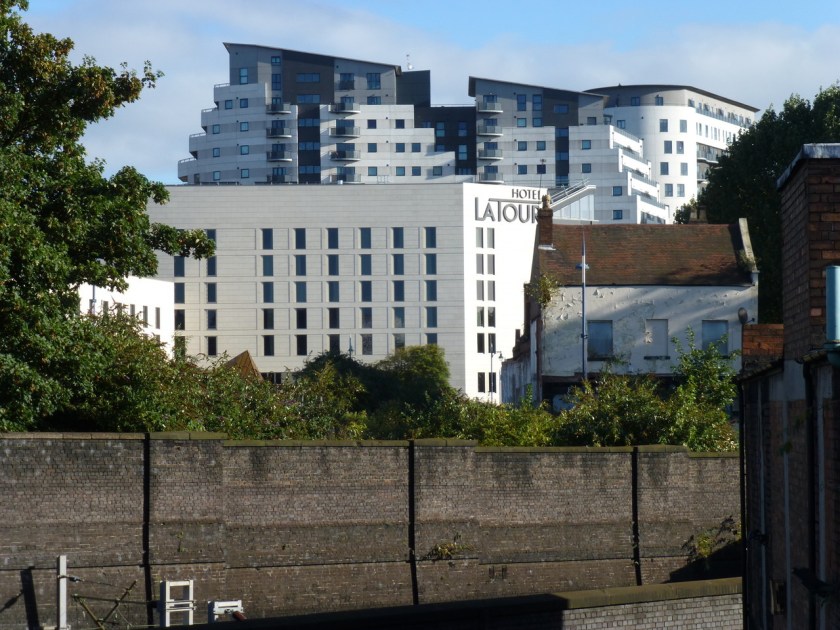
September 19th – Off to Tyseley, and stood on Moor Street Station in Birmingham, I looked through the railings back towards Masshouse, and the edge of Eastside. Not many folk realise that Moor Street Station actually sits on a bridge over the approaches to New Street Station, so this may one day be the location of a new Birmingham central transport interchange. I was struck by the state of this area in terms of architecture and regeneration. Caught between dereliction and rebirth, the shiny new blocks contrast jarringly with the boarded up buildings nearby. With the recent change in control at Birmingham City Council, hopefully the indecisive hiatus that stalled development of Eastside for over a decade will end.

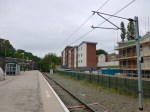
August 17th – Some development decisions baffle me totally. Out again at dawn to Four Oaks station, I found myself early and hanging around. I studied the apartment blocks that had been built on the former builder’s yard next to the station. The yard was originally railway sidings last used to serve MotorRail, and is cut into the hill back towards Mere Green. That means a very narrow strip of land with an oblique retaining wall one side, and a view over a commuter railway station at the other. Into this narrow dog-leg, builders have squeezed bland, characterless boxes. 

Presumably, the Mere Green/Four Oaks adress sells them, and the commuter links. I find them utterly hideous, with a dreadful outlook.

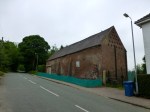
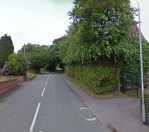
June 1st – I see that Wordsley House in Stonnall has  now been sold, and this includes the barn and land.  The barn is now marked down – like most agricultural buildings in the area have been – for conversion into dwellings. It says much about the economics and demographic of this burgeoning Metroland that all the farming has now gone from the village. The transformation – from comfortable rural village to almost totally soulless commuter resort –  has been completed in the 30 years I’ve been riding through here, and I find it desperately sad. The only redeeming feature is the rolling countryside and greenery – although it is under threat too, as the lower image from Google Earth Streetview shows. In danger of losing the remainder of it’s greatest assets to overdevelopment, I fear for Stonnall’s future. Sad, destructive and tragic.

April 14th – Didn’t get far today for one reason or another. Slipping out for a quick scoot around town at teatime, I found myself at opposite ends of the modern development history of Brownhills. I noted that in High Street, at the corner of the Ogley Road junction, the second phase of the social housing project started a year ago has begun. Replacing the hated maisonettes that formerly occupied the site, it’s nice to see some housing development happening. We have so much land left vacant by the clearance of bad social housing, yet the pace of replacement is painfully slow. The 75-odd homes this project will create are next to nothing compared to the hundreds lost.
Meanwhile, littered with the detritus of drug use, forlorn and abandoned, the loading bay for what was Brownhills’ first Tesco at the rear of Ravens Court. Tesco have got cold feet on replacing this derelict structure with a new store, leaving the town in limbo. When will we ever learn? 

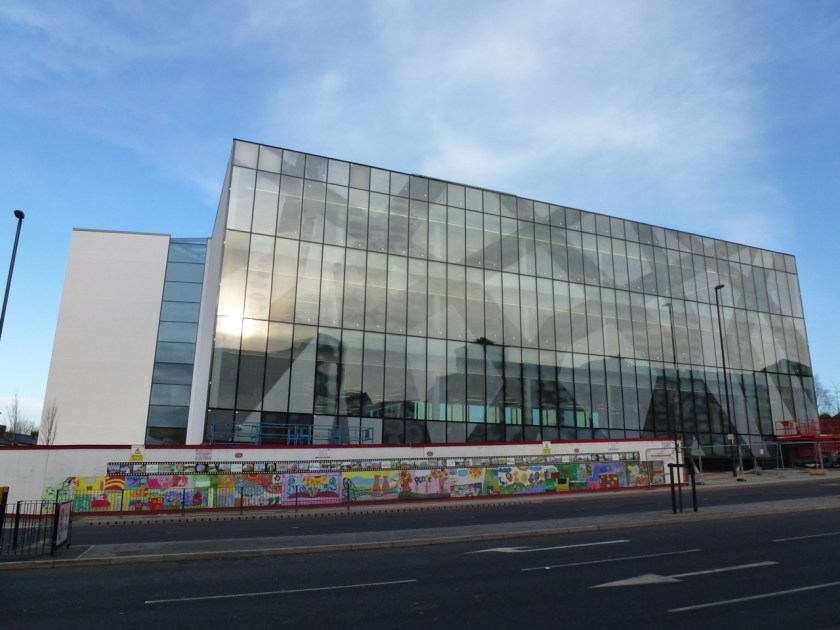
December 14th – Walsall Housing Group have spent a huge amount – said to be about 6½ million pounds – on a new headquarters at Hatherton Street on the new ring road in Walsall. The development seems to have undergone some difficulty, with the glazing suffering a manufacturing fault causing condensation ingress and having to be replaced. The entire project was hoped to kickstart Walsall Council’s ill-fated Gigaport project, a development area intended for high tech businesses. There have been few takers, however, and the council sold the land this block stands on for a pound. Sometimes, I think councils should leave development stuff to the developers. These things never seem to go right…