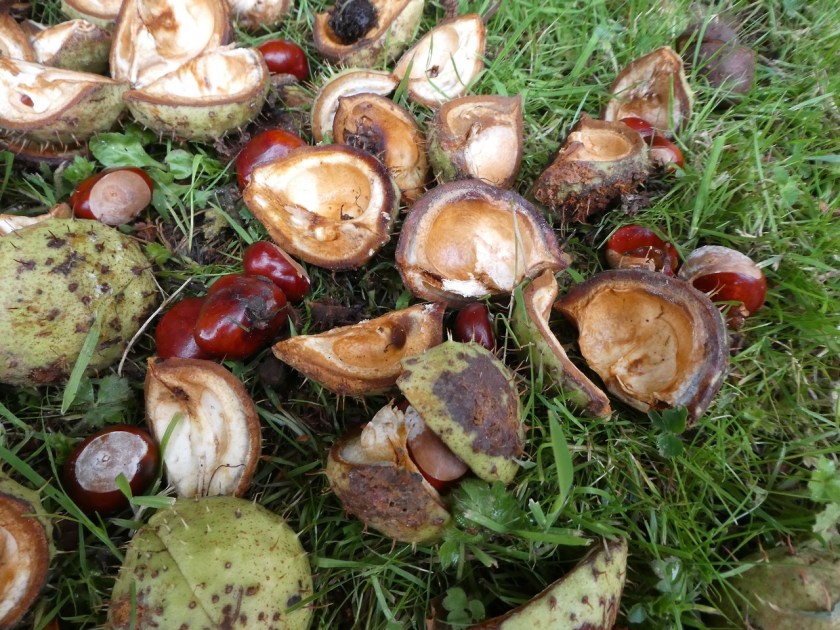
September 20th – The conker (or horse chestnut to be formal for non-UK readers) harvest this year is ample, which is excellent to see considering so many of these marvellous, noble trees are having their foliage ravaged by leaf  miners and cankers.

Here at Darlaston, the nuts are so copious, even though the kids gather around, there are loads of them left on the verge, a bounty I could only ever dream of as a kid.

I’ve said it many times but I do think there’s a real primitive instinct with British men and conkers. We’re programmed to collect and admire them from an early age.
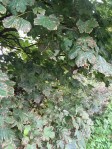
September 4th – Apologies for the poor phone photos, I forgot the camera…

I’m still musing on the oaks, and their various blights and parasites. I asserted a few weeks ago that the oak seemed to suffer disproportionally with these afflictions, but I was forgetting the various leaf-miners, bugs and aphids that affect other species.

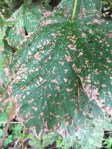
This sycamore in Pleck, Walsall for instance is suffering form various things, including leaf miners. I have no idea why, but only this tree out of several neighbours is affected.

I really ought to read up on this stuff.

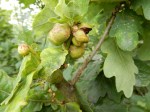
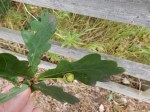
August 7th – This oak tree was spotted by the cycle way in Pelsall, and seems to be afflicted by the same ills befalling similar trees everywhere I go. The poor oaks this year seem to have few acorns, leaves dying off early and tiny, deformed acorns.
I hope this is an aberrant year and in seasons to come are better.

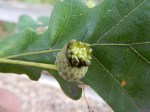
June 29th – Spotted on the cycleway near Telford station, this oddly tortured oak tree. Generally with a healthy appearance, look closely and the tree is covered in insect galls, whereas the acorns that it has grown are oddly mutated and tiny. The leaves also seem subject to some kind of leaf miner attack.

I feel sorry for the oaks – they seem far more susceptible to such attacks and diseases than other trees. I’m not arborialist – is there a reason why the noble oak suffers so very much?

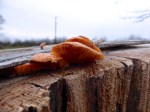
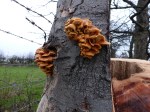
December 19th – I headed out mid afternoon on the annual pre-Christmas pilgrimage to Packington Moor farm shop near Whittington. On the way, I spun down Barracks Lane, and the bright colour of some fungus on a tree stump snagged my eye. I stopped to take a look.

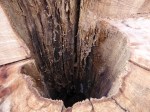
A big old tree – I think an Ash – has been cut down here in recent weeks, leaving a hollowed out bole to rot away. The cavity in the stump itself contains an odd, purple mildew, and although clearly only weeks since being cut, the fungus is working to recycle the wood, and growing in slimy, glossy bright orange clumps. I’ve no idea what they are, but they’re beautiful.

Nature reclaims most things, and is wonderful and mysterious in her processes.

As an aside, it’s clear that this tree was suffering a dreadful disease from the hollow core. To the untrained eye, there appear to have been no signs on the outside of the malady within. How do arborists know this stuff?

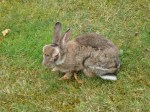
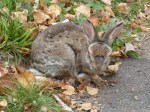
October 2nd – A bit grisly, this, but I feel it needs saying. Myxomatosis never really went away, but it seems to be sweeping through South Staffordshire again. This wild rabbit – spotted wandering helpless on a grass verge in Chorley, near Burntwood – is blinded by this dreadful rabbit plague. Introduced from Venezeula to Australia in the early 20th century to control the burgeoning rabbit population, this pernicious disease was accidentally imported to France by scientists. Soon it came to the UK. Causing blindness and tumours, it’s a horrid disease and a prolonged, hideous death. I’ve seen five or six bunnies in this state recently – this one so impaired that it was unaware I was a couple of feet away. I can’t bring myself to kill animals, but I hope foxes or the buzzards strike soon.

There is a light on the horizon. Studies show that the rabbit population – increasing, currently – is becoming gradually immune. Next time you see some agribusiness wonk on TV telling you that science is the solution to agriculture issues, remember this rabbit.

If you keep pet rabbits, take care if your garden backs onto open land, or where they may come into contact with their wild cousins. 

August 29th – I don’t know if this is the result of a natural process, a disease or a parasite but all the sycamores I’m seeing at the moment have these brown/yellow scabs on the leaves. This one was on the canal at Hopwas Hays Wood, but I’m seeing it everywhere. I’m aware of the leaf miner problem with horse chestnut trees, but didn’t think that affected sycamores. Any ideas, anyone?