#365daysofbiking Here comes the flood

February 16th – A truly dreadful day which saw a huge amount of rain and high winds. Overnight, lots of local roads flooded and there was much damage.

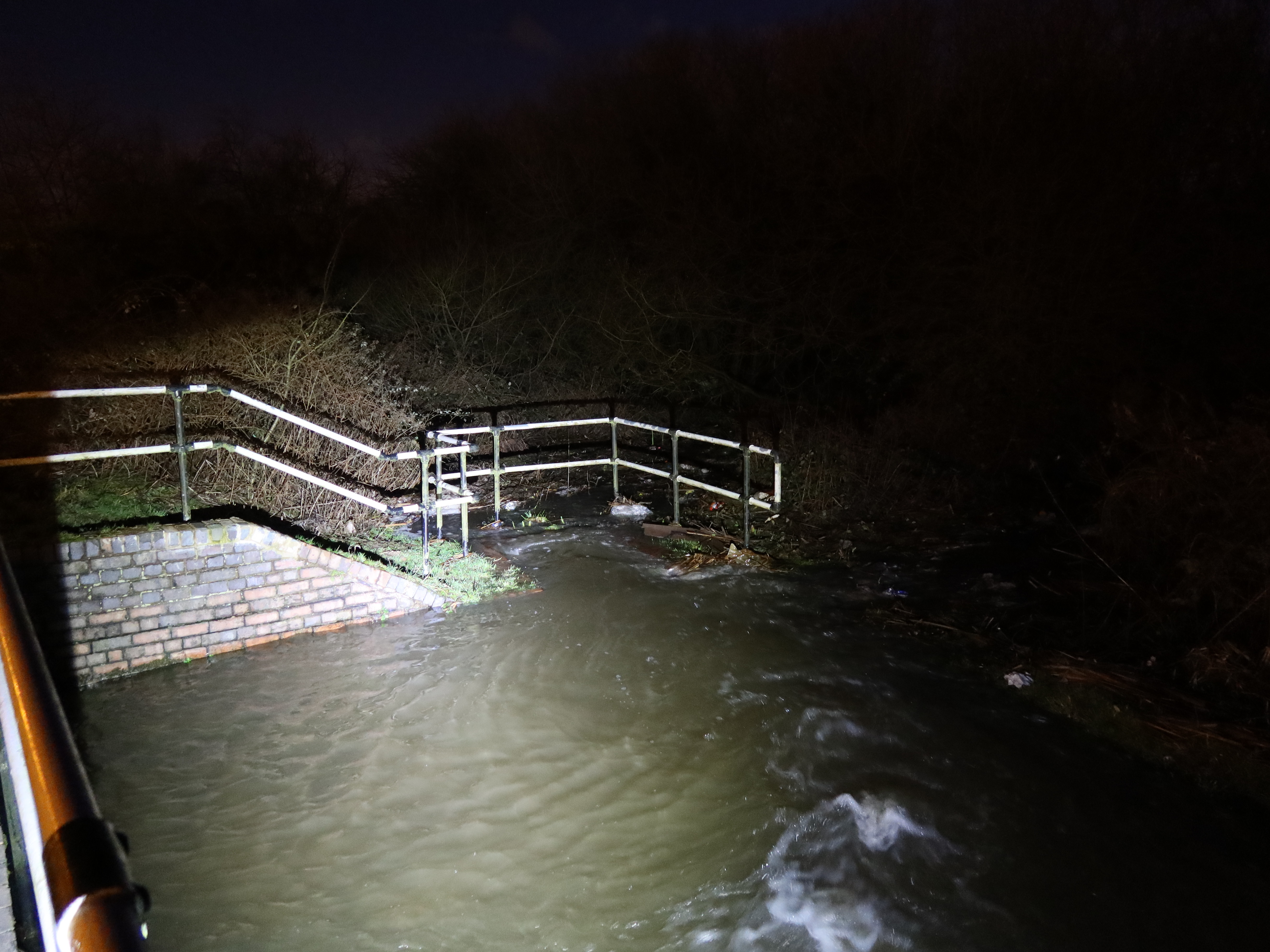
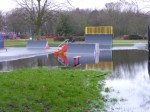
I ventured out after dark, and noted that the lower meadow at Clayhanger Common was doing it’s usual job. It had flooded, storing the water from the canal and local drains that would previously have swamped the village.

Instead, the landscape forms a lake that slowly and safely drains, keeping Clayhanger dry.

The noise and spectacle of this rushing water is a sight to see, but a remarkable bit of landscape engineering.

I do hope the weather will improve soon.

This journal is moving home. Find out more by clicking here

from Tumblr https://ift.tt/2SZjHtt
via IFTTT

#365daysofbiking Circling the drain

October 7th -This is one for the collection of things that randomly irritate me. It’s not a huge thing, but it’s been bothering me a while now – several years in fact.

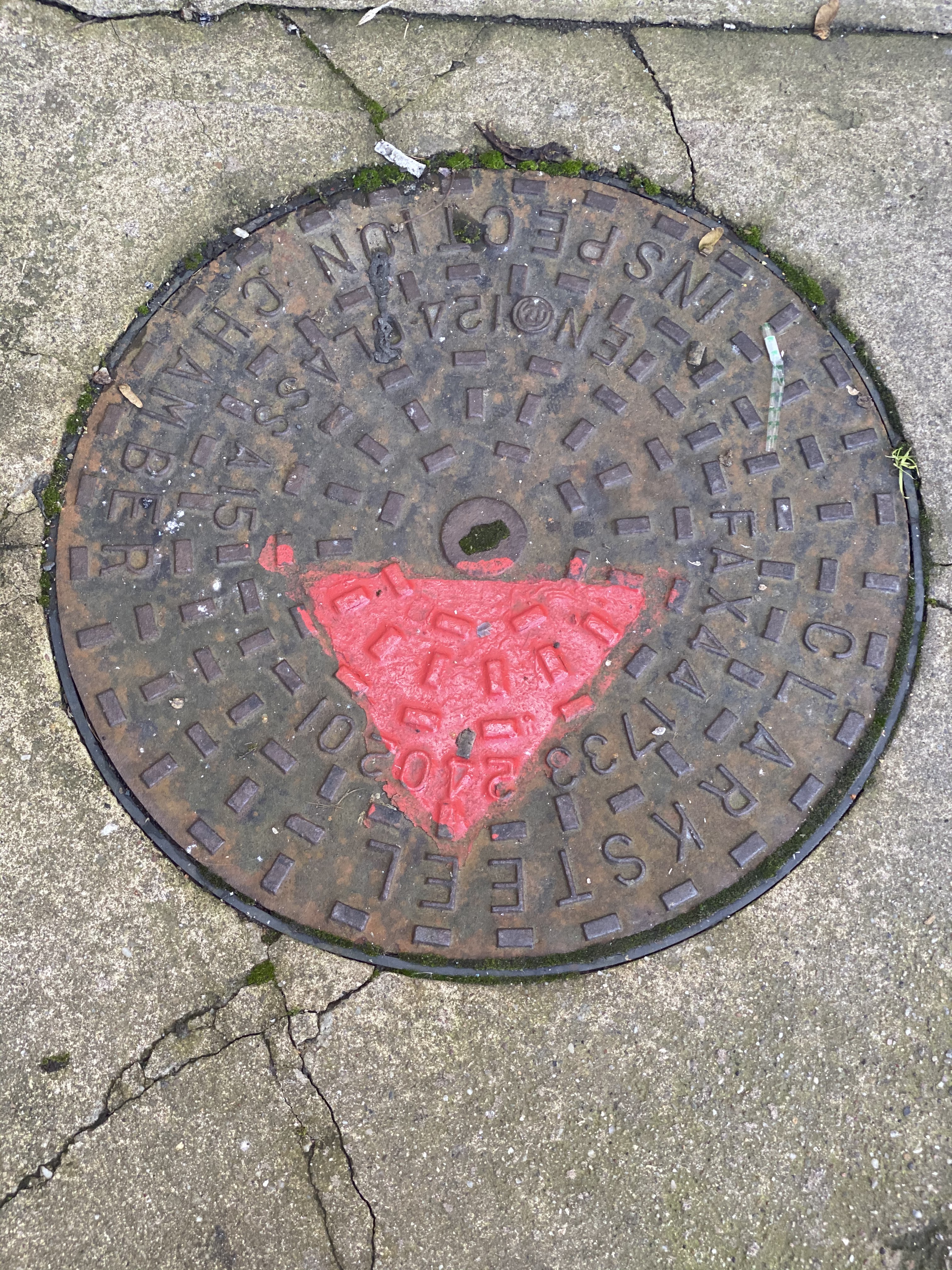
A the place I visit in Telford, facilities have been told to paint arrows indicating direction of flow on manhole covers. Which is a great idea. In theory.

Until you do it on a round cover. Which isn’t keyed. And can be put back in any orientation.

Some of the triangular arrows are also equilateral, and central.

It irritates me every time I notice it, and they’ve just repainted all the arrows…

This journal is moving home. Find out more by clicking here.

from Tumblr https://ift.tt/33l7J0K
via IFTTT

June 18th – for the second time in 12 months, Green Lane has been closed so sewage tankers can relive backed up sewers due to a pip collapse near the Clayhanger Sewage Works.

The road has been impassible to cars as drivers Marshall tankers in relays pumping out effluent and Marshall plant around.

Sadly, the impatience of some drivers was pretty unimpressive. These people have a job to do. Let them get on with it.

December 4th – Returning home, I had to visit a mate in Shire Oak, and on the way noted that the problems with pooling water at Anchor Bridge were bad again, after a fair few yeas of being trouble free.

I also noted that the Anchor pub was looking very welcoming these days, with a well-lit exterior that really makes it look warm, cosy and inviting.

No time today, sadly; maybe another day.

April 17th – The minutiae of drainage engineering are wonderful. I’ve been passing this array of manholes for a couple of weeks now, and noticed that new bars had been installed across the covers. It’s taken me ages to work out what they’re for. It’s not what one may imagine.

Opposite a small, automatic sewer pumping station on Green Lane at Bullings Heath, Walsall Wood, there is the concrete cap to what must be a storm buffer. A storm buffer is a large underground tank that, in time of heavy rainfall, collects drainage water and fills up, storing it and allowing slower discharge into the main network to prevent overload. There are lots around and they work well; you can tell this is one due to the large circular ‘cap’ evident with the access covers.

Recently, bars were mounted over the covers. Initially, I assumed they were to prevent access by drainers – a type of Urban Explorer that goes into sewers and storm drains to explore – but they aren’t actually secure. They’re secured with normal nuts and bolts, not locks. A couple of covers in front (not shown), which I think house pumps of valves – are not so protected.

They have actually been fitted to prevent internal pressure from blowing the access covers out. If the buffer filled to capacity due to a storm event, water pressure would increase against the hatches, and lift them out. That would then expose anyone walking through the subsequent flood liable to fall into a very deep, open manhole.

The bars are therefore a safety feature.

I wonder what has occurred, and where, to make this risk suddenly appreciated?
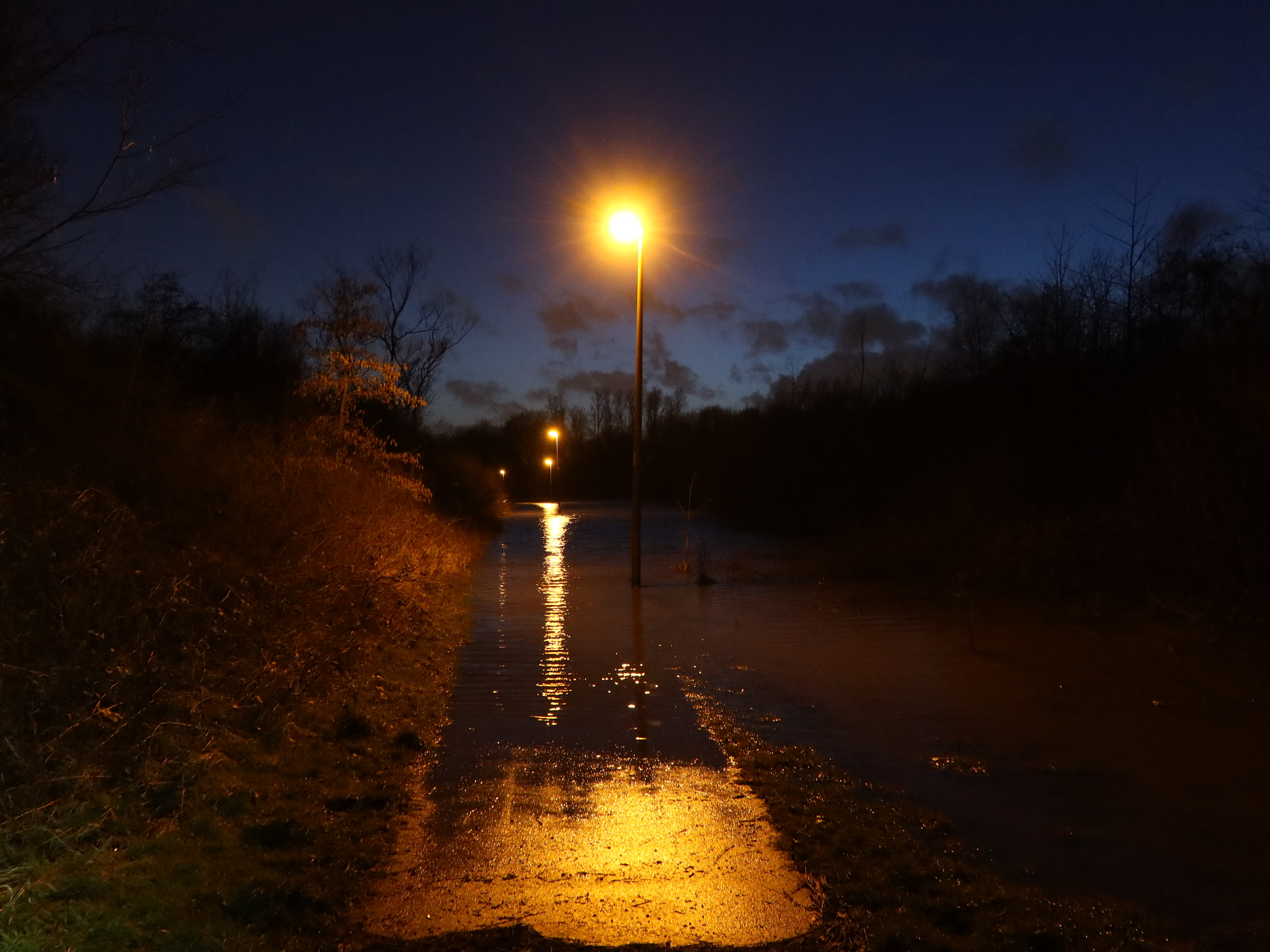
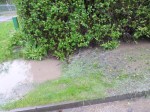
February 17th – There’s water everywhere at the moment, but it’s depressing to note that flooding caused by bad drains is still happening a couple of years after I first noticed it. At the Black Path, near the A5 by Brownhills School, pedestrians and cyclists are forced onto a muddy desire-path around a lake formed because the drain at the bottom of the slope hasn’t been cleaned out for years.

Similarly, and most frustratingly, at the other end of the Black Path, the money recently spent on Hoilland Park clearly didn’t extend to sorting the nonfunctional drains on the tennis court. Like the flooded bowling green at Waslall Wood, this has been ongoing for a couple of years now. A refurbishment has recently taken place here, yet it’s still flooded, and presenting a hazard.

I’d really like someone to look into sorting these problems out – a lot of people complain about them, and it’s getting harder and harder to defend the official position. 

If we can find money to resurface paths, I sure we can spend a little bit sorting the blocked drains.

August 2nd – The destructive power of storm water left it’s mark on Main Street, Stonnall. When we had the heavy rains, this storm drain blew it’s lid and ruptured the tarmac of the road. It’s been re-rolled flat now, but some remarkable damage was done in the downpours of the previous Saturday. Ultimately, I suspect, these drains will have to have their access chambers rebuilt due to the water damage.

It must have been a sight to see when it happened.

September 16th – Silver Waters (oh lord, that’s a preposterous name) is coming on apace. Most of the foundations have now been laid, and a show home has positively sprung up on the patch of wasteland off Silver Street, Brownhills. Fortunately, the doom-mongers predictions about the diggers finding the remains of the swine disease/foot and mouth cull from Swingbridge Farm in the 1960s have been unfounded (not surprising, really, as the pits for that were dug adjacent to the farm and are now lying beneath public open space).

I must say, those are massive drains, there. They seem a bit excessive for a relatively small number of dwellings. Wonder what the reason for that is?

April 27th – Prompted by what, I don’t know, but during the day several people reported that they’d seen a gully cleaner on the Lichfield Road at Sandhills. Since I’d been complaining about the state of the drains here for ages, I thought I’d check out the situation. Sure enough, about 60% of the drains are now flowing freely, with one flowing in reverse (clearly a blockage in the intermediate culvert). The worst ones were left untouched, as I guess they need the solid silt removing by some other means. The road had much less surface water, although it still wasn’t great, it was much better. There appeared, however, to be an issue with the other drains in the verge, which was contributing to the surface water considerably. All in all, not a bad result but it would be nice to see them all cleaned and back to functionality.

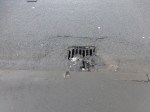
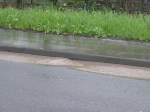
August 30th – The Chester Road between Shire Oak and Stonnall forms quite a steep hill. The sandy soil on this side of the ridge, coupled with the presence of an open demolition site and a landfill access way on the brow of the hill mean that when it rains, sand and detritus is washed into the local drain gullies, most of which are permanently blocked as a result. This one has been in this state for several years, and I think is now beyond recovery. It’s worrying because when it rains, surface water flows down this road like a river as a result, lowering traction, reducing braking and soaking the determined cyclist….