#365daysofbiking Poppy red

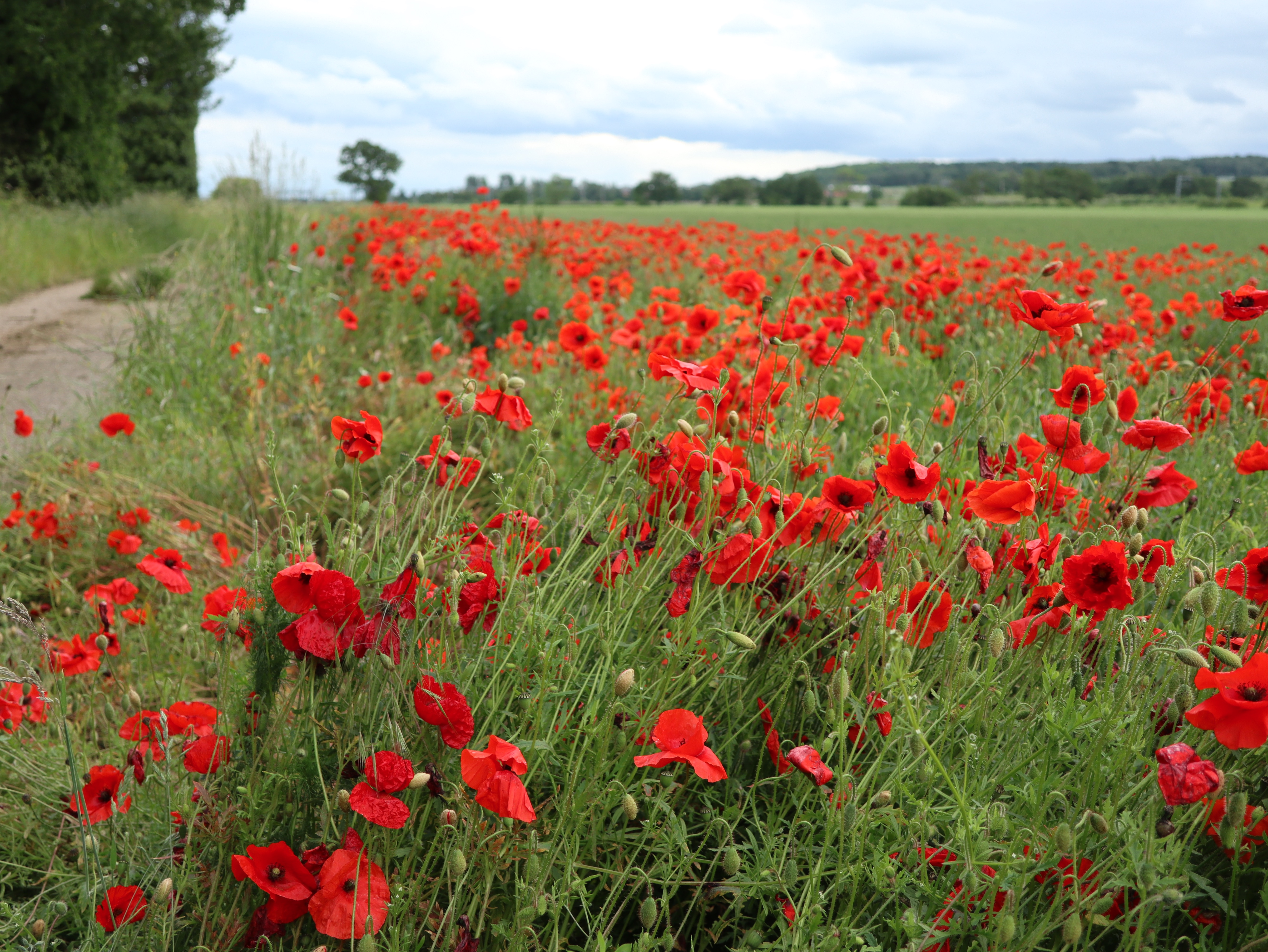
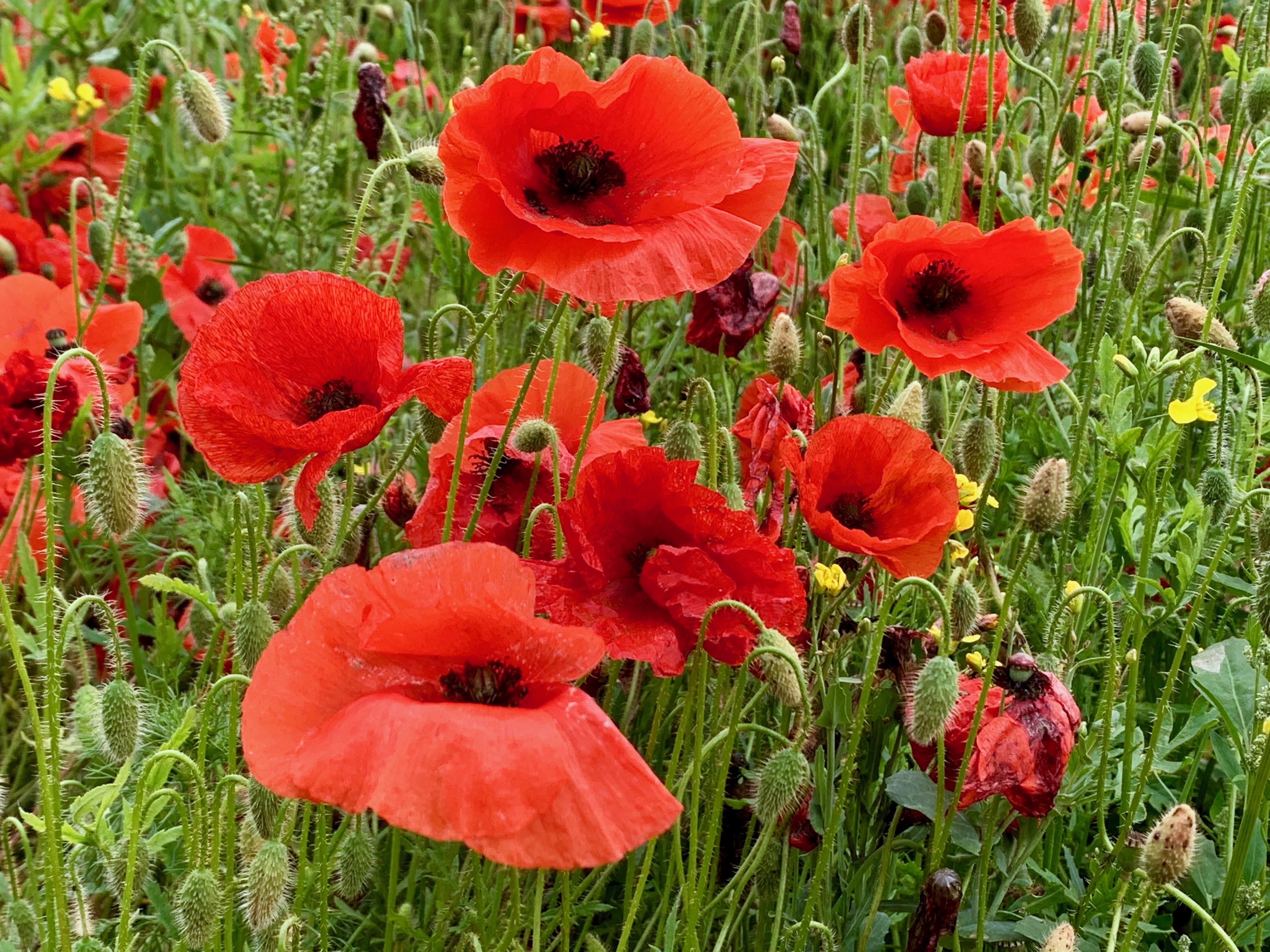
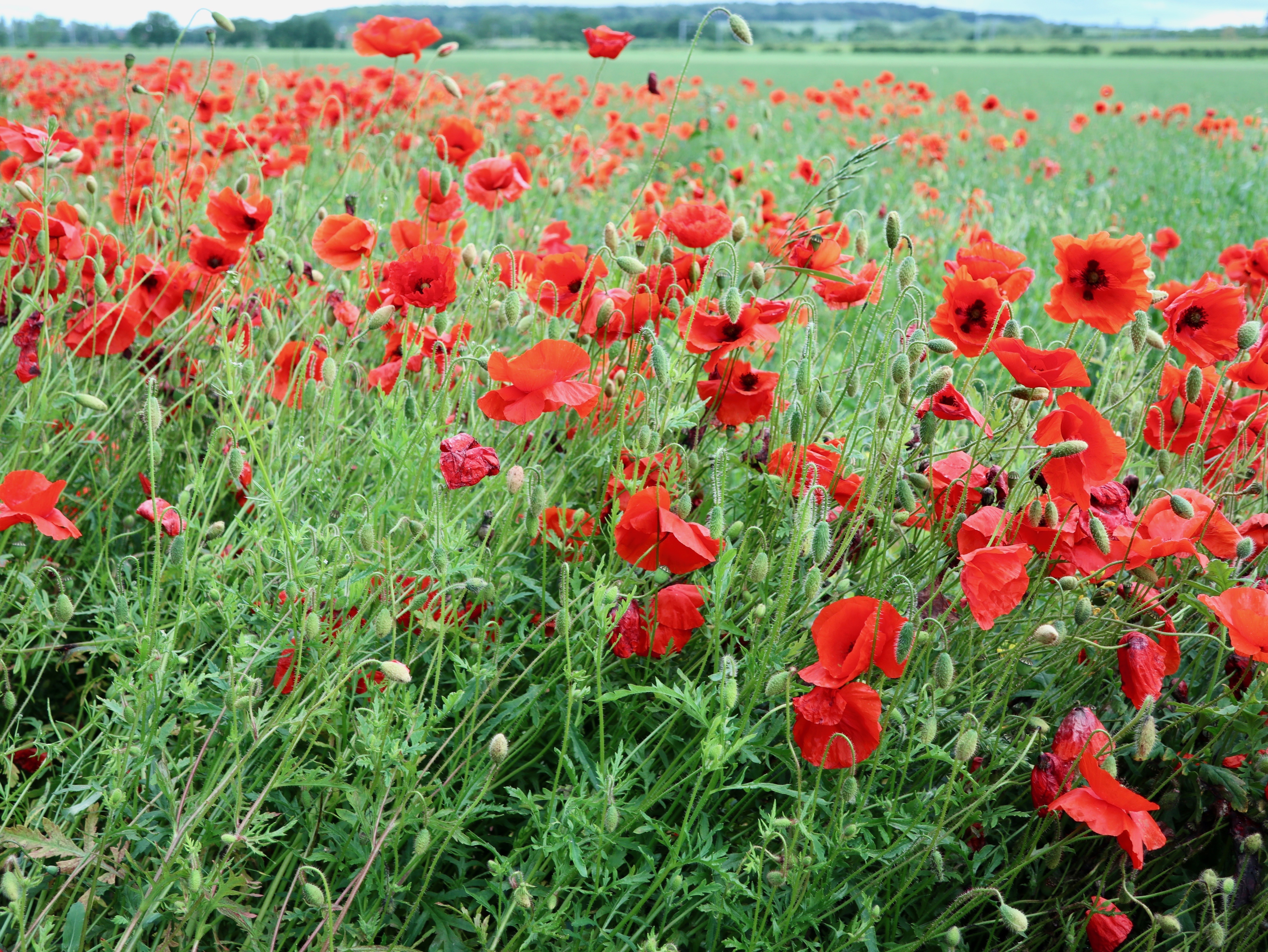
June 16th – Looks like it’s going to be a good year for crop-field poppies: The gorgeous effect where these delightful flowers bloom amongst agricultural crops and present patches or whole fields of red.

At Stubby Leas near Elford, this gorgeous patch of big red flowers in a field of oilseed rape were absolutely delightful and a patch of brightness after the sun had gone in.

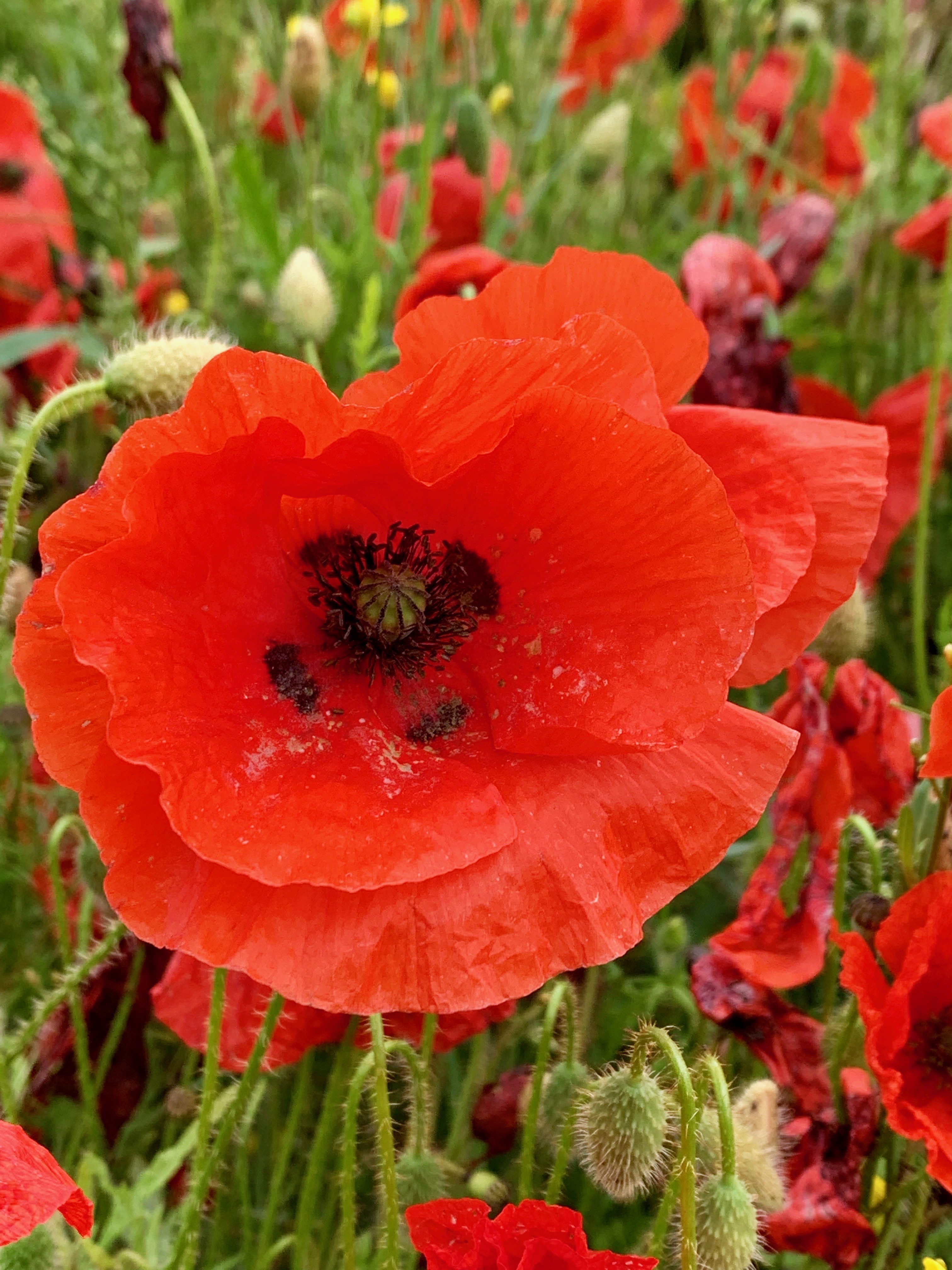
The feathery, fussy and lovely flower was found growing in a ditch, beside the quarry at Sittles, all by itself.

You can’t mention poppies without thinking of the symbolism of Remembrance and they are so beautifully appropriate.

You certainly never forget with these lovely tributes occurring naturally.

This journal is moving home. Find out more by clicking here.

from Tumblr http://bit.ly/2Zx3Eoo
via IFTTT
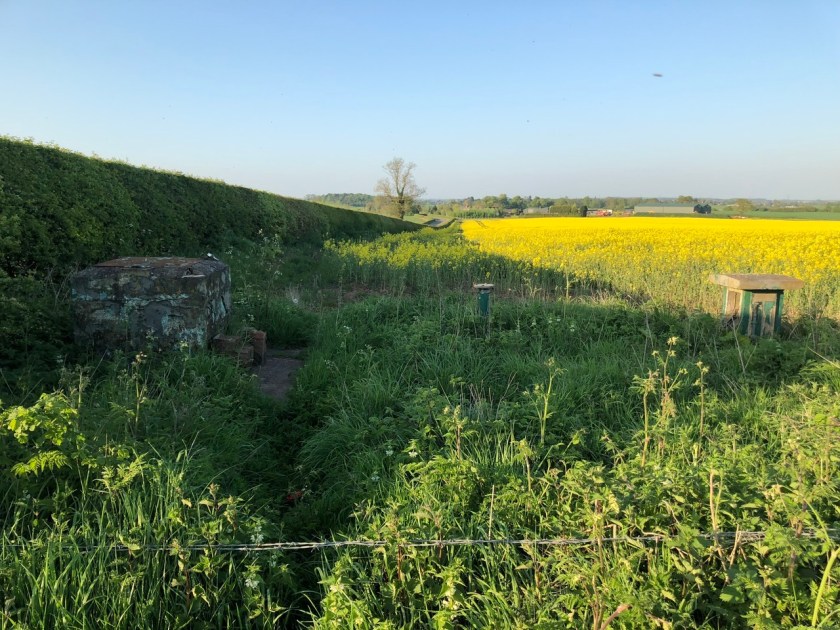
May 6th – Riding back through Haunton to Whittington via Elford, I passed the derelict Royal Observer Corps bunker post at the top of Willow Bottom Lane, just in the corner of the field.

Someone has made a half-hearted attempt to lock it again: It won’t stay locked for long, it never does.

This underground nuclear bunker was intended to house 3 volunteers in the event of nuclear war; they would monitor damage after a blast, and report back on conditions if possible. Their monitoring was on a crude ‘If we survive’ basis, and this bit of Cold War history is obscure and grim.

Since being stood down in the early 90s, these posts – hundreds over the whole country – have been discovered, raided, trashed, demolished and sold; few survive intact and this one itself has been burned out.

But it remains, a grim memorial to a very paranoid time.

You can read more about ROC posts here.

April 7th – Sad to see the decaying relics of a lost period of history I feel we shouldn’t let pass unrecorded. The old ROC post at Elford is in a sorry state. Open, vandalised, robbed. Once the pride of the volunteers who would man it in event of a nuclear conflict, it’s just now a lump of subterranean concrete and metal that nobody knows what to do with.

In similarly reduced circumstances but in better condition, the microwave relay tower at No Mans Heath is looking bare now. When I was younger, this unmarked, unacknowledged communications installation was bristling with horn antenna, dishes and drums; now it carries very little. A few telemetry and mobile data links, and that’s it. 

In terms of engineering complexity, the framework of the tower is hugely intricate, now to no purpose. I suppose, like the ROC post, eventually it will disappear; testament to times dangerous in a different way to our own.

April 5th – I wasn’t terribly well, so with a heavy heart and bad stomach I left in the afternoon for a ride to Lichfield. As often happens, I was on my cyclic antidepressant, and after 30 minutes of riding, felt better. The ride to Lichfield became a ride through Huddlesford, Wetleyhay, Roddige and Croxall. Back to Elford, Whittington and home, it worked out to a nice 45 miles, and I felt loads better for it. It was a gorgeous day.

Early oilseed rape is coming into boom at Elford, where I noticed the stone guy with the club I’d never registered before. The Tame looked peaceful at Whitemoor Haye, and pheasants pottered at field margins. 

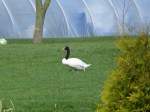
The posh house at Thatchmoor had peacocks and other fancy fowl roaming the lawn; anyone know what the peculiar-looking black and white bird is, please?

A great ride that perked me up no end.

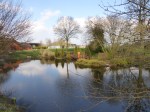
February 16th – It was a gorgeous day, and a reminder of what this country is like when the sun shines properly. With the sun on my back, I rode out at lunchtime to check out the floods of the Tame Valley, around Hopwas, Elford and Croxall. 

I was expecting the Tame to be in flood. This wasn’t the case at all – the Tame had clearly stayed in-channel, and although brisk, the Footherley, Black and Bourne brooks were all below capacity, too; although we’ve had record rainfall, it’s clearly been spaced out enough to avoid the horrific scenes locally that we saw in 2007. 

Of course, other areas have not been so fortunate.

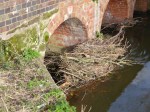
What is evidenced is wind damage. At the hump bridge on Gravelly Lane, Footherley, tree debris blocks one arch, and a whole tree lies similarly before the Elford Bridge. Clearing the detritus from trash screens and under bridges is an essential part of waterway maintenance, and this will have to be removed.

The technicians that do this work have plenty to do in the coming weeks – their work is essential, and I wish them well.

December 29th – I stopped by at Hademore on the way back. This sleepy hamlet was once a cluster of farms, houses and an explosives depot (yes, really) surrounding a level crossing. Now, the crossing has been removed. Some railway cottages were demolished in the upgrade of the line, the old signal box moved to Chasewater, and Hademore found itself riven in two by the railway and bypassed by a loop of horrid road with an equally abhorrent utilitarian flyover.

There is great history here – on the long road from Whittington to Elford the Marquis of Donegal had his house, Fisherwick Park, and the surrounding grounds were designed by Capability Brown. They were all carried to dust, however, when in 1810 the estate fell into the possession of the Howards of Elford, who ploughed up the lawns, demolished the hall and converted it all back to farmland.

A few relics remain, including the big old gateposts that stand here, moved from a site nearby when the railway would have ploughed through them itself. 

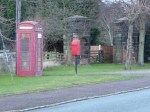
The other relic on this once-busy road is the Post Office K6 red call box; now with it’s phone removed, it still has a working light, shining like a beacon in a shorn hamlet that nobody passes through anymore.

I guess this is just the sadness of things.

May 6th – The English are still rather eccentric in their habits.

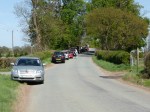
These cars – disgorging a variety of men with step ladders and camera gear – were parked on the approach to the Haselour railway bridge, near Elford, normally a quiet backlane. They were, I was informed, waiting for a couple of old diesel locomotives to come through – Class 20s, apparently, but nobody knew when they were due exactly. This was the cause of much anticipation.

I’ve not seen anything like this before. Bizarre. It takes all sorts of folk to make a world. I hope their locos came, I really do.

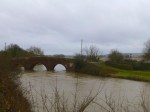
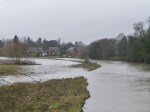
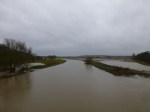
December 26th – The dirty old river Tame that gives it’s name to Tamworth and doubles the Trent by draining Birmingham, was in impressive form yesterday. I’m interested in the flood pattern of this river, which runs in a natural channel from Minworth to Cat Holme, near the National Memorial Arboretum. heading out when the sun was shining, I looped through Lichfield and Whittington as the rains came. At Elford, I surveyed the path of the recent flood, and the houses on The Beck – which are so attractive in summer -looked vulnerable. The old Elford bridge, however, looked as steadfast as ever. Following the river down through Tamhorn, I viewed it again from Hopwas, where it’s natural flood channel can be seen. That shallow berm is more than enough to protect the houses of the village, as to the eastern side, the plain is wide. It’s interesting to note anti-erosion work going on there. 

The waters look brown, angry and filthy, and they currently are. Undoubtedly contaminated with all manner of pollutants, including possibly sewage, it will take a few dry weeks to settle before returning to it’s  clear, glass-like self. 

There’s no avoiding the spirit of the water.

March 25th – Staffordshire was just showing off – there’s no other term for it. It was the first day of British Summer Time and the birds sang, the sun beat down, and I witnessed nature, and the county I love, awaken. The wind was soft and the cycling fast. I took in views that I do every year at this time; everything old was new once again. I felt alive. The world was spinning, and I was part of it. This county gives up it’s secrets slowly, over the course of your life. But you never forget them.