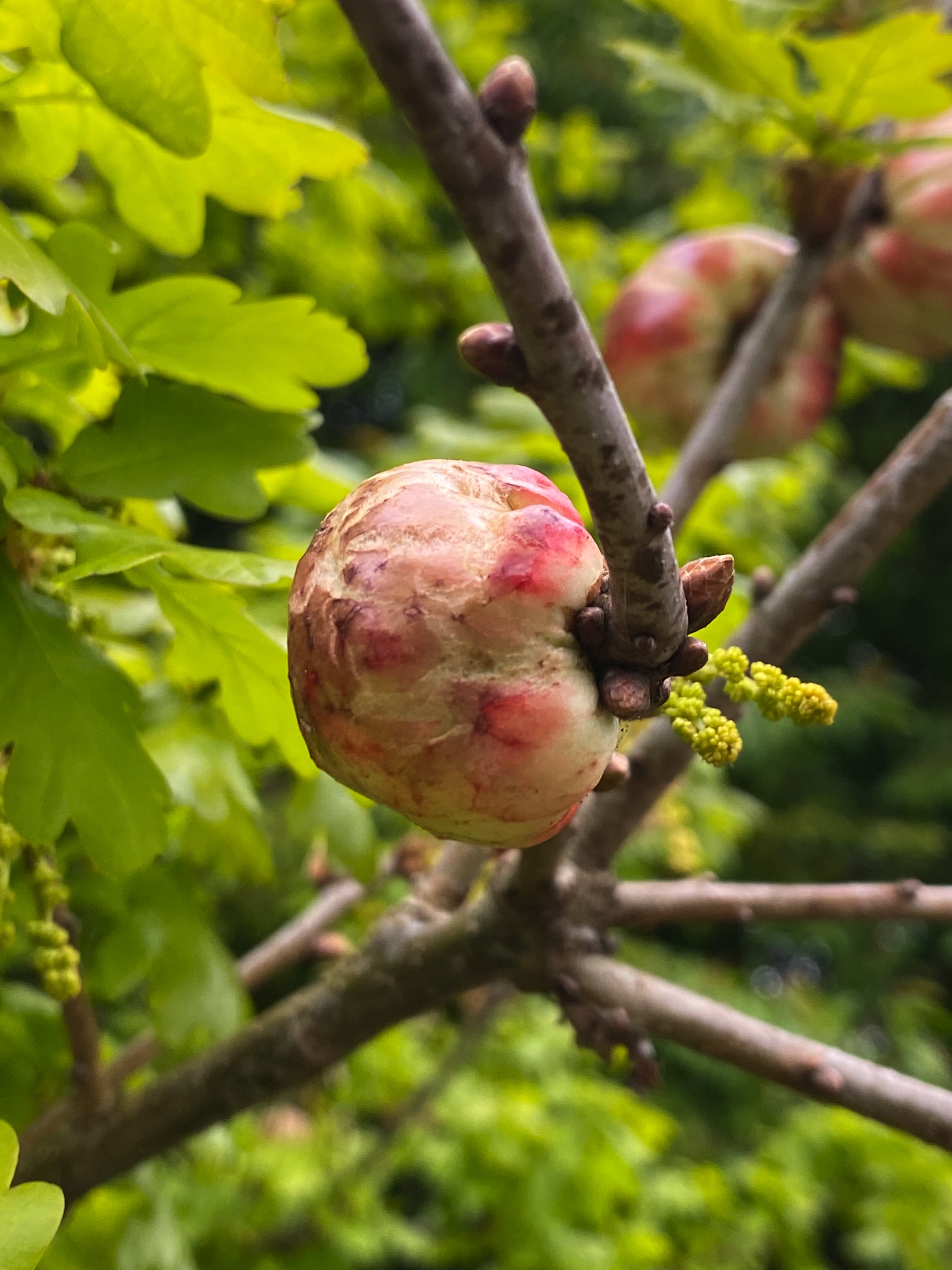
#365daysofbiking How do you like those apples?

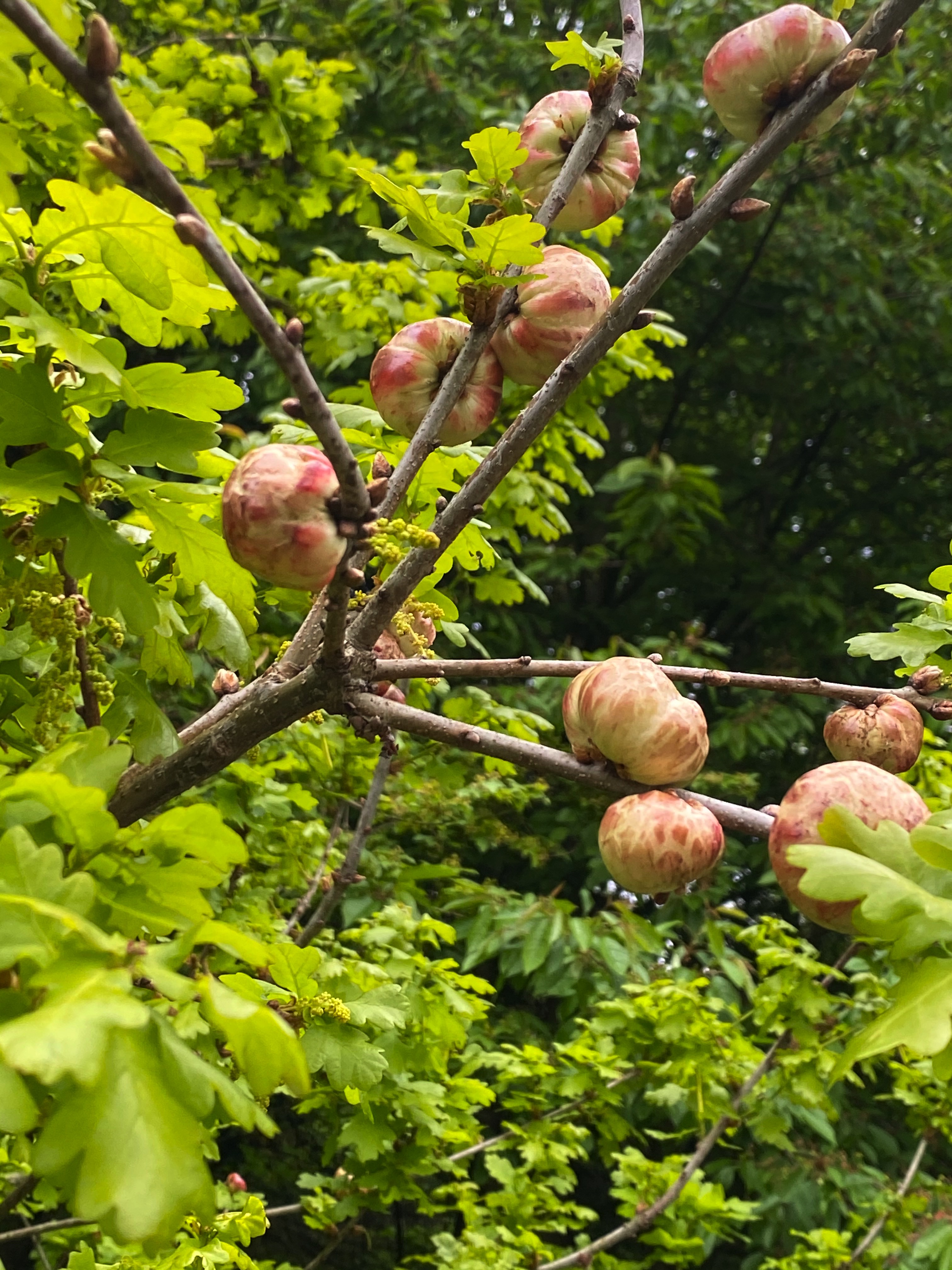
May 3rd – An interesting surprise to note one tree near Clayhanger Common this year has been hit heavily by the gall wasp that causes oak apple galls.

These growths – protective structures grown from corrupted leaf buds – house gall wasp larva that will eat their way out of the gall as the season progresses. The corruption is caused by the parent wasp injecting the larva’s egg into the nascent leaf bud covered in a chemical that causes the cells to deform.

It’s one of the odder evolutionary parasitic actions I’ve ever come across and it fascinates me. And it doesn’t seem to affect the tree at all.

One of the more peculiar aspects is all the oak trees around the one affected are completely untouched. But this one is affected more heavily than any I’ve ever seen in my life. There must be several thousand oak apples.

But why just this one tree? A fascinating thing.

This journal is moving home. Find out more by clicking here.

from Tumblr https://ift.tt/2Tg9KZl
via IFTTT

#365daysofbiking Dark centre

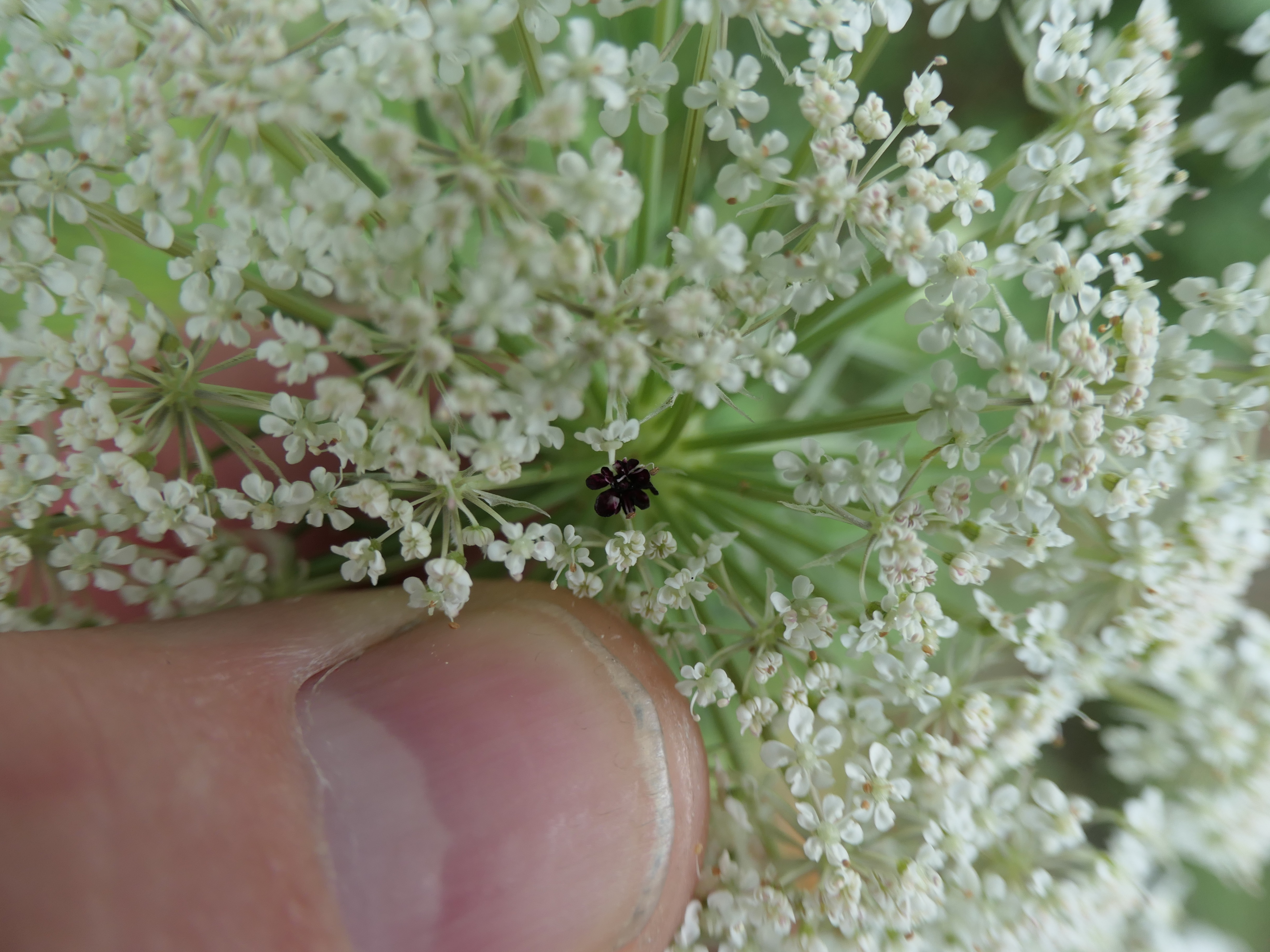
July 18th – Yesterday, I found a plant that I considered may be wild carrot due to the presence of a tiny, dark flower in the centre of it’s otherwise creamy white umbrel. I wrote:

The reason I think this is wild carrot is the presence of a tiny dark flower in the centre of the head to attract insects – I’ll have another look tomorrow to verify this.

That is definitely a tiny, dark purple flower, so this plant is indeed wild carrot. Another baffling, wondrous feature you have to wonder the path towards.

This lovely wildflower was certainly keeping the overflies busy too.

This journal is moving home. Find out more by clicking here.

from Tumblr https://ift.tt/30D7fBG
via IFTTT

#365daysofbiking Unshed

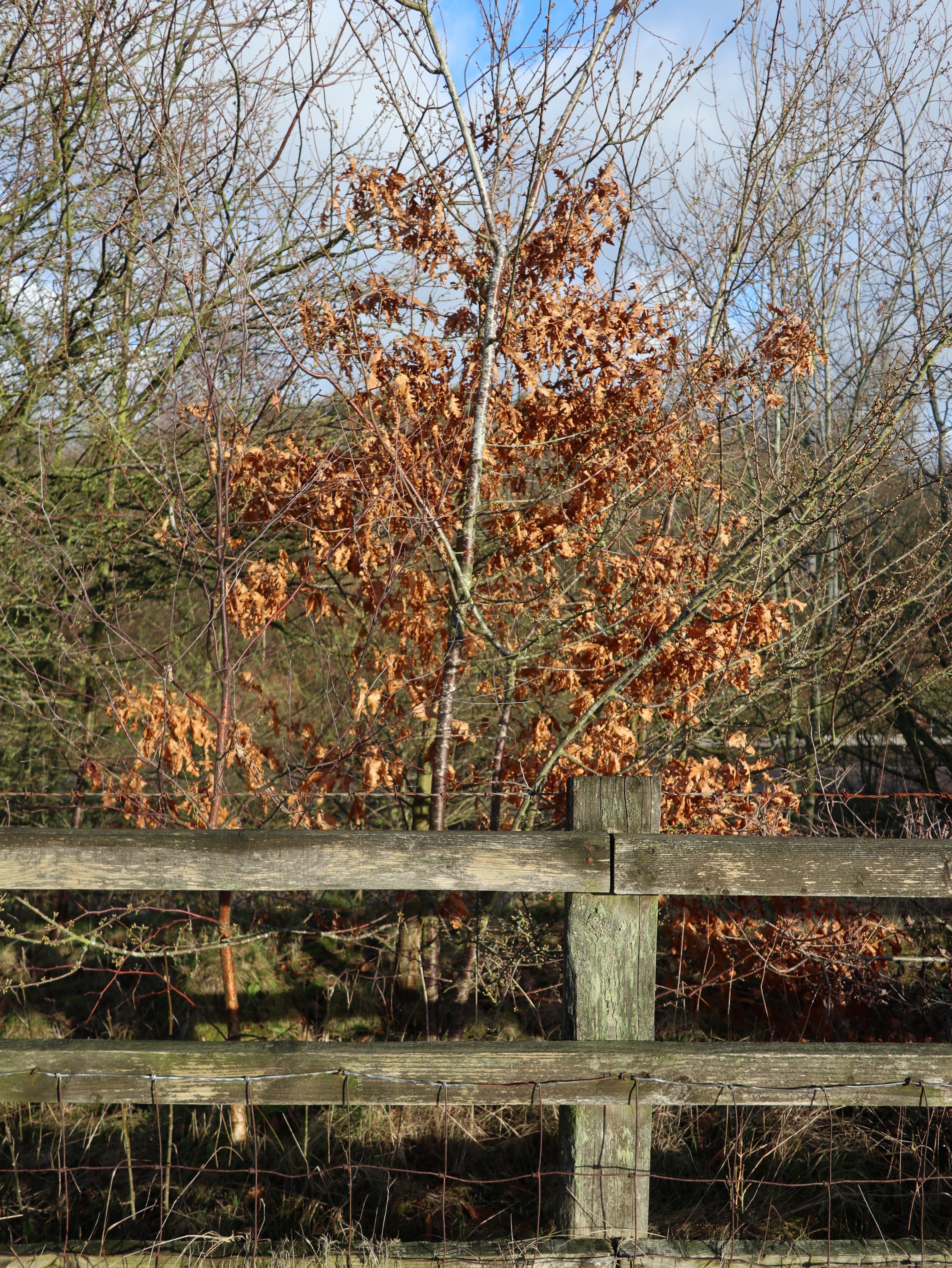
February 4th – I’ve always been puzzled why it might be that some deciduous trees don’t shed their dead leaves in autumn; the summer growth dies and goes brown, but doesn’t drop.

Someone asked the same question on social media over the weekend, so I thought I’d look into it.

The characteristic is called marcescence, and is exhibited mainly by oak, beech and hornbeam in the UK. It’s not clear what the evolutionary purpose of this curious feature is; it could be to shelter leaf buds from browsing animals like deer, and indeed, some oaks are only marcescent on lower boughs. Another theory says that the leaves attached to the beaches have their goodness absorbed back into the tree over winter, which is more efficient than them dropping and relying on conversion from leaf litter.

So I’m not really much wiser, but at least it has a name – and this marcescant oak was showing it’s dead leaves well beside the cycleway in Telford as I passed this morning, making me smile.

This journal is moving home. Please find out more by clicking here.

from Tumblr http://bit.ly/2GfBdFM
via IFTTT

May 15th – I’m a scientific and cultural atheist, as most readers know and I’m a really strong believer in evolution. It’s just the way I am. But even my stoic scientific approach falters sometimes.

Like in the case of coot chicks.

What evolutionary advantage does looking like they really had a moorhen as a father create? And just what made them so ugly that probably even their mums find them a bit grim?

They have cute in shedloads but bless my soul they’re not lookers.