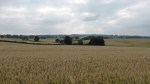
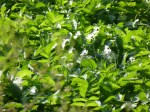
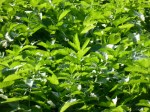
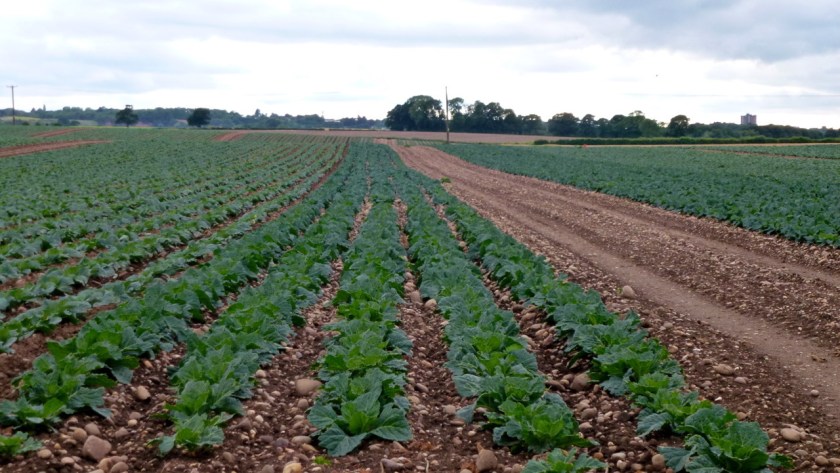
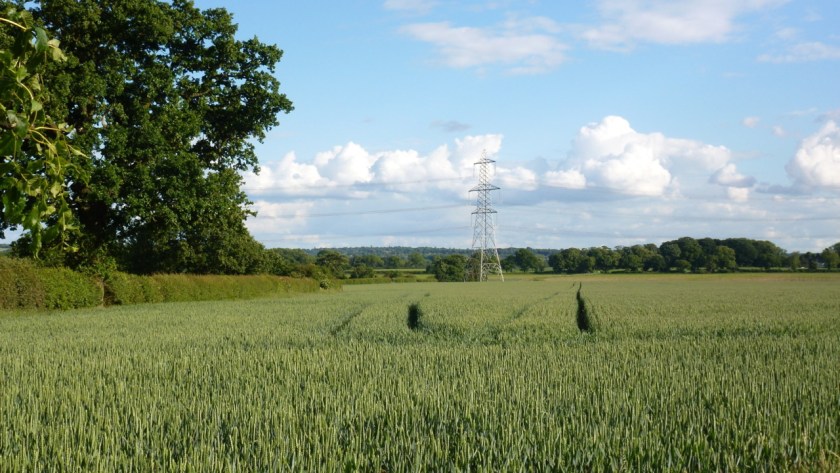
July 8th – I need your help, folks. This crop is the one that started under polythene at Home Farm, Sandhills, in the spring. It seems to require constant attention, and is very lush. It doesn’t look like spuds, or any other vegetable I can think of.

Can anyone ID this for me, please? Cheers.

April 11th – In the fields just outside Shenstone, one might be forgiven for thinking there was a frost. However, it was too warm for that today, and this looks more like a dusting of icing sugar. It’s actually a freshly ploughed field, dusted by nitrate fertiliser. Soon, a crop will be planted here, and the growing will start over again.

The only trouble with dusting fields in this way is that even in still conditions, everything around gets dusted too, like the holly in the hedgerow…

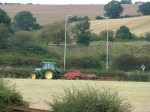
September 15th – I noticed that in the fields between the A5 and the canal, the farmer was baling mown hay this evening. The device behind the tractor rakes up the sun-dried grass, rolls it into mat-like clumps, before compression and baling with twine. Completed bales are ejected back onto the pasture. Unlike straw, which has no nutritional or economic value to speak of, hay is a valuable commodity as it retains the goodness of grass, and becomes expensive during a bad winter.

Hay making is one of the great traditions of the rural summer, and speaks of provision and preparation, as well as the rotation of the season’s wheel. What better place to do it that in pasture in the evening sunshine?
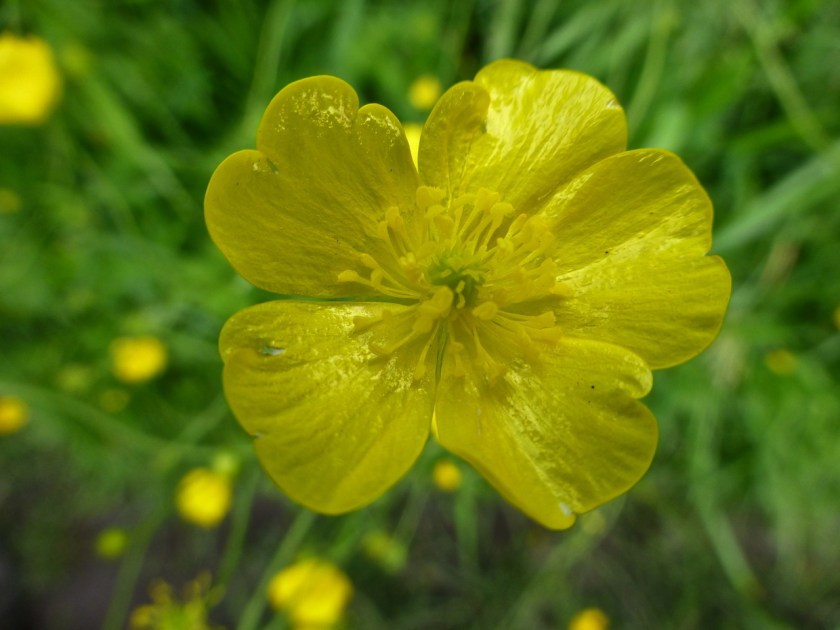
June 18th – The farmer who planted such a fine crop of beans seems very sensitive to wildlife, leaving wide fieldmargins and nic patches of scrub. This benefits the who biodiversity – bugs, birds, animals and flora. Still beautiful, though, however common, is the humble buttercup, here in abundance with cow parsley, dandelions, cornflower and poppy. Gorgeous.

March 14th – A run up the Trent valley to Walton-on-Trent, then back via Barton and Alrewas. A gorgeous afternoon, chilly, but with a wonderful, golden mist. Here at Whitemore Haye, I noticed the swans had descended, and were loafing in the fields. I’ve mentioned it before, but these birds are the bane of farmers lives – beautiful as they are, they’ll decimate fields of young crops, and are breeding at an incredible rate. I pity the poor person who eventually moots the idea of a cull, but I can’t see the current population of birds being sustainable with clutches of 6 or more being the norm. 

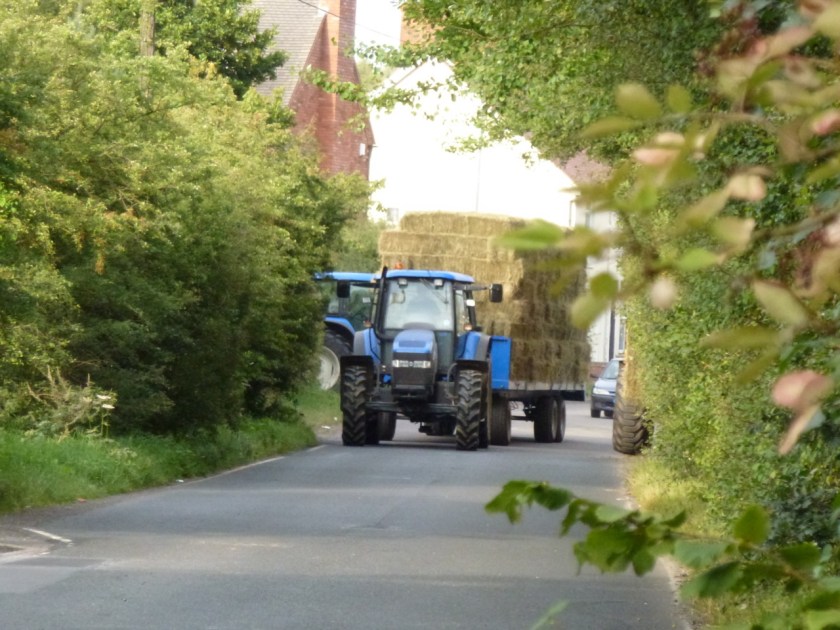
August 17th – as I returned home that evening, I noticed that Green Lane in Walsall Wood was blocked by the farmer moving large trailers of fresh, sweet-scented bales of hay. This activity must have been going on here at this time of year for several centuries, only the automation and vehicles have changed. It reminded me of the advancing of the season, and of the fact that although I live in an urban area, I’m never far from the countryside.

July 18th – I’m embarrassed to admit this, but I saw this relatively small crop near Lynn in Raikes Lane, and am at bit at a loss as to what it is. It looks a bit like cabbage, but isn’t leafy enough. Clearly not beet, or mangles, not tall enough. Can anyone put me out of my misery, please? Whatever it is, it’s surely in rude health…