August 21st – A grey and depressing day with a heavy, punishing wind. On my way home, for a change, I rode over Springhill and Barracks Lane down to the Lichfield Road, and came into Brownhills that way. 

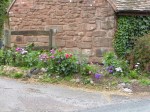
On the crossroads of Barracks Lane and Lichfield Road, what I think must be one of the oldest buildings in Ogley Hay and wider Brownhills; Warrenhouse Farm’s barn.

Now converted into a dwelling, I’m sure parts of this stone and brick structure are very old indeed; the farm here was where the Warren Keeper lived, who kept the rabbits on Ogley Hay for hunting – hence the Warrener’s Arms pub. Another noted resident was William Roberts, who tried to retire here, but found it too quiet and he soon returned to the bright lights and bustle of Brownhills.

These days, Warrenhouse is no longer a farm; it is private houses and a noted veterinary surgery, but this was the closest building to the location of the Staffordshire Hoard, found only a couple of hundred metres away, and is therefore evidence of a much earlier time, before Brownhills itself.

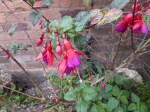
The converted barn has some lovely flowerbeds running around it too; such a delight on a grey day. 

August 17th – If you listen to many opinions in these parts, Brownhills is ugly, a lost cause; everything is broken and we’re descending into oblivion.

But if you open your eyes, and look around, it’s not quite like that.

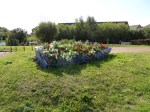
How I’ve managed to not notice the old wooden rowing boat filled with beautiful flowers before, I’ll never know. It’s placed wonderfully by the Canoe and Outdoor Centre on Silver Street, and captivated me. My compliments to whoever thought of it and planted it. It’s gorgeous.

Compliments are also due to the local schoolkids who planted sunflowers on the open space between the High Street and Short Street; they are  absolutely beautiful, and can’t but make you smile.

Brownhills has more than 99 problems. But a lack of beauty isn’t one of them, oddly enough.

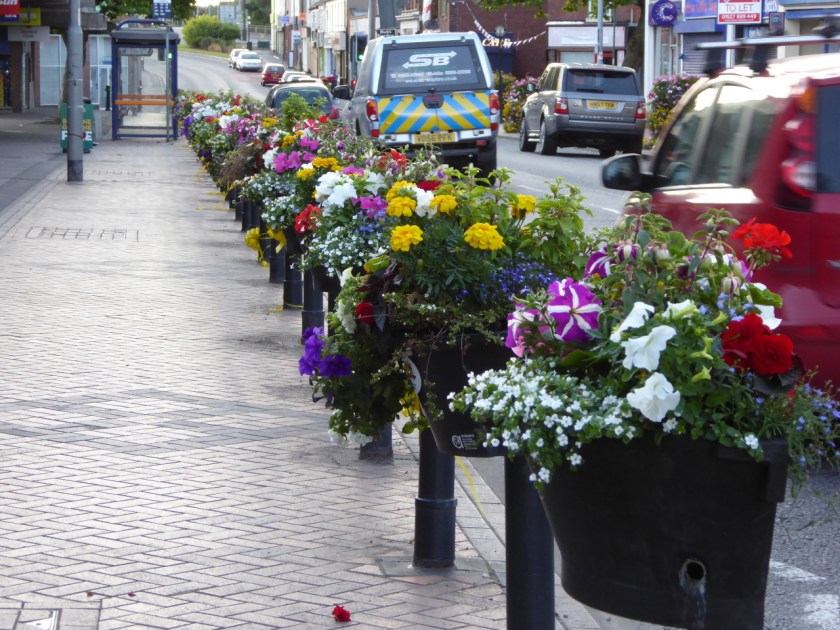
July 27th – Brownhills High Street.

Next time you hear someone dismiss this place as a dump, a ghost town or worse, think of this.

Local traders have worked hard – with the Town Centre Partnership – to create the wonderful flower displays we have. Just look at that – it’s gorgeous.

It’s a tribute to the hard work and community spirit of the traders who’ve planted and kept watering the baskets, tubs and planters.

The place may have problems, but these people had a go, and made something beautiful. 

A wonderful thing on a lovely summer evening. Thank you.

July 13th – A vitally important mission begins.

These are the seed heads of my favourite flowers, cowslips, and the wee dots the seeds themselves. For the next few weeks, I’ll potter around anywhere I saw cowslips in spring, looking for the seeding plant. I’ll gently collect a little pot of seeds, and then spread them on land where it would be nice to see some in spring (praying I don’t get pulled by the coppers in the meantime).

It’s how most of the cowslips got on Clayhanger Common in the first place. I’m rather proud of that.

Guerilla planting is a random act of natural kindness. Do it now.

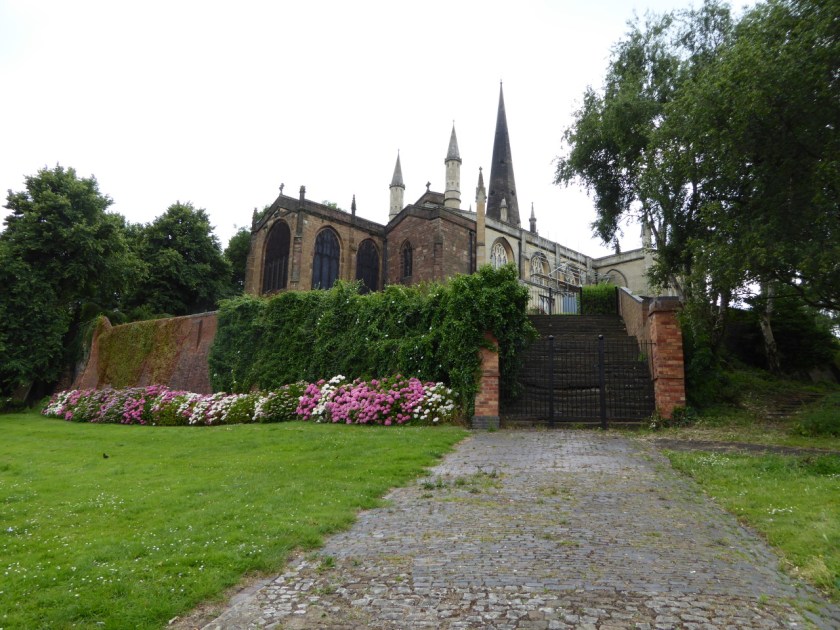
July 11th – My return via Walsall for some shopping took me up through Yewtree, Delves, Highgate and over Church Hill. Rounding the corner on the cycleway, at the foot of the old, disused steps down to The Ditch (that’s the name of a place, honest), a fantastic display of flowers.

What a splendid ride for a Friday at the end of a very, very hard week.

July 6th – I wasn’t in the mood to ride much – I had lots of work to do, so just popped up to Chasewater to check out the Craft & Farmers market, which again, disappointed. I shan’t bother with that again.

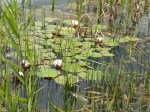
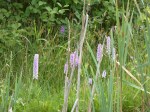
I spun out for a circuit around the park, and was taken by the buddleia, water lilies and various marsh orchids, which out here, unlike the ones near the canal, hadn’t gone over yet.

I stated last week that the flowering time was passing; but I was wrong. Things are still flowering well, just in different ways and different places.

This really is a most excellent summer.

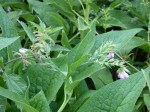
June 25th – As the summer winds on, the next stage of the season begins; moving from the flowering, to the fruiting and seeding. In Walsall Wood’s Green Lane, there’s a patch of comfrey that’s going to seed, and I was intrigued by the way it forms from the flowers, another almost prehistoric-looking plant. Intertwined with it, the white bloom of mid and late summer, bindweed.

Soon, blackberries will be forming on the brambles, and there will be hips, haws and berries ripening aplenty, and time for a new palette of colours; but at the moment we’re passing from the purple into the white for a while.

The advancing summer makes me a little sad, but the weather is fine ad warm, and everything looks splendid. I’m in my element, to be honest.

June 15th – The flora was also showing well, and the blackberry and dewberry brambles are flowering intensely this year – so if we get a nice few days with plenty of bees and bugs, there should be another ample crop of blackberries this autumn. The lovely, paper-white flowers are rarely studied closely, such is their proliferation, but they are most delicate, attractive things.

I was also pleased to note that following the great marsh orchid massacre – where the plants I had been lovingly watching were mown off by a C&RT grass cutting crew a week or so ago – another abundant patch seems to be growing on the slope down to the new pond at Clayhanger.

I love those orchids. I never saw anything like them here when I was younger, and cherish them as a sign of how much better the ecology generally is around here these days.

June 5th – A better day. There was warm sun and it was dry with a keen wind. I had to nip down to King’s Hill near Darlaston, and passed the derelict, abandoned Methodist Church. I haven’t been this way much of late, and since my last look at this architectural stunner, it has continued to decay gracefully. The building has been sold, and permission granted to convert it into apartments, but work has not commenced yet.

At least we’re not losing the building.

What fascinated me today was the way nature is reclaiming the place. When the Church still held it, although unused, volunteers used to tend the grounds. Now, it’s run wild, and a riot of begonias, roses and shrubs are taking over. 

It’s sad and beautiful simultaneously.