March 18th – A brief run out on a wolfish, windy afternoon had me glared at by a resident of… Catshill. 

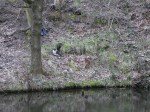
This grey and white, somewhat scornful fellow was watching me contemptuously from the far bank of the canal, just past the Anchor pub. I’ve never seen in before, but from the small grey dot on his nose to the subtle striped tail, he’s clearly a lovely cat.

I noticed he seems to be sitting at the mouth of a fox set, too. Wonder if the resident was inside, wishing the cat would bugger off?

December 29th – I took a ride up to Park Lime Pits where I hadn’t been for ages as I thought the frozen towpaths might be easier to ride than the usual winter quagmire.

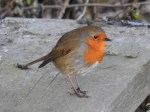
Sadly, the profusion of wildlife evident the day before was largely in hiding, although I did fleetingly see a large male fox patrolling his manor. The robins, however, were performing well.

This is a lovely spot that desperately needs the canal towpaths improving. Perhaps some of the money spent upgrading the ones in east Walsall unnecessarily could be directed here instead?

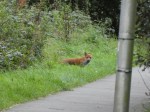
September 24th – Heading for Chasewater from Brownhills along the canal, my recovery ride was slow and plodding, but if it had not been, I might not have looked right down the Spot Path on Clayhanger Common and seen the old dog fox annoyed at my disturbing his duck hunting activities.

One ear flat in irritation and an expression of utter contempt, that fox never changes and we’re old familiars. 

Rare to be able to catch a photo – despite his age he’s nimble and still quick on his feet.

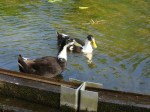
August 4th – The bachelor boys – the mongrel domestic/mallard ducks that live on the canal in Walsall Wood –  are sadly down to two now from the original four. Probably lost to age or a fox, it’s always sad to see such close groups decrease in number, and their loss was in the summer, coincidentally at the same time as the local fox cubs would have been learning to hunt.

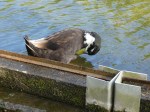
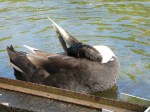
I spotted the two remaining ducks on the canal by the overflow at Clayhanger Bridge, loafing and preening. The two were relaxed and content in each other’s company and for all the world were like an old married couple.

It’s hard not to love the ducks, although mother nature seems to consider them very expendable.

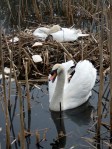
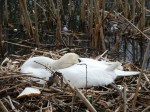
April 12th – On the Walsall Canal where the Anson Brach used to spur off between Bentley Bridge and Bentley Mill Way Aqueduct, the swans who I think nested in the abandoned basin last year are nesting anew. 

Sadly, the nest isn’t well protected this year and I think an enterprising fox or heron – who fish here regularly – may end up with cygnet tea.

That’s if the phantom bread-flinger does’t chock the wee ones – sadly, the message that bread isn’t good for waterfowl doesn’t seem to be reaching all quarters. I know these folk mean well, but it’s not good for them. 

Please, if you feed them, seed or greens instead.

October 3rd – A short recovery ride over to Clayhanger Marsh and Ryders Mere to keep the legs going and get some fresh air. The afternoon was very grey, and it’s on days like this I often used to see the gnarled old dog fox who hunted here. I think he must have passed away by now, but I thought of him as I surveyed the grey, still waters.

Me and that fox knew each other – we were familiars. As far as I was concerned, he was just another resident of the area, using the facilities available. To him, I was tolerable company as long as I kept silent, made no sudden movements and minded my own business.

Ah well, I daresay one or two of his extended family were watching me from the thickets nearby as I remembered him.

April 19th – Sometimes it’s necessary to point out the less pleasant side of nature. Sorry.

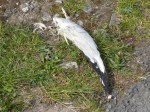
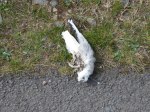
I occasionally get messages and mail from people worried, because they’ve seen pairs of almost intact bird wings at Chasewater or near other places where water bird congregate. The finders of these grisly leftovers sometimes think these are signs of human cruelty.

Relax, they aren’t – but they are a sign that nature is red in tooth an claw. Foxes and avian predators will take birds who roost close to the edge of the lake, or in the case of raptors, take birds on the surface – gulls, ducks, small geese, even swans on occasion in the case of Reynard if he’s hungry and brave enough. 

There isn’t much meat in the wings, which are mostly bone, skin, feather and sinew, so they are discarded as being not worth the effort. Experienced predators cut them off cleanly, and one often finds them discarded. This pair, I think maybe from a gull, were near the dam on Pool Road. I’ve seen 7 pairs so far this year.

Nature is horrid sometimes.

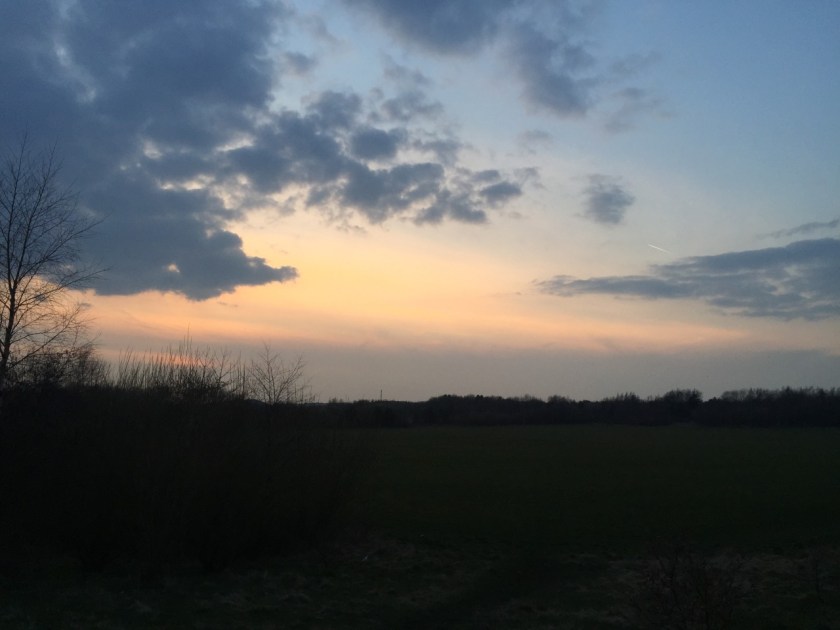
March 25th – As it happened, I never got to a place where the sunset was that good today, which was probably just as well as I was reduced to the phone camera with the main one flat. As I rode down the canal to central Brownhills, I saw a large dog fox run up the bank onto Clayhanger Common. Grabbing the phone, I crested the bank looking for a fox picture to go with yesterday’s heron.

Sadly, he disappeared into the thicket. 

The sky wasn’t too bad though, so I took a quick picture, and headed home.

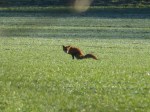
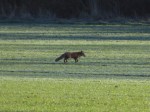
January 19th – Again, apologies for the long-range, poor photos, but I spotted this charming chap on Jockey Meadows. He was embarrassed as I caught him going about his ablutions, but he mooched around the meadow a little before sloping off into the hedgerow. Such a fit, lithe-looking chap; there are few animals more impressive in the English countryside than a fox in his prime.

A great sight on a nippy morning.

September 17th – Recently on Facebook there was some concern over a swan that was found dead in Pelsall. The bird had been decapitated, and many were accusing vandals. The truth is less controversial, but sadly a little more gory.

The swan was, in all probability, killed by a fox. Anyone who’s seen the aftermath of a fox in a henhouse will know that Reynard goes for the neck.

At this time of year, this year’s cubs are driven out of the den by their parents to seek their own territories – that’s why we often see foxes sleeping on roofs and in quiet but open spots in late summer. Quite frankly, these canines are homeless.

The young, inexperienced adolescents are forced to fend for themselves – that includes finding food – and many will attempt kills that are well above them. So it probably was with the Pelsall swan.

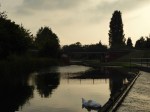
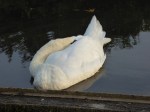
Swans are not bright birds. As I came home along the canal, I spotted this usually aggressive lone bird fast asleep, drifting on the water. It had floated into the bank around the overflow, at Clayhanger Bridge, and the thicket nearby is usually host to a den of Brer Fox.

It would be fairly trivial for the fox to sneak up to the bird unseen, and go straight for the neck, which is about the only bit the fox can attack without the risk of being ferociously pecked. The kill, to an experienced fox, would be fast and efficient and lead to food for a week or more.

The fox that attacked the Pelsall bird was probably scared off, or attacked by other swans roused by the commotion, leaving their kill behind.

I couldn’t knowingly leave this swan to a similar fate, so after taking a few pictures, I gently woke it by speaking. I was greeted by wing-flapping, honking and hissing, and the white bird swam away from me.

Job done.