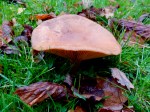
August 2nd – Another late summer and autumn bounty is fungi. A prime hunting ground for edible treats like these lovely field mushrooms and puffballs are the verges of industrial estates. Usually undisturbed, fungi prosper quietly here, and tend to go unstomped by mischievous kids. 

From now until late autumn I will carry a cotton bag and knife to perform an impromptu harvest of anything tasty that would otherwise go unplucked.

This time of year does have some excellent things to commend it.
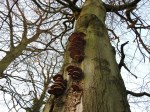
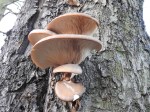
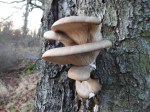
December 29th – At the lime pits themselves, some excellent bracket fungus on a dying tree. It looks like a classic pleurotus to me – oyster fungus, which I believe to be edible (though don’t take my word for it!).

I was surprised to see such a healthy, fresh seeming display in cold weather. Is this normal?

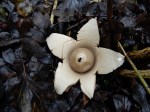
December 10th – Whilst in Brownhills checking out the Christmas Market event, I popped over to Clayhanger Common to check out the rosy earthstar colony growing there.

These remain the most odd, fascinating fungi I have ever seen, and despite my initial concern, they are showing beautifully this year.

When ripe, the central sphere crumbles and the spores spread on the wind. 

So pleased to find what is a relatively rare fungi locally.

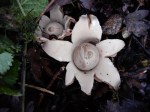
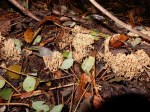
December 9th – Near the canal at Moxley, Darlaston, I found these fascinating fungi – I’d stopped to undertake a quick mechanical adjustment, and had I not been crouched fiddling with the bike, I’d never have seen the rosy earthstars and what I assume from guides is some kind of pterula multifida living well in the under hedge leaf litter.

It just goes to show what wonders go unseen in our everyday environment.

November 28th – Pleased to note the return this year of the sunny rosy earthstar fungus to Clayhanger Common.

They aren’t looking too good at the moment – they need more damp – but these uncommon fungi have plenty of young ones developing and will look like no other fungi I’ve seen when fully developed.

I was hoping last year’s find wasn’t a one off. I’m  chuffed to bits.

I watch with interest.

November 16th – Not sure what this large fungus actually is, but it was handsome and glistening with collected dew and rainwater as I passed through Victoria Park in Darlaston in the early morning.

To my sadness, the fungi haven’t been terribly prolific this year – some did explode into life late, like the fly agaric, but this year I’ve hardly seen any puffballs, very few shaggy ink caps and the brackets seem well down too.

I do hope the unusually dry autumn hasn’t scuppered chances of seeing rosy earthstars at Clayhanger again… 

October 11th – Oh boy. Not more that a few days ago, I was bemoaning the lack of decent fungus this year, and was stunned to find a sing fly agaric toadstool in the usual spot near Chasewater, then this.

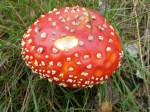
I was shotting along the canal through Pleck of all places, and as I rode a red flash on top of the canal cutting embankment caught my eye. Scrambling up there to investigate, I saw found one of the best crops of these cute red and white spotted fungi I’ve ever seen.

Large, profuse and very beautiful, these are in the heart of formerly industrial, urban Walsall, in a place few humans would ever think to go. A really wonderful find.

October 9th – A late afternoon ride up to Cannock Chase, and like the day before, disappointing as fine weather had been promised, which wasn’t forthcoming when I was out and about – it was yet another grey day.

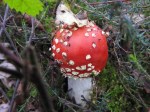
Brightness, however was evident in the first fly agaric toadstool of the season I found on the canal bank near Wharf Lane in Brownhills. This was a perfect young specimen, bright red and round with lots of white spots. As I took photos, I felt myself being watched.

Stripes, observing me curiously from some decking on the opposite bank could see what I was up to – but wasn’t impressed at all.

That’s one lovely cat.

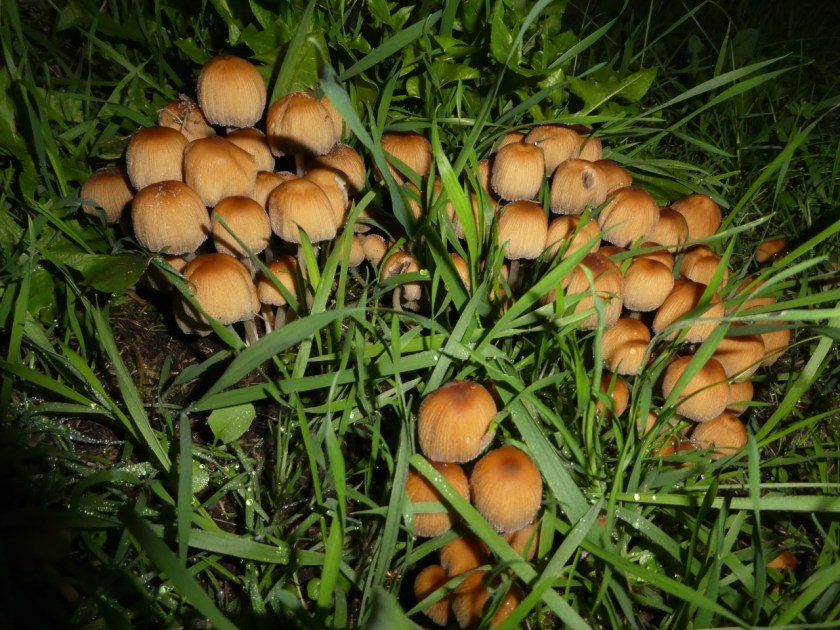
October 3rd – I had somewhere to call on the way back, and returned in darkness, but I couldn’t resist checking up the little forest of glistening ink caps on the edge of Clayhanger Common. 

Grown well, these curious toadstools have peaked now and will soon decay to mush.

I have no idea what triggers these busy, short-lived clumps but they’re fascinating to study.

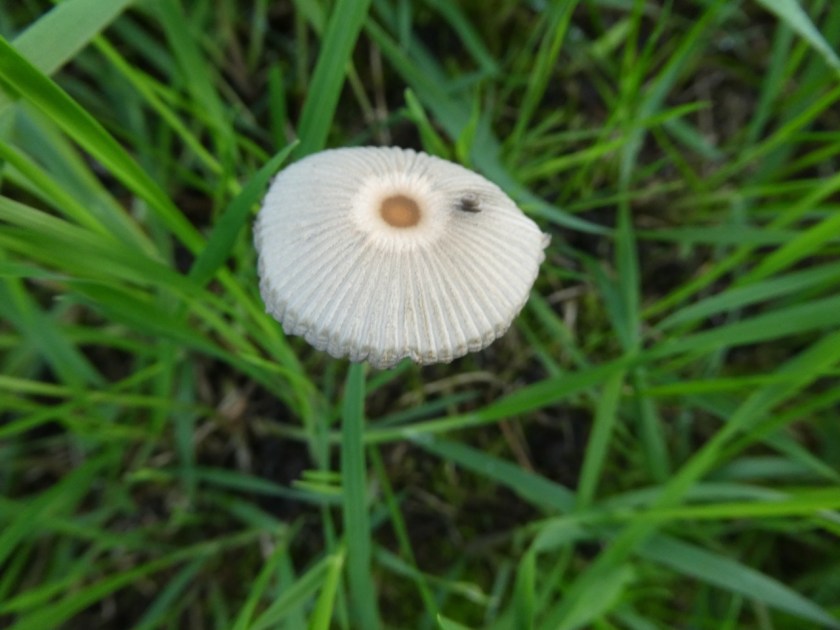
September 27th – I was lucky to spot this Japanese parasol toadstool fully open on Clayhanger Common on my way to work. They are generally so short lived that actually catching one fully open is quite hard to do.

When open, you can see just how these delicate little fungi got their name – fragile, with a pleated cap no bigger than a 10p piece, they’re one of my favourites.

Twelve hours later it will have disintegrated to nothing.