August 13th – More oak wasp galls, which I’ve gone all out to find this year for no other reason than they fascinate me.

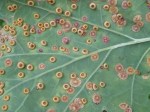
On a small sapling by the canalside track at Hopwas, hundreds of thousands of almost annular, ring-like growths on the leaves, looking maybe like fungus or some odd egg. These are the delightfully named common spangle gall for the flat ones, and silk button galls for the rounder, more sharply defined ones.

These are all created by the same mechanism – a small wasp injects an egg into the leaf, and a chemical coating the egg disrupts the plant DNA to grow the gall, which leaves a light patch on the upper surface of the leaf where nutrients have been leeched away by the larva growing underneath.

I’m not sure why galls like this captivate me so much but they are absolutely fascinating.

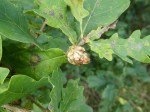
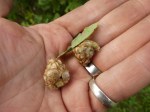
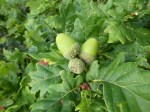
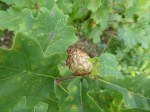
August 10th – Oak galls continue to fascinate, and on this tree in Victoria Park, Darlaston, there’s quite a display of knopper galls, the first I’ve seen this year.

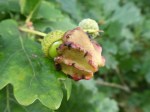
Like other oak parasites, the knopper wasp lays eggs in it’s host, secreted in a chemical that corrupts the cellular DNA of the host plant matter causing the gall too grow. In this case, the target is the acorn itself, and on this tree, one can see some acorns blighted by two such galls.

As with others, the egg hatches and ithe wasp larva eats the gall and grows safe in it’s corrupted acorn, before boring it’s way out when mature.

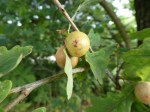
Also on this tree, the more conventional wasp gall – the common ‘oak apple’ of folklore, a spherical gall grown the same way.

These galls don’t harm the host, but do reduce the functional acorn crop. I’d love to know just why the oak is targeted so particularly with the and not so much other trees…

August 1st – Also ripening well are the rosehips, the seed fruit of the various types of wild and feral rose that grow so beautifully by the towpaths and edge lands all over urban Britain. Sweet and juicy, they are sought after by birds, mammals and foragers alike.

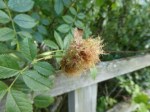
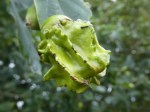
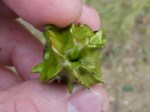
Less common and indeed, quite a find, is the odd, hairy wasp gall growing on the same bush. This is the wonderfully named robins pincushion gall, or sometimes just moss gall.

Like oak galls, this curious mutation forms from a leaf bud on the rose stem injected with eggs and a DNA corrupting chemical by a tiny wasp. The chemical causes the leaf bud to mutate into this odd growth instead, and at the heart of the woolly mass is a solid core, in which the eggs hatch, and the larvae eat their way out when ready.

the gall doesn’t harm the rose particularly and is just another fascinating example of the ingenuity of evolution, with host and parasite developing together for thousands of years.

July 16th – I seem to have it with a cold. I’ve been feeling a bit peaky all weekend with a headache and sinus trouble, and today I couldn’t raise any energy to move until evening – but a short ride in a terrific warm, sunny golden hour was well worth what seemed like a superhuman effort.

In the backlanes of Stonnall, a shed, fallen spent marble oak gall. Spongy, expanded and very different to the marble-hardness of the fresh variety, this had maybe a couple of hundred holes drilled in it where the emerging wasp larva had bored their way out to freedom.

Galls are fascinating and gruesome at the same time. They do captivate me so: I wonder what the tine wasps look like?

September 4th – This is an interesting find. I’m fascinated by insect galls – the aberrations caused mainly to oak trees by parasitic insects who lay their eggs in leaf and acorn buds and cause them to mutate into safe enclosures for their larvae to hatch and grow.

We mostly know oak apples, the round globes top right – often, like these, with a little hole bored in their surface where the wasp that grew within emerged. Also, I’ve featured a few pictures in the past of the gnarly, fascinating knapper and marble galls. But these are new to me.

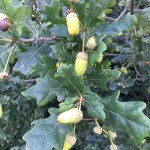
This tree at the new pond in Clayhanger was covered in fruits that looked like hops, or alder fruit, as well as healthy, plump acorns. I’ve never seen anything like it, and so asked twitter. My old mate Posh Dave, @tringonometry came to my aid.

These are artichoke galls, yet another variety of insect parasitisation on oaks. You can read about them here.

Both nature, and the usefulness of social media are astounding. Thanks, Dave.

August 22nd – I note a fair crop of acorns this year, and like last, I was caught by false memory with the knopper galls.

I tend to think these parasite-created growths happen earlier in the year than they actually do, and always assume we’re not going to see any when they’ve not appeared by late July. Since they’re caused by a wasp larva hatching in the acorn bud, they can’t occur earlier than the fruit, can they?

The tiny wasp that drills it’s egg in to the fruit bud earlier in the year – coated in a secretion that will corrupt the bud’s growth plan into these curious galls – is pretty unremarkable. But the distorted, knobbly knopper galls are glossy, leathery and fascinating.

Nature can be very weird sometimes.

July 4th – A first for the year, an oak gall. I don’t know if I’m too early or if it’s just been a bad year for the tiny wasp that creates these galls on oak trees by depositing an egg coated in a chemical which causes leaf or acorn buds to mutate and grow into a gall, inside which a tiny hatched larvae feeds, before drilling it’s way out and flying away.

I normally see a variety from mid summer on – the smooth green type shown here, marble gables which are also globular, but veined with white and pink, and knoppers which mutate gnarly growths from acorns themselves.

It’ll be fun to see if I’m early or if the yield this year is indeed quite poor.

September 4th – And then, there are the oaks I was concerned were lost. All the galls and nasties seem to have appeared long before the acorn crop I thought would not appear – there is now a stunning crop of tiny acorns growing well all along the canal at Clayhanger.

It’s good to see, and when they start to fall, I’ll gather them and spread the acorn love.

Never lose faith.

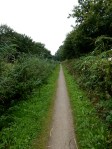
August 31st – I rode out via Canwell and Middleton to Middleton Hall for a cup of tea and cake, all the while in steady rain. I nipped down to Bodymoor Heath, onto the canal and up to Fazeley Junction. Back along the old A5 to Weeford, then home via Shenstone.

It was warm enough, and there wasn’t much in the way of wind. The roads were quiet and the riding fast; but it was very, very grey and very, very wet. The countryside dripped silently little droplets of grey summer sadness.

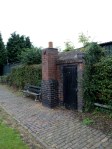
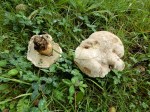
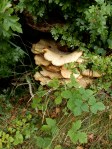
As ever on grey days, there was fun and beauty to be found; the architecture of the canals – not just the bold redbrick house, but the small lock-keeper’s hut with the chimney for a stove (how cosy must that have been in winter?); the Kingsbury lock flight and greenery of the canalside reed bed. Fungus is growing well in the damp, and those polypores were huge. 

Middleton Hall was as stunning as ever.

I just loved the hound tied up outside the cafe. He had an endearing way of looking at you with his head to one side. He was muddy and wet and had clearly been having lots of fun.

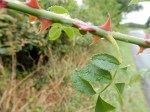
The red and orange spiny, furry growth on the rose stem that looks like a ball of thread? That’s a robins pincushion or Diplolepis rosea – a gall formed, like the oak galls by a wasp. 

I asked a few weeks ago why only the oak is bothered by wasp galls; it’s not only the oak, but mostly. Lime trees, conifers and roses suffer too. Here, a wasp lays 60 or so eggs in a tiny, developing leaf bud, surrounded in a chemical which causes the plant to mutate and grow this furry aberration, which is internally quite solid with cavities for the larva to hatch and feed.

Nature is quite horrific in it’s fascination sometimes. Find out more about this curious parasite here.

August 26th – I think I was a bit previous on the acorn thing.

I think acorns affected by galls fruit sooner. Perhaps there’s a naturally selective advantage in this. It’s fascinating me.
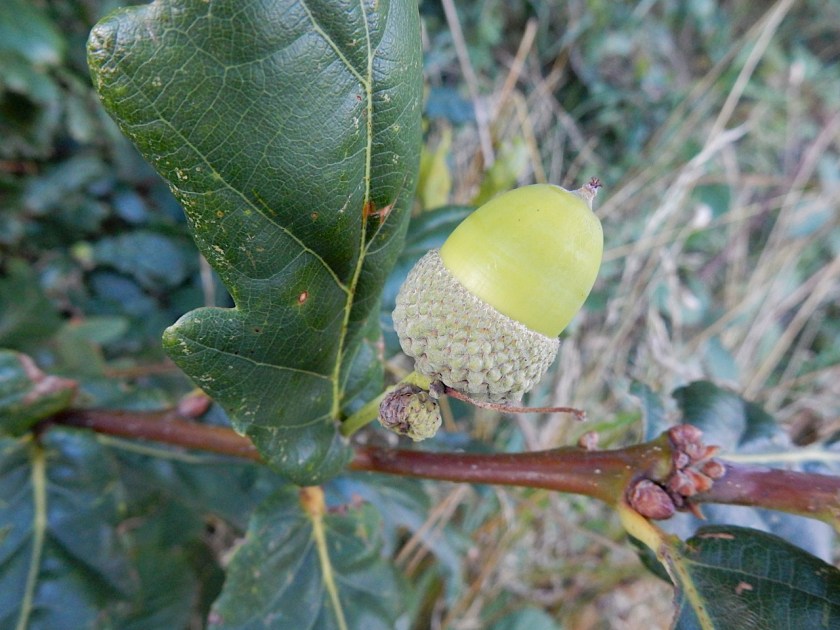
In the last couple of weeks, a huge crop of acorns has developed, even on the blighted trees. They came later than the acorn galls, and are plump and where unaffected, a great looking crop.

I’d say now less than 5% are galls.

Is there a guide or information anywhere about this? It’s fascinating me.