#365daysofbiking Humongous:

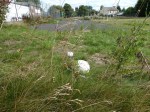
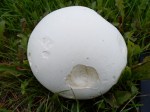
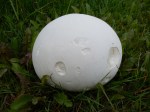
September 19th – A real find on the enclosed football pitch next to the old Smith’s Flour Mill in Walsall, next to the central Ring Road – quite the largest giant puffball I’ve ever seen.

This prize specimen looks a little old to eat and was beyond reach anyway through the fence, but I did giggle at the idea of it being kicked accidentally, mistaken for a football.

What a whopper!

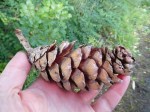
September 13th – Spotted on the footpath on a Wednesury industrial estate, these giant pine cones. Weighing in I’d guess at half a pound in weight, they’re actually quite sharp and abrasive and I’d not want one to land on my head as it fell from the tree.

Remarkable things, and lots of them; like conkers, at this time of year falling harvests can be the only decent reason to wear a helmet…

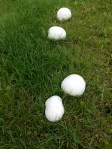
August 16th – Another delight of the season, that frustratingly I couldn’t harvest: Giant puffballs on the patch of fenced off grass used as an occasional football pitch right in central Walsall between Smiths Flour Mill and the turn off the ring road for Birchills.

These are about the size of a football, and are pure white and lovely to eat. There were about 14 in total over the field, but due to the gates being locked, they were beyond the range of my frying pan. 

Nice to see these huge fungi though, looking for all the world like alien eggs.

September 12th – These were incredible. I don’t think I’ve ever seen them before.

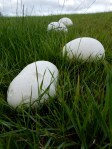
In a field near Harlaston, I spotted their bright white shapes as I sped past. A quick about turn, and I found the largest puffball fungus I’ve ever seen.

Almost pristine, largely globular shaped and the size of a small football, they were like some alien egg rather than fungi, but looking them up at home they are clearly giant puffballs.

The looked like plaster casts. 

A real find – and apparently edible.

June 26 – I’ve not had to go to Telford for ages, and was looking forward to my trip there today to check out the flowers growing on the cycleways, which are always a bit different to the ones I’m used to. They didn’t disappoint.

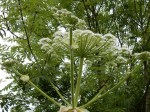
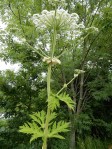
In the short run from the Station to Hortonwood, I spotted an interesting orchid, cornflowers and this spectacular, but dangerous giant hogweed.

The hogweed, a good two feet taller than me, is a plant containing a sap which burns human skin by neutralising natural UV protection, causing prolonged, and  slow to heal burns – effectively very severe sunburn. It’s very easy to get hurt by it, so I steered well clear (and will notify the council of it’s presence). It’s an imported plant that’s been gaining a strong foothold here.

Beware. It may not be an actual triffid, but it’s pretty nasty.

Telford. Never a dull moment.

June 21st – Another very common but sadly overlooked wildflower is cow parsley. Tall, with flat, creamy-white flower heads, it’s a staple of the British hedgerow – which is where I found this specimen near Stonnall. Considered edible, it has a very bitter taste, and is related to the carrot and hogweed families. Cow parsley is often confused for Hogweed, which is very toxic and can cause severe burns, so don’t pick either if you’re unsure. Cow parsley is also colloquially known as Queen Anne’s lace, and you can see why when the delicacy of the flowers are studied closely. An unsung beauty.