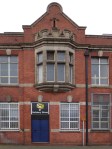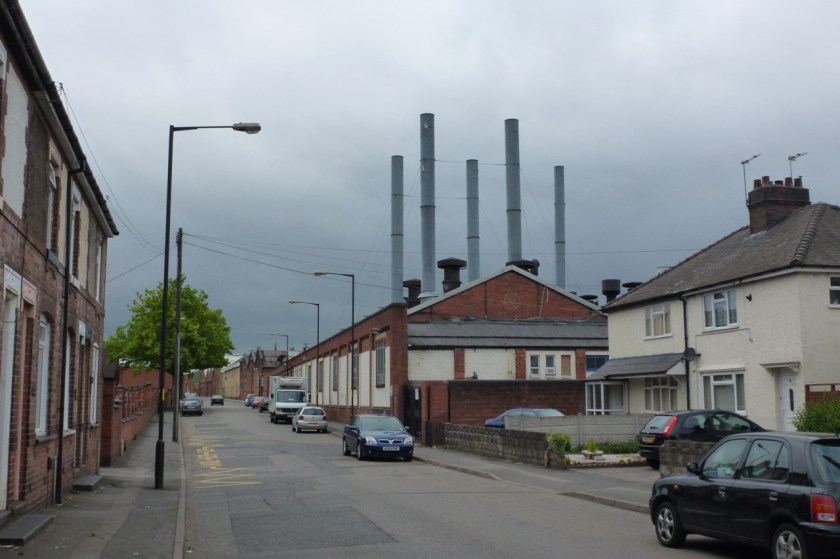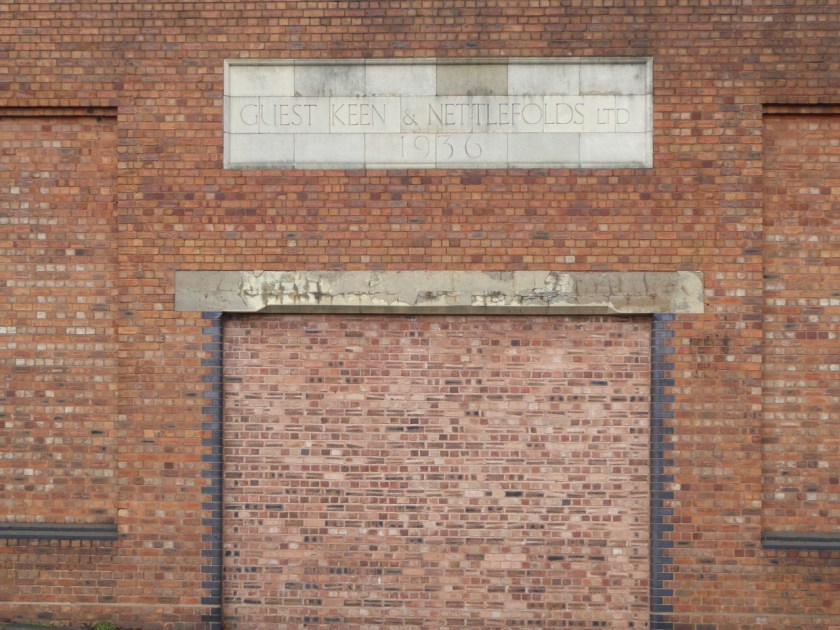
February 23rd – On a factory wall in Darlaston, a plaque recording the name of Guest, Keen & Nettlefolds, and a date of 1936. This was GKN, in their heyday, just before the outbreak of war. This place may now be a shadow of its former self, but this is a history Darlaston can be proud of: screws, nuts and other fastening components came out of Darlaston by the million until the late 1970s, and held the engineering of the world together.

GKN have long since gone from here, but some of the products they made are still created here by a German company.

Today, Darlaston’s industry hangs by a thread, not upon it. But these streets still resound to the sounds of industry living and breathing – and it still makes me proud to experience it.

February 5th – In the backstreets of industrial Darlaston, part of the former Guest, Keene and Nettlefolds works: Salisbury House. Half derelict now, decaying ungracefully, a red terracotta brick edifice in mock victorian gothic complete with bay windows and cornices. The saddest part is that it’s almost impossible to get a good photographic angle on it.

This is a remarkable building – rather ugly, but beautifully executed; it has a proud heritage and it’s sad to see it carried to dust like this.

I think the internal light fittings are probably collectors items, and that lost football must have been frustrating for the poor kids that kicked it up there…

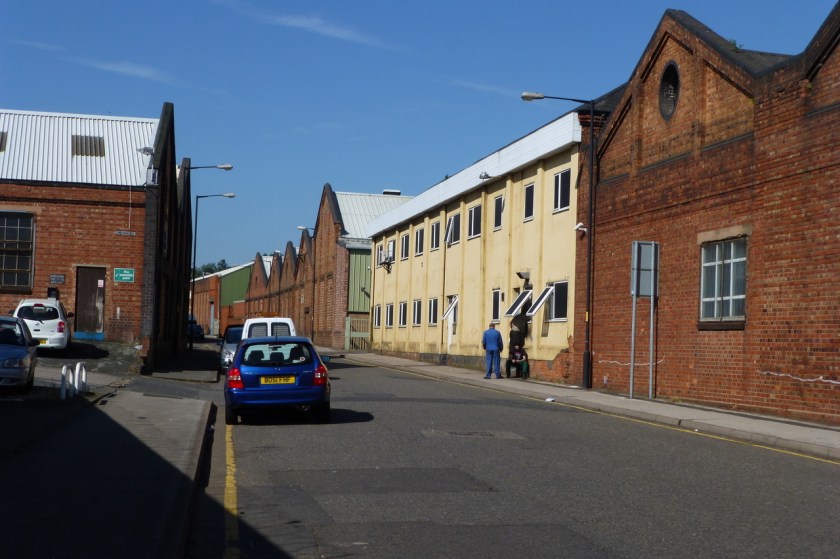
July 27th – Scenes from a Black Country life. This is a sunny, summery and somewhat industrial Station Street in Darlaston. I passed this way on my way to work, and noted a tradition here that’s been going on for decades. Those men stood at the window are buying breakfast sandwiches from the Caparo Atlas canteen, which supplants its income by selling to anybody bold enough to stand on the upturned crate and stick their head in through the open window, and shout their requirements. The food is good, if the reputation is to be believed, and Darlaston working folk have been doing this for years, as far back as Wartime when this whole estate was part of GKN.

Bacon, egg, black pudding and shrooms, and a tea, thanks me love.

August 18th – It’s arguable that the most powerful economic force in the development of modern Darlastion was GKN, or Guest, Keene & Nettlefolds, a fastener manufacturing company that, until the 1980’s, loomed large in the Black Country industrial psyche. GKN had massive factories in Eastern Darlaston along Station Street, and companies that supplied them and competed were attracted nearby by the availability of skilled labour – Companies like Charles Richards, Kinnings Marlow and Deltight. GKN, of course, are still a massive powerhouse in British engineering, yet in the 1981, decided to end fastener production in the UK. Tens of thousands in Darlaston and Smethwick were made redundant. These were not just factories, but communities, that had their own doctors, carpenters and decorators on site. The National Blood Service used to come here for days on end, and blood donation was seen as an easy break by many of the workers who donated blood.

Here at Station Street, the GKN buildings remain, now housing ZF Lemforder and Caparo, both shadows of the manufacturer that abandoned Darlaston to the Wolves. GKN’s footprints are all over this town, and ingrained into the social history of this proud place.