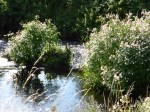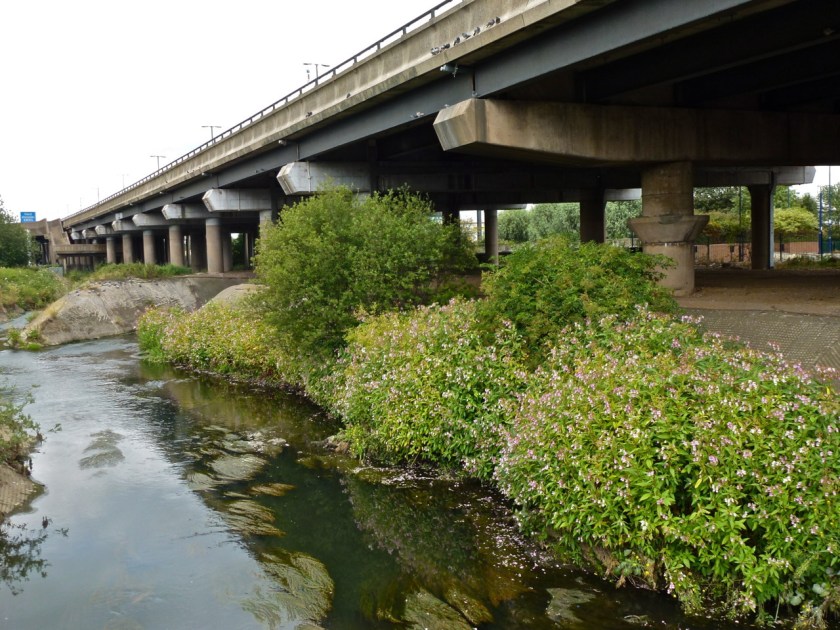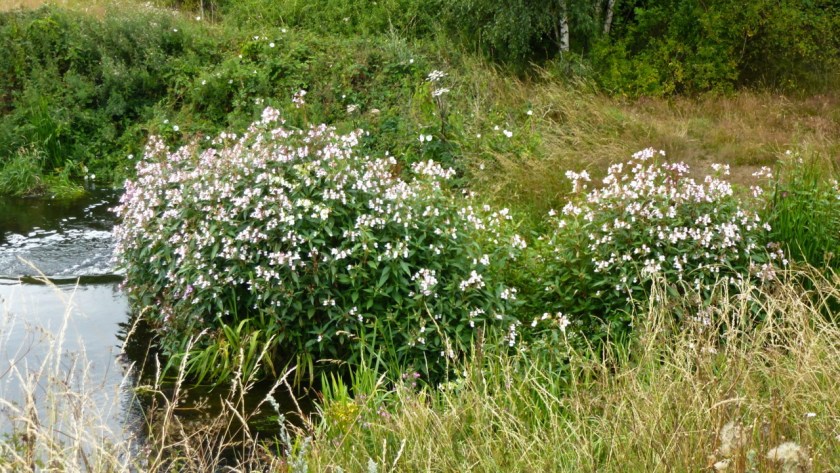
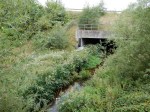
August 30th – This time of year is mostly about fruits, and this year, there are no shortage. Another fine crop of walnuts in Wall, possibly the best yet. Conkers were growing big and fat at Weeford village hall, and reships glisten orange by the waysides. At the Bourne Brook near Thickbroom, the Himalayan basal is beautiful, but chocking out the other pants, notably purple loosestrife. In Shenstone churchyard, prickly sweet chestnuts fascinate.

Painful as autumn is, heralding the oncoming darkness, it is such a beautiful season.

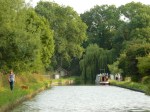
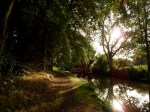
August 8th – From Seven Springs I headed down onto the canal at Weetmans Bridge near Little Haywood, as far as Breretonhill, then back through Upper Longdon and Stoneywell. The canal was glorious on a golden evening, and I drifted lazily past narrowboats, clumps of Himalayan balsam and waterside gardens that were enchanting. At Longdon, I see the refurbishment of the windmill continues well, after seemingly being stalked for ages.
As I came through Stoneywell the dying sun caught the have step fields and rendered them precious.

August 4th – If you;re around Walsall and have half an hour to kill, I can recommend a walk or ride down the cycle route that follows the Ford Brook in Goscote Valley from The Butts to Pelsall.

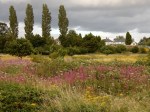
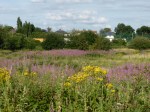
At the moment the meadows and heaths around it are alive with colour – rose bay willow herb, ragwort, daisies and other meadow flowers form a carpet, and the metallic tang and bright pink-white show of the invasive himalayan balsam is remarkable.

This isn’t commonly thought to be a picturesque part of Walsall – but there is so much to see, including a buzzard being mobbed by crows as I cycled my way home.

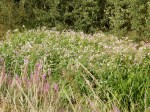
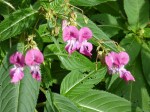
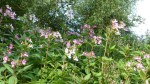
July 15th – Also a pain is the himalayan balsam. This tall, beautiful plant is growing in abundance now, and flowering strongly on damp waste ground, stream banks and the hinterlands and margins. It’s beautiful pink/white, metallic-scented flowers hide the real problem: this is an invasive species introduced by the Victorians.

The plant grows so tall and thickly that it chokes all beneath it, yet once established, like japanese knotweed, it’s very hard to remove.

The A461 Pipe Hill at Lichfield, and most of the verges to the waterworks at Pipe Hill are full of the stuff, season by season edging it’s way to Muckley Corner.

A beautiful undesirable.

August 10th – Himalayan Balsam is a pain. Lovely to look at, its highly aromatic, metallic-smelling flowers line wetlands, riverbanks and marshes at this time of year. Growing to a couple of meters, it chokes native plants and is considered an invasive species. Sadly, it’s so prolific – this clump was on the banks of the Trent at Shugborough – I don’t think we’ll ever be rid of it.

August 6th – I’d been in Darlaston, and returned home via the cycleway down the Goscote Valley. Despite small areas of tipping and litter, it’s lovely at the moment; the pastures and wastelands are bright with willow herb, wort, convulvulus and budleia, and the Ford Brook has tall swathes of Himalayan balsam growing tall. It’s an unwelcome species, but it is gorgeous to look at.

All the way through Goscote I watched two buzzards wheel and soar on the warm breeze. You wouldn’t think this area could be so peaceful and beautiful.

Walsall still has the capacity to surprise.

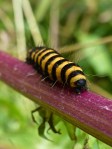
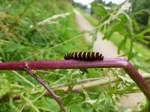
August 31st – I know bugger all about Lepidoptera. That’s not to say that caterpillars, butterflies and moths don’t fascinate me, because they do, but I never found time to read much about them. They’re very curious things. Take this fellow, for instance. 30mm long, clearly a Wolves fan, I spotted him whilst travelling at some speed down a canal towpath in Aldridge. I pulled the bike to a halt, and went back to examinee what I thought I saw crawling along a himalayan balsam stalk. How does that even work? I spotted him really easily, presumably so can his predators. How does that work on an evolutionary level? He’s certainly striking, hairy and caprivating. Anyone recognise what it is?

Edit: he appears to be a future cinnabar moth. Wonderful, black and red moths… and also rather late, it seems.

July 21st – Summer is rolling on, and the Himalayan Balsam had started to appear. This prolific, invasive species loves damp, marshy conditions like riverbanks, streams and wetland, and crowds out anything it grows near. Reaching 2 to 3 metres in height, it bears a pretty, white and pink flower, and has a familiar metallic scent that’s quite unpleasant. It’s lovely to look at but an environmental menace, quite unlike the roses I witnessed further down the canal in central Rugeley, growing on canalside waste ground. Aren’t they gorgeous?

July 27th – Getting of a Walsall train at Bescot, I lugged the bike over the mountainous footbridge and over the river Tame onto Bescot Cresent. Here, the formerly dirty, polluted river runs clean and is lined with greenery. The Ford Brook, which I commented on yesterday, flowing down the Goscote Valley, is a tributary to the Tame and shares the same issue with the invasive, alien plant Himalayan Balsam. Here, it grows tall and dense in the detritus at the side of a concrete culvert. The tinny, metallic smell of the flowers is very strong here, as it will be in lots of damp spaces for the coming month or so.

July 26th – The Goscote Valley cycle route is beautiful at the moment. Traversing it yesterday on my way home I was struct by the profusion of wildflowers and fruits creating a riot of colour. Everything from thistles to vetch, ragwort to rowan is loud and colourful, just fighting for our attention. I notice that on the banks of the Ford Brook, Himalayan Balsam is proliferating. This pink and white, tall flower is an invasive species but is itself rather beautiful. It has a peculiar scent and smells metallic. Let’s hope it doesn’t force out any of the equally beautiful native species.