April 28th – I’ve not really studied this old, derelict mill on the canal at Rugeley before, but it’s quite fascinating, actually. Built in 1863, it’s older than I expected, and I’m interested in its history. Most intriguing are the metal canopies installed awkwardly below the upper row of windows. Wonder what their purpose was?

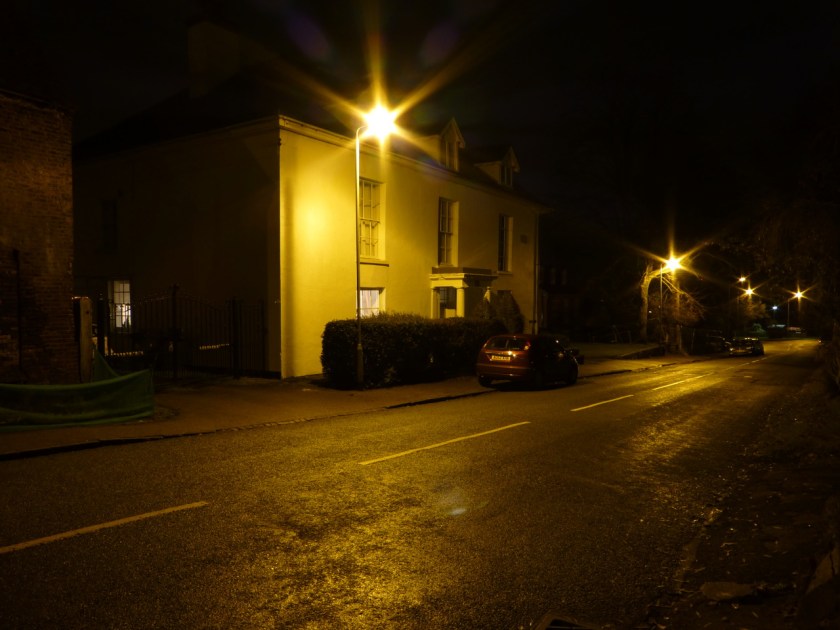
December 21st – A day without rain, at last. I headed to Birmingham (without my bike) to do Christmas shopping, then returned home exhausted. After a restorative strong coffee, I headed down into Stonnall to bag fish and chips for tea from the Stonnall chippy – the best chip shop in the area. On the way, I noticed that Wordsley House looks lived in again. Lights were on around the back, and work seems to be starting. This is a handsome house, with a long history. Lets hope it has owners who respect it.

November 20th – It’s all about stations this week. Off to Telford for a meeting early, then back to Tyseley. A day of delays, missed connections and grim, grey weather. I get to see a fair few of the local rail stations around Birmingham and the Black Country, and they’re a varied bunch, from the Victorian to the modern, from the beautiful to the pug-ugly. This one is Smethwick Galton Bridge, built adjacent to the imposing, remarkable iron bridge canal crossing it’s named after. Straddling two canals, the station sits at the crossing point of the Snow Hill former GWR line and the Stour Valley Line between Wolverhampton and Birmingham. Everywhere you look from this complex, multilevel edifice there is history, be it Chance Glassworks decaying nobly down the line, or the historic, grim 60s architecture of Smethwick. 
A station so complex, I’m not sure how it was planned, in a place who’s history is far more convoluted. Not bad for a grey Tuesday waiting for a late train. 

November 7th – I’m really getting into Acocks Green in Birmingham. I love the suburban, Metroland architecture, broad tree-lined streets and air of urban dignity. What’s really interesting me, particularly now I’ve spotted Hay Hall, is that there are clearly buildings of an earlier period dotted throughout the district. Some are quite well hidden, but this suggests a long history. This is fascinating and I must read up.

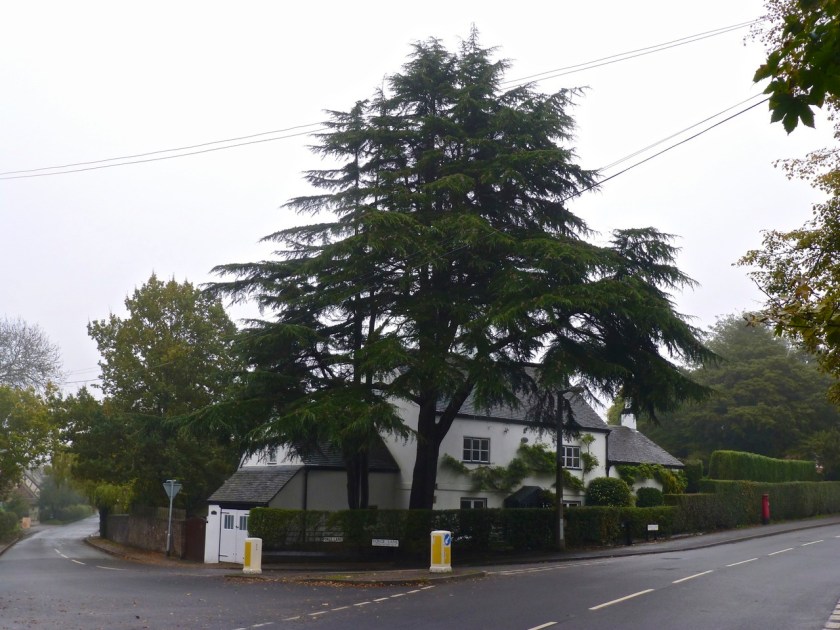
October 24th – The grim weather continues. Every commute is an effort this week – really poor visibility coupled with slippery, greasy roads and a fine, penetrative drizzle that soaks everything. I just want a clear, bright, cold day for a change. It’s also really, really difficult to take photos. The exposure on the camera slows down to sub-handheld speeds, and pictures are washed out and grey, just like the landscape. 

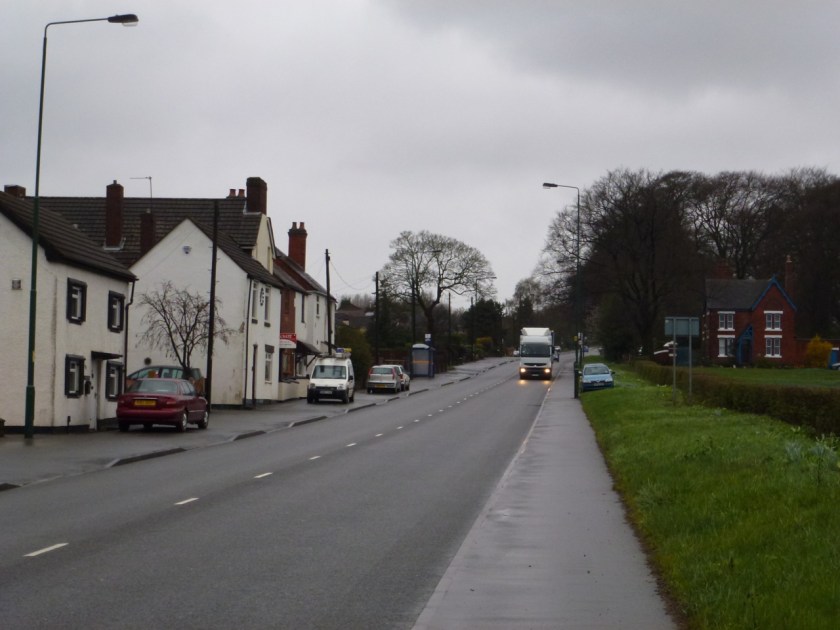
Passing the junction of Forge Lane and Walsall Road, this is the old village of Little Aston, before the money moved in. These cottages, behind the venerable scots pine, are very old indeed. Just up forge lane, the original smithy still stands, up until a couple of years ago, still a blacksmith’s sop. Even on a grey day, it’s an attractive place hinting at a more rural past.

April 4th – Today was not a photogenic day. My journey to the station at Telford – about three miles – was against the wind and in a steady rain, felt much how I imagine being shotblasted to feel. It was the kind of rain that made your forehead hurt.

At the other end of my commute, I chose my return station with care. I could have come from Walsall or Shenstone, but the latter offered the choice with the favourable wind. Positively blown home, there was nothing that inspired me to get the camera out until I tackled Shire Oak Hill at Sandhills. The weather had been dire, yet I was coasting up a really quite nasty hill without thinking. I reflected on the nature of this hill over history – this small group of old houses would have been the Sandhills of old, one being the Leopard pub – closed at the turn of the 1900’s, but with a two-century history. What would it have been like to climb this hill in say, 1850? 1800? 1750? 

An old route through an old hamlet. Never really noticed  before.

January 7th – Up at the former RAF Hednesford, it was as peaceful as ever. Families pottered about with kids on bikes – perhaps new ones from Christmas. Dog walkers exercised their companions and it all felt like I’d never been away. I was tired – it had been a battle to get here in a cold wind, and energy reserves were low. Not all the tears running down my cheeks climbing through Wimblebury had been caused by the wind.

I reflected on a time that this place would have been a sea of wooden huts, noise and hubbub, bustling with RAF trainees preparing for war. I suddenly became acutely aware of our position as beneficiaries of their victory. History catches you, sometimes. 

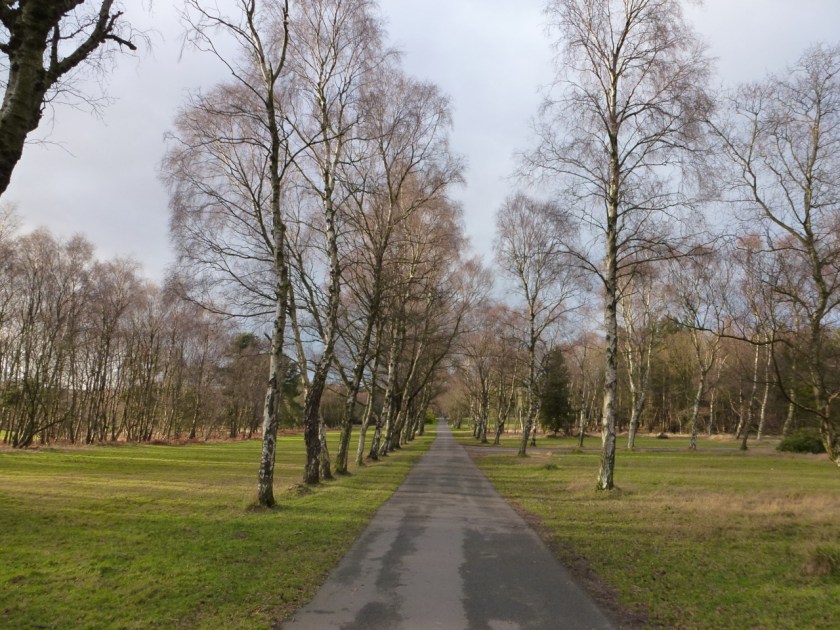
October 22nd – You’d not know really, unless you were told, but this lovely spot in the Hednesford Hills, on the southern edge of Cannock Chase used to be an RAF base – RAF Hednesford. I think it was largely a training camp, and closed soon after the war. Little remains except the odd suspiciously military looking hut, a pleasant monument and a heritage walk, which is well worth doing. Victory’s beneficiaries are we all; but the history is all around, often in quiet, unassuming places like this.