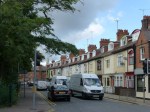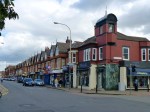
6th December – Today didn’t start well. A really, really bad journey to work saw me leave the house, return, leave again, just make the train, then sit for ages on it going nowhere just outside Birmingham New Street. When I finally got to Moor Street, the trains there were also not running, so I cycled into Tyseley. Instead of going via Small Heath, I chanced my arm at Camp Hill-Sparkbrook- Sparkhill, which seemed a decent route. 

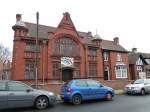
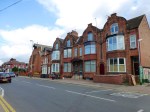
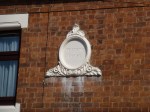
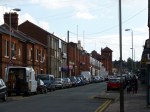
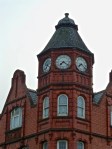
There is some really great architecture in this corner of south east central Brum. I noticed particularly this old pub on the corner of Shakespeare Street and Warwick Road. I think it must be all flats now, but the terracotta brickwork, architraves and panels are a thing to behold. Sadly, the elegant clocks on the tower are stopped. Few things speak more eloquently of urban decay than a static public clock.
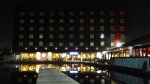
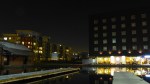
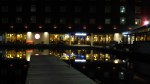
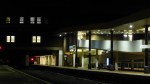
November 29th – While we’re on the subject of architectural disasters, the new Premier Inn on the waterfront development near the art gallery looks better at night – mainly because it’s grim black colour and peculiar yellow window frames are muted by the darkness. Nearly ready to open, the lights were on and made for an interesting shot or two over the canal basin. Over a decade since development here began, the basin is still overlooked by derelict and unoccupied buildings. Not a great success story, it has to be said.

November 29th – Walsall Station is an odd, ugly place. The original, stunning and imperious victorian station was demolished in the 1970s and the current concrete and steel afterthought bolted into the then new Saddlers Centre shopping mall. Partially in a tunnel, visually the external aspect is very busy and jarrs the eye. To use, it’s grey, dingy and unpleasant, full of dark spots and blind corners, which multiply and threatenn at night.

An awful place.

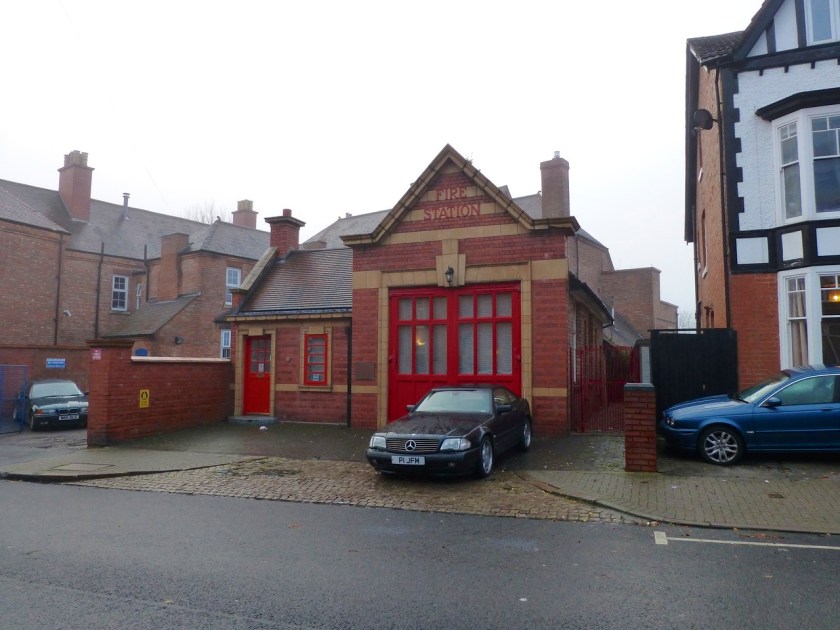
November 26th – Commutes seem to be alternating at the moment – wet and dry. This morning, after the rains of the weekend, it was blessedly clear and dry as I left home in the morning. The roads, however, were quite treacherous; flooding and debris made the going cautious. Accumulations of greasy leaves, tree debris and marbles made the journey interesting in parts. As I descended into Birmingham, the morning got mistier. In Acocks Green, I came past The Old Fire Station. I have no idea what it’s used for today – clearly not a firefighter in sight – but it is rather wonderful. I think it’s offices. It seems as if around every corner in Acocks Green there’s a new architectural curiosity. I feel I could live here.

November 13th – Later, in Acocks Green, I was surprised to note some old and rather wonderful architecture I hadn’t noticed previously. I was so busy looking for old cottages last week, that I never spotted some rather wonderful examples of civic buildings in Alexander Road. The Baptist Church Hall is a classic Birmingham terracotta brick building, and puts me very much in mind of the Magistrates Court in Corporation Street in the city centre. It seems to have an attached caretakers house, and next door appears to be an attractive former schoolhouse. I must look into the history of these buildings – they’re very grand for a small suburb. There must have been a fair bit of money here once…

November 7th – I’m really getting into Acocks Green in Birmingham. I love the suburban, Metroland architecture, broad tree-lined streets and air of urban dignity. What’s really interesting me, particularly now I’ve spotted Hay Hall, is that there are clearly buildings of an earlier period dotted throughout the district. Some are quite well hidden, but this suggests a long history. This is fascinating and I must read up.

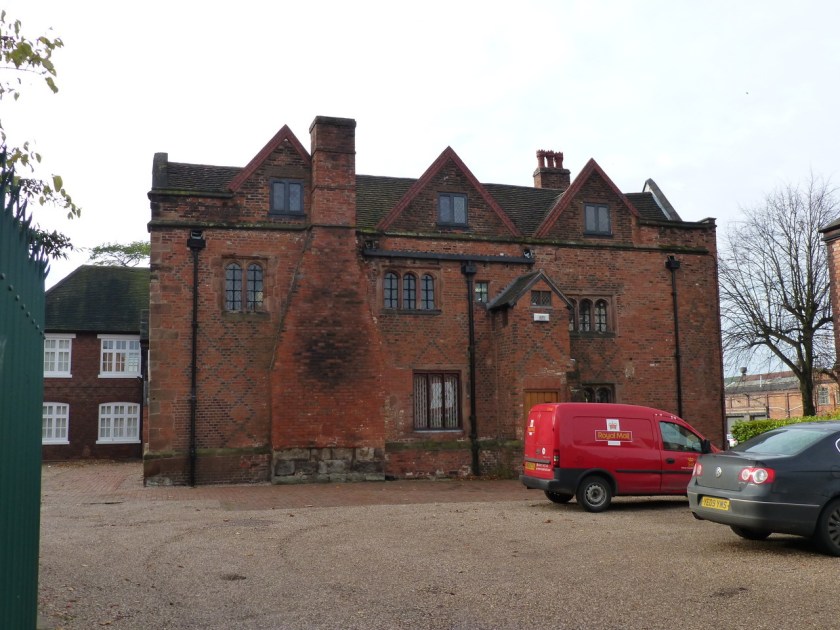
November 6th – I came upon this remarkable building yesterday, completely by accident. Taking a wrong turn in the industrial backstreets of Tyseley, Birmingham, I found Hay Hall,  one of the few remnants of Medieval architecture in the city. It’s got excellent chimney pots, too. Wikipedia has this to say:

A moated house or manor was first founded at the site in about 1260 by the De La Haye family. Hay Hall passed on to the Este family in 1423, when the heiress Marian De La Haye, married Thomas Este. They are commemorated in St. Edburgha’s Church atYardleyby a wall sculpture depicting them. The Este family owned and occupied Hay Hall until the late seventeenth century after which the property changed hands frequently. In 1917, when thePatented Butted Tube Company purchased Hay Hall and a surrounding 13 acres of land. The estate was developed into new tube works and factories but fortunately Hay Hall was saved from demolition.

The last person to actually reside at Hay Hall was apparently a Mrs Shelley who was employed as a housekeeper by the then rebranded Tube Investments Company, and was known to be living in the Hall up until 1939. In 1948 the building was fully restored and is currently in use as private offices for the Reynolds Tube Company Limited

I’m not sure if Reynolds still own it – the sign outside says ‘Air Link’, but it’s very hard to convey just how industrial the area around it is. Utterly incongruous, and rather lovely.


September 26th – I’ve spent a lot of time in Tyseley lately, and I have an odd kind of love-hate relationship with the station. Tyseley, as Ive noted here before, is now a heavily industrialised area, and has a mixed air of quiet decay and frantic commerce. The station, with it’s GWR accoutrements and air of very faded splendour speaks of a time when this Birmingham suburb was more genteel and rail was king. Scruffy, rotting and largely unloved, the station sits like a drunken duchess, quiety getting drunk whilst dwelling on past glories in some last chance saloon. Willowherb and buddleia grow from gutters, walls and platforms; the roofs and canopies leak, and everything gives an air of decay. But somehow, I actually think I like the place.

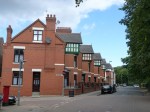
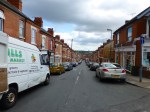
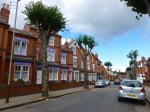
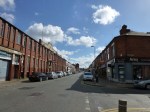
September 18th – I spent a good 45 minutes spinning around the backstreets, just taking in the architecture. I’ve never really seen a place as wonderfully diverse as this. Buildings here variously remind me of Leeds, Clifton, Brighton and Cheltenham. The area seems to have a genuine air of community, too. Leicester is great, and very underrated. 

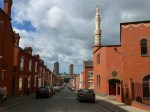
September 18th – Today, I visited Leicester. Not my usual haunt, I was up in a different part of the city. On my way, I passed through the melting pot that in North Everington and Spinney Hills. Here, there are folk of every culture and ethnicity imaginable. Asians, South East Asians, Africans, Arabs, Europeans. I saw cars with not just UK number plates, but Polish, Latvian, Irish and Lithuanian. The streets are busy with shoppers, students, kids, folk going about their everyday business. This place is buzzing, and has the frantic air of commerce one gets in all such places – the Edgware Road in London, say, or the Soho Road in Brum. What makes this spot different is the architecture. From factories to churches, mosques to terraces, there exists an incredible diversity of styles and adornments. Towers, bays, pediments and porches. All overlooked by the hillside park. Beautiful.