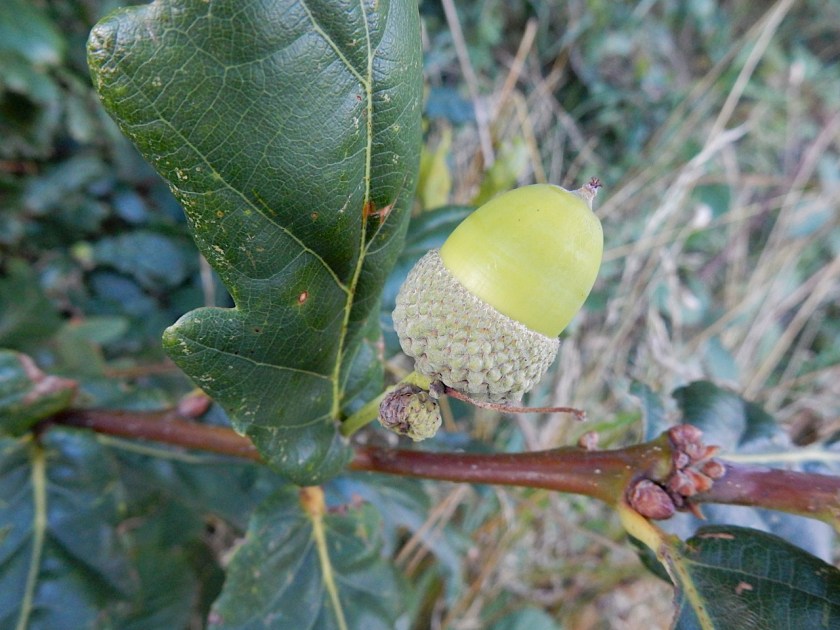
August 22nd – I note a fair crop of acorns this year, and like last, I was caught by false memory with the knopper galls.

I tend to think these parasite-created growths happen earlier in the year than they actually do, and always assume we’re not going to see any when they’ve not appeared by late July. Since they’re caused by a wasp larva hatching in the acorn bud, they can’t occur earlier than the fruit, can they?

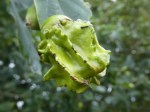
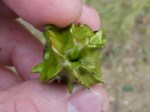
The tiny wasp that drills it’s egg in to the fruit bud earlier in the year – coated in a secretion that will corrupt the bud’s growth plan into these curious galls – is pretty unremarkable. But the distorted, knobbly knopper galls are glossy, leathery and fascinating.

Nature can be very weird sometimes.

July 4th – A first for the year, an oak gall. I don’t know if I’m too early or if it’s just been a bad year for the tiny wasp that creates these galls on oak trees by depositing an egg coated in a chemical which causes leaf or acorn buds to mutate and grow into a gall, inside which a tiny hatched larvae feeds, before drilling it’s way out and flying away.

I normally see a variety from mid summer on – the smooth green type shown here, marble gables which are also globular, but veined with white and pink, and knoppers which mutate gnarly growths from acorns themselves.

It’ll be fun to see if I’m early or if the yield this year is indeed quite poor.

August 26th – I think I was a bit previous on the acorn thing.

I think acorns affected by galls fruit sooner. Perhaps there’s a naturally selective advantage in this. It’s fascinating me.

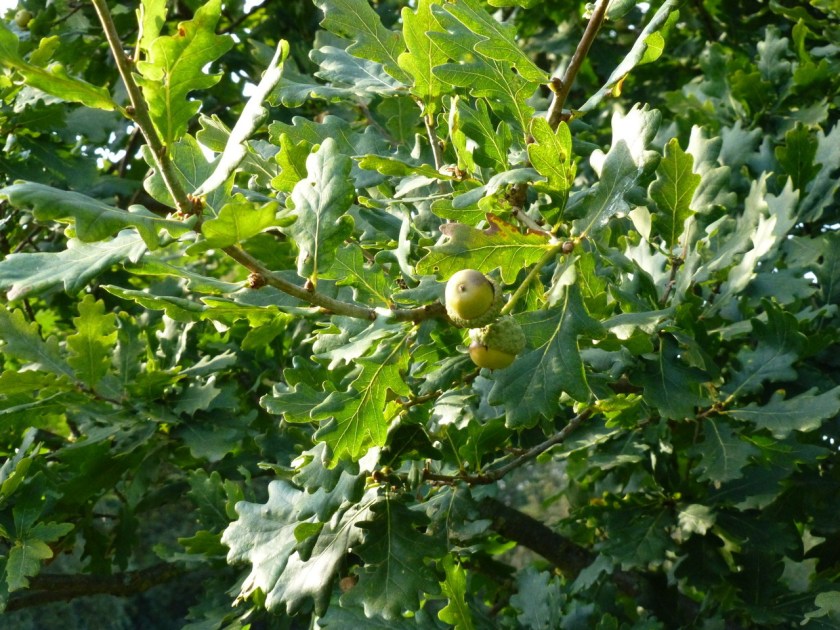
In the last couple of weeks, a huge crop of acorns has developed, even on the blighted trees. They came later than the acorn galls, and are plump and where unaffected, a great looking crop.

I’d say now less than 5% are galls.

Is there a guide or information anywhere about this? It’s fascinating me.

August 19th – The oaks are faring better this year for acorns. Last year, the crop here by the canal at Clayhanger, and over on Brownhills Common, was ravaged by knopper galls, which turn the oak fruit into odd-shaped aberrations that are home to the larvae of a tiny wasp. Thankfully, I could only see a handful of such curiously distorted acorns on this tree, which had a healthy looking crop of normal fruit maturing nicely.

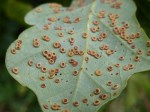
What the tree was suffering, though, is unknown but fascinating. Leaves had inverted, and the undersides were covered with an annular ring, clearly left by fungi or some insect or other. They look like tiny breakfast cereal pieces, but are obviously killing the foliage.

Do any passing arborialists know what they are, please?

September 22nd – a bright, sunshine autumn day. A ride through Staffordshire. My goodness, it was nippy as evening fell. It’s been one hell of a bad year for the oaks. I’ve previously recorded the absolute plague of knopper galls around Brownhills, devastating the acorn crop, and I’ve hardly seen any unharmed ones at all. Out in Staffordshire the story was the same. The ones that aren’t victim to the tiny, drilling wasp are small and sickly, affected by the lousy summer.

I hope they (and we) have a better time next year. To me, oaks are the epitome of the English tree, and when they suffer, I feel we all do a little bit.