July 30th – Nipping out of work in the earl m morning on a cafe run, passing a familiar patch of waste ground, I finally found something I’ve been looking for for a few weeks without luck; a robin’s pincushion gall.

This hairy mass on dog and wild roses is, like the knopper and marble galls on oaks, an insect gall; a tiny wasp lays eggs by injecting them into a leaf-bud surrounded by DNA corrupting chemicals that cause this odd growth to form rather than a leaf.

Beneath the bristles, there’s a solid ball of plant matter with cavities within which the larva grow and develop in safety; when ready, like other galls, they eat their way to freedom and adulthood.

The gall doesn’t harm the plant at all. It’s a remarkable thing.

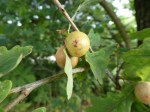
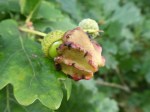
August 10th – Oak galls continue to fascinate, and on this tree in Victoria Park, Darlaston, there’s quite a display of knopper galls, the first I’ve seen this year.

Like other oak parasites, the knopper wasp lays eggs in it’s host, secreted in a chemical that corrupts the cellular DNA of the host plant matter causing the gall too grow. In this case, the target is the acorn itself, and on this tree, one can see some acorns blighted by two such galls.

As with others, the egg hatches and ithe wasp larva eats the gall and grows safe in it’s corrupted acorn, before boring it’s way out when mature.

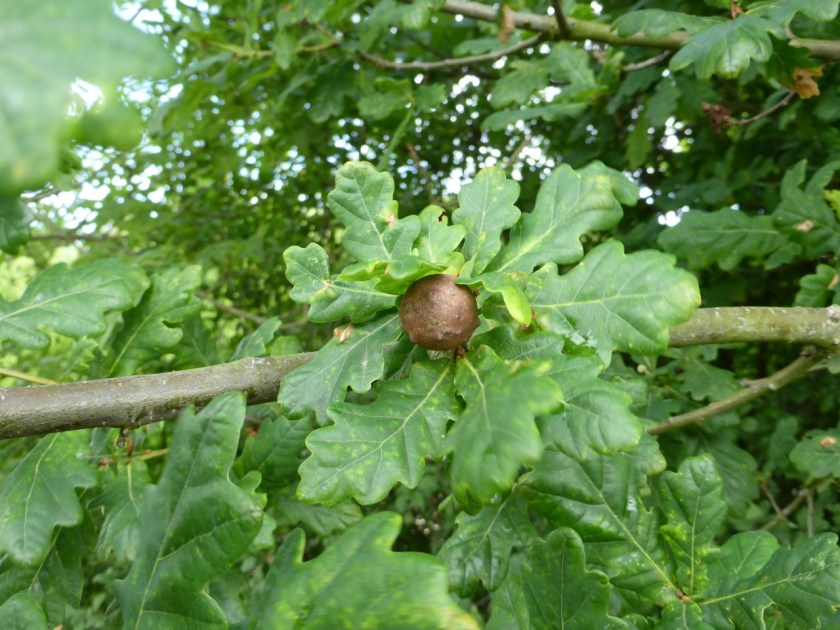
Also on this tree, the more conventional wasp gall – the common ‘oak apple’ of folklore, a spherical gall grown the same way.

These galls don’t harm the host, but do reduce the functional acorn crop. I’d love to know just why the oak is targeted so particularly with the and not so much other trees…

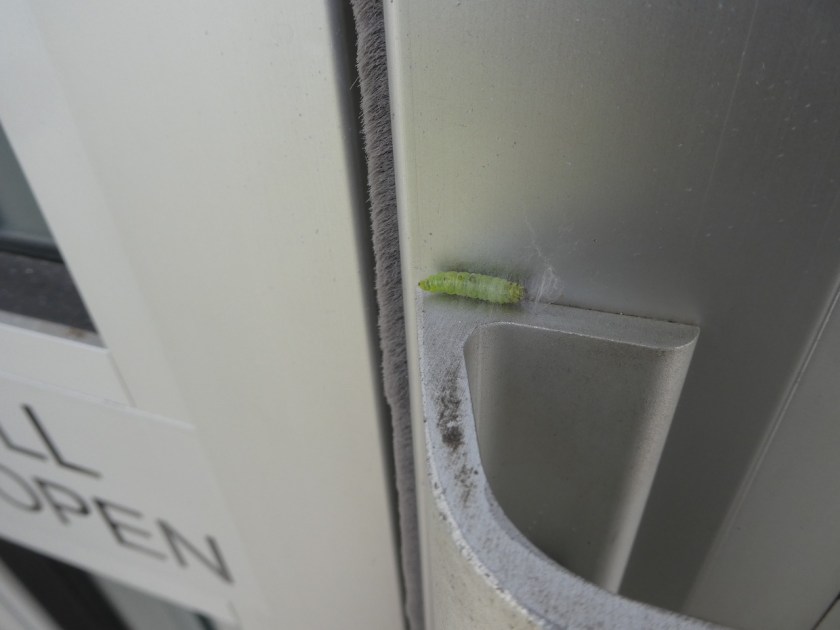
May18th – Arriving at work today on a sunny, bright but nippy morning in total contrast to the day before – I spotted this wee creature, very much alive on the doorhandles. I guess it can only have got there by a startled bird dropping it when disturbed by a called (I had just missed the post who’s not noted for their gentle approach to their duty).

I was quite concerned it might die, so I popped it in a nearby tree – presumably to be taken again by bluetits or some other creepy crawly eating bird.

Wonder what it would grow into?

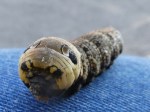
August 15th – A real treat for the seventh day of seven days of wildlife, the challenge set me by reader Susan Forster. I was riding through Pleck, and I spotted something wriggling, right in the middle of the road; stopping to investigate, I found this elephant hawkmoth caterpillar.

About two inches in length and ½ inch diameter, this is a big creepy crawly, not for the faint heated, but harmless and rather fascinating. Camouflaged to look like a plant stalk or twig, it has fake eyes and a bulbous head to make it look far more threatening than it really is, should it be threatened. Living mainly on willowherb or fuchsias, I suspect this one had been dropped by a bird, and thus escaped being lunch, and after posing for photos, was popped back on the scrub I think it came from, thus avoiding being squished.

This is a truly huge, fascinating caterpillar, and although common, a great chance find. Read more about it here.

July 29th – Oak Apples, or galls, are an interesting thing. Very visible right now, they are the gall of a type of wasp that lays it’s egg inside new oak leaf buds. A chemical reaction caused by a secreted fluid causes the gall to grow, and inside, the wasp larva feeds on it, eventually burrowing it’s way to the surface and flying away.

Isn’t nature amazing?