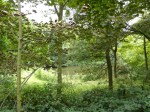
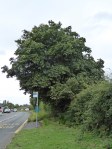
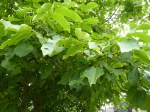
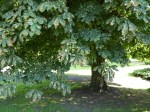
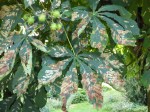
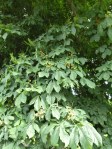
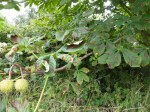
July 13th – I’m sad to see the huge horse chestnut trees on Stafford Park in Telford are suffering for the first time I think with leaf miner parasites. 

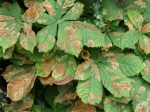
These tiny larva destroy the leaves of the host tree from within, and although leaving the host pretty much unharmed, they bring on an ‘early autumn’ but causing the leaves to become blotchy and brown.

It looks worse than it is, but it’s a sad end to the season for many a beautiful tree.

Hopefully the current wave of these insects will pass soon.

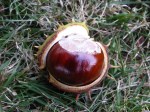
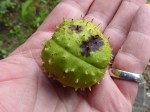
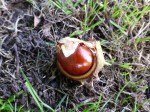
September 14th – A real sign of autumn, my first conker finds of the season, and this year it looks like there’s a large, voluminous crop waiting to fall to earth.

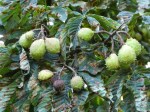
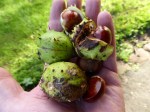
This tree, spotted in the backlanes of Stonnall was laden, and the fruit fresh from the husk as beautiful and shiny as ever one could wish, despite the tree being hard-hit by leaf miner.

Like most men, there is an inbuilt genetic urge to collect fallen conkers and I still can’t pass them in the road without popping a few in my pocket.

July 30th – I see the horse chestnut leaf miners are back with a vengeance now. A moth lays eggs, whose larvae burrow through the large leaves, eating them and leaving huge brown scars, which suddenly appear around this time of year. A relatively new problem, it doesn’t seem to hurt the trees, but it causes premature leaf fall, and they look bad. 

Experts are assessing links between this and the canker also affecting many of these stately, arboreal giants.

It’s a great shame, I love these trees and hope this ugly affliction soon passes. I cycled a loop around Shenstone and Stonnall and I don’t think there’s an unaffected tree anywhere in the area.

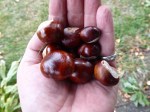
September 12th – Conkers, by the shedload. The tree in Festival Gardens, Lichfield is laden with them again, despite being ravaged by leaf miner. Last year, due to the season, they were small, but this year, a better size. They’re thick on the ground in their shiny, brown glory.

Like all men, I’m programmed to pick up conkers whenever I see them. They are beautiful, like jewels in leathery, nutty perfection.

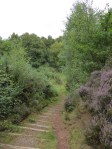
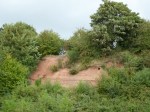
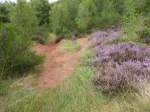
August 30th – I don’t go to Shire Oak Park nearly enough. This Local Nature Reserve, which was once a sand and gravel quarry exploiting the bunter sandstone ridge on the crest of Shire Oak Hill, is a wonderful and rare place. It’s teaming with wildlife, from rabbits to amphibians, mustelids to owls. In this sandy, sheltered enclave, deciduous trees like oaks and birch (and even the odd maple) are thriving, and the outside world seems a long way away.

The reserve is maintained by Walsall Council and on this dull Saturday afternoon, it struck me how clean and litter free the place was. Like all such spots, there’s occasional nuisance from ASB and the odd idiot, but this is a lovely, little known place.

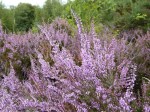
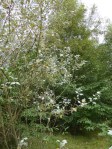
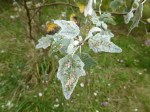
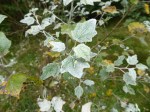
The heather in bloom is gorgeous here, but as with everywhere else, the oaks have had a bad year, with leaf miners and a lack of acorns startlingly evident. Also, I was puzzled by the white appearance of the unrecognised shrub I spotted by the main steps. Can anyone help? Is this disease, pest or normal?

August 26th – The day was better, I guess, by virtue of being dry, but when I set out for a tentative ride mid-afternoon it was cold, and a harsh wind blew. It wasn’t a bad October day, I thought.

I’m taking it easy. My foot isn’t completely better, and I thought I’d see how far I could push it before embarking on longer rides again. I looped up to Chasewater, then down to Wall, through Chesterfield and Hilton, back to Lower Stonnall, then home. Apart from a bit of toe-burn, not too bad.

What did impress was the fruits I saw. A terrific year for large, plump conkers; the tree at Edial between Burntwood and Pipe Hill is laden, and although suffering leaf miner damage, has a huge crop this year. In a few weeks standing at that bus stop could be hazardous.

At Wall, the walnut tree has a crop too. After finding it last year, I didn’t expect it to fruit this year too, but it has, with the lime-like ripening walnuts hanging from the boughs. I picked up a few windfalls, which were firm and large. When ripe, the green husks will split to reveal the more familiar brown nut inside. That’s if any survive the squirrels.

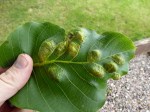
The Walnut tree also seems to have some kind of leaf miner activity. There are ‘blisters’ on some of the otherwise healthy, waxy leaves. I wonder what the bug is?
July 15th – This journal illustrates many things, but mostly, it illustrates my ignorance. 

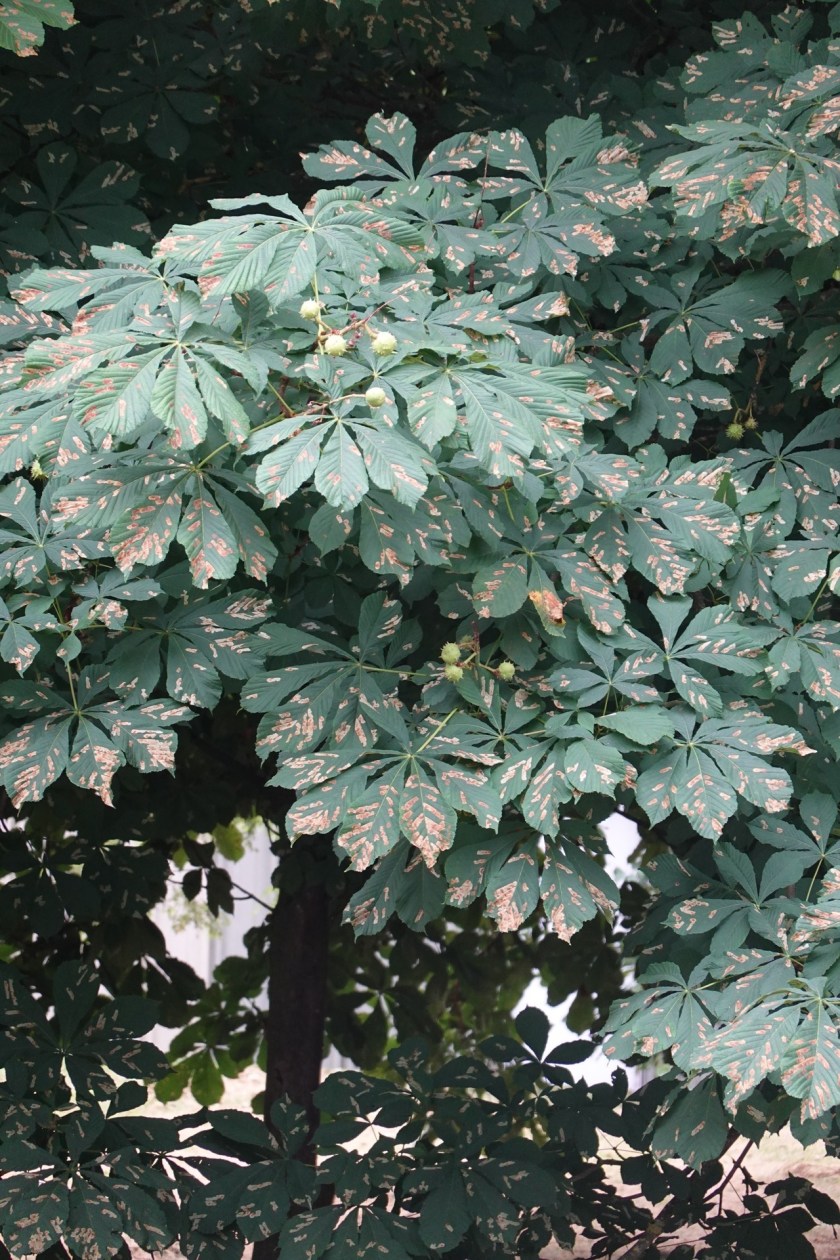
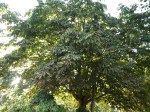
Three weeks hence I stopped to admire this horse chestnut tree in Festival Gardens, Lichfield, and noted how fine it was looking, laden with young fruit, and that it was showing hardly any leaf miner activity.

It is now. The leaves have been absolutely infested with it.

The leaf miner is a pain – it can cause early leaf fall and there’s speculation that this tiny moth larvae can cause poor fruit development, but otherwise, this infestation doesn’t affect the overall health of the tree. It just makes the poor thing look terribly diseased.

Next time, I’ll keep my mouth shut. Can’t help feeling I cursed my poor arboreal brother…

June 19th – Passing through Lichfield today on my way home, I stopped by Festival Gardens to check out the conker trees. They seem to be in fairly good nick, and aren’t showing much leaf miner activity at the moment. They are, however, showing a huge amount of fruit.

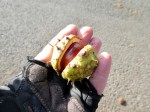
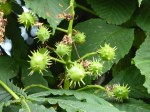
I think it’s going to be another great year for conkers. The spiny cased nuts look almost prehistoric to me at this stage.

September 18th – Conkers. Every man I know is inexorably drawn to the shiny fruit every autumn, it’s almost an instinct to pick a few up if you see them. This splendid tree is at Festival Gardens in Lichfield, and the conkers are just starting to fall. This year, they’re small – I’m not sure if it’s just this tree, or general, but there are lots to come; the boughs are heavy with the spiny-husked horse chestnuts.

The tree is clearly suffering the ubiquitous leaf miner parasite, but it large and handsome, all the same. I gathered a couple of pocketfuls, and tossed them near Wall Butts on the way back.

September 8th – A hard 50 miler. I headed out to Hopwas Hays and explored the wood some more, finding what I think were training buildings for basic urban assault practice. They had a curious alley construction between them which would seem to be for practice around blind corners. These days, they seem to attract kids and campers. 

From there, I headed east through Harlaston and Clifton, then south through Thorpe Constantine and Seckington. The sky was darkening, and by the time I hit Shuttington and the canal at Alvecote, it was raining hard. Sadly, the band of rain followed me home. I was soaked and tired.

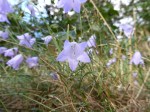
Still, it was nice to see the conkers doing well, despite the evidence of leaf-miner blight, and even the late hairbells were lovely.

Can’t avoid the feeling of autumn, too. As I rode home, the smell of coal smoke was heavy on the air, and there was a distinct chill.