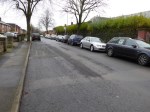
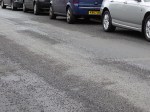
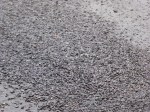
March 29th – On a practical level, the bad weather is taking an awful toll on the lanes. Here, near Springhill this backlane like many has a ridge of wash down mud in the centre, and the tarmac either side is fracturing into potholes and covered in loose detritus and marbles that are slippery and prone to stealing your grip.

The roads now will be in a parlous state, and without much money to repair them, I fear for the condition of minor lanes like Whittaker Lane here in years to come.

We really need to tackle this very serious road safety issue.

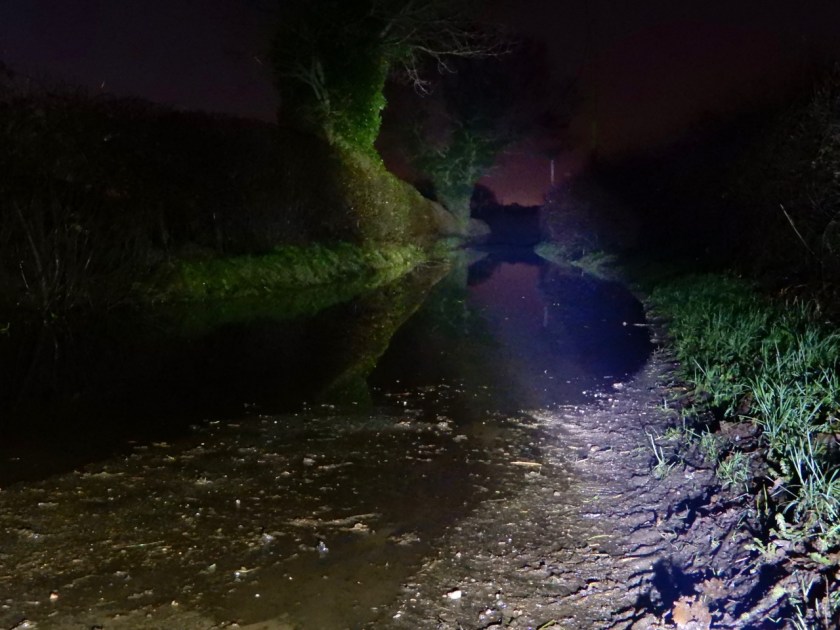
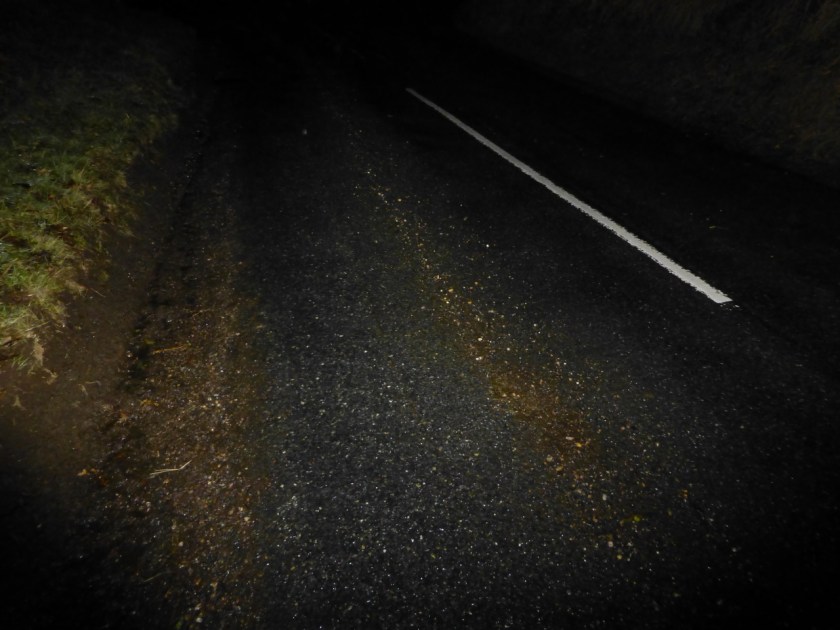
January 20th – I was home earlier, but didn’t escape the dark. It was light when I left though, which was something. On the way back I had to call in to Stonnall on an errand, and I came upon a hazard every bit as dangerous as the unexpected black ice that morning; in the blackness of the backlane, the road was flooded to some depth for the full width of the tarmac.

In my bike light, I took the best picture I could, and note that apart from the bike light, this is in total black; a mix of speed and grip-thieving water, marbles and mud just ready to strike out of the darkness.

Thankfully, I spotted it,. But be careful out there. I’h hate to think what this is like if it freezes…

December 9th – Walsall Council’s road repair contractors, Tarmac, have a new toy: a velocity patcher. This hi-tech bit of road repair kit cleans out potholes, then blows in a grit and fill mixture, which has a finishing coat of grit applied afterwards. It does a good job.

They’ve been using such a machine in South Staffordshire for ages, and the repairs are long-lasting and good for what they are. They certainly take the nasty surprise out of potholes.

However, just a wee complaint. The crew in Walsall clearly aren’t quite as proficient as those in Staffs, and in the otherwise nicely repaired Scarborough Road in Pleck is awash with loose grit. It’s like Chesil Beach, and very unsafe for cyclists and anyone braking suddenly.

The repair is great, much better – but that loose stuff is going to cause, or exacerbate an accident. Please sort it out.

May 7th – A snatched picture combining two of the worst hazards in cycling. One is common, the other seems unique to a particular part of Darlaston. The loose grit – marbles – I’ve discussed at length here; wheel and traction stealing, highly polished grit, it washes down during rain and snow, and gathers in junction voids and gutters, waiting to snatch your bike from under you.

The unique hazard is metal clippings, swarf and shards, and this is Heath Road in Darlaston at it’s junction with Station Street. Around Darlaston Green, all the way down to the Walsall Road this problem slices tyres and causes punctures. Open tipper wagons and skip lorries corner here to get to the scrap yards up the road, and metal drops through their tailgates, shutterboards and  from unsheeted tops. The metal lies flat in the road, where it’s gradually sharpened by the traffic dragging it against the road. 

Automatic sweepers don’t pick it up because it’s so thin, but hit it with your tyres and you’ll quickly flat. It’s a pain in the arse. Look closely here and there’s sharp spikes, wire and razor-thin plates.

Look out for it; avoid the area if you can. In a place where one has to watch the traffic carefully, it’s another hazard to watch out for.
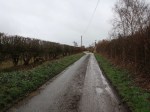
July 28th – Cycling after flash rains at the end of a dry spell is dangerous. The torrent washes down sand, stones and detritus that lurk in bends, hollows and adverse cambers waiting to steal your wheels from under you. The stones are the worst – they’re like cycling on black ice.

This patch lies at the junction of Cranebrook Lane and Boat Lane near Hilton, north of Stonnall.

Take care, take it steady, and Look out. 

April 4th – Time for my usual post-snow warning. The roads are murder at the moment, especially ones where snowploughs have been used. What’s happening is that melting snow that collected grit, marbles and detritus from the road, is concentrating the horrid payload and depositing it on the surface where many cyclists ride.

Hitting the polished gravel – known as marbles to motorcyclists – that gathers over junctions, on cambers and in gutters can be like hitting black ice. Silt and mud can conceal deep potholes and steal your wheels from under you. Debris like sticks, branches and littler can jam your wheels. Until the wind, rain and local authorities have done their cleansing thing, be careful out there.

January 28th – Marbles. I go on about them repeatedly, with good reason. The roads are absolutely covered right now in debris – bits of wood, bits of vehicle, grit residue and gravel, left behind by the snow and ide. This material gathers in hollows and patches on the roads, and passing traffic grinds and polishes it ind it’s wheels. The result is a loose material with very low friction, that lurks on bends and junctions, ready to snatch your wheels from under you. It’s particularly bad in backlanes, but even busy roads like the Chester Road are affected. 

Motorbikers call this debris ‘marbles’ due to the similarity to riding on glass beads. The problem will remain until either the road is swept, or heavy rains wash the worst away.Take extra care, please.

June 28th – Time for a bit of cycling knowledge. After heavy rains – like we had today – the roads are way more hazardous than usual. If it’s the first rain after a dry spell, the surface water becomes greasy and slippery, due to tyre rubber detritus and diesel being washed into the sludge. This makes white lines, ironworks and junctions really nasty. After heavy rain, silt washes of fields and gardens, bring with it loose gravel. This gathers in bands, hollows and dips, often just where cyclists cross junctions. The silt when wet is slippery, but when dry, will steal your wheels from beneath you. The gravel – known as ‘marbles’ to motorcyclists – gets progressively polished by vehicle wheels, and is like cycling on ball bearings. Take care – the hazard continues in the dry, too, and can last for weeks after a storm.

Councils don’t really understand the menace of this stuff to folk on two wheels. I wish they did.

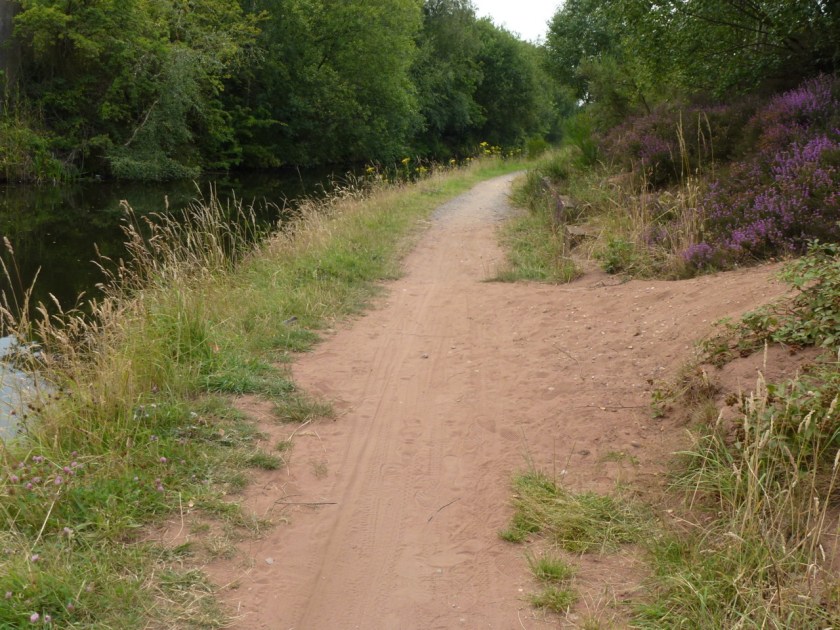
August 1st – A ride out to Burntwood took me along the Anglesey Branch. I’ve been meaning to mention for a while now that if you’re out cycling, watch out in the dry weather for patches of very dry sand. Deposited by heavy rain, when it dries it’s like hitting black ice and will easily have you off the bike. This patch near Wharf Lane, Brownhills isn’t too bad, but some of the patches that gather in road margins and at junctions – particularly when mixed with gravel and other road debris – can be evil. The motorcyclist term for these hazards is ‘marbles’, because that’s exactly how it feels when you ride into one. Take care.

May 25th – Back to Walsall. On my way into Bilston, I travel, as I often do, down Scarborough Road, Pleck. The surface of this road has been terrible for ages, and following complaints most of it has now been patched up, even though I was recently told by a Walsall Highway engineer that surveyors ’…Didn’t consider it dangerous’. I thank the council for sorting it.

Oddly, the last hundred yards or so – containing the most hazardous potholes – remains untouched, though clearly marked for repair. This loose gravel is a danger to all traffic, but to anyone on two wheels – motorised or otherwise – it’s deadly. Motorcyclists christen this loose detritus ‘marbles’ due to it’s slippery, destabilising effect, and it’s a real pain. This needs fixing. It’s time all road engineers woke up to this hazard.

Perhaps the permanently parked vehicles have been in the way, but I wish it could be sorted.