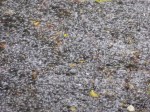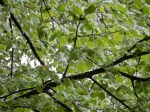
July 2nd – In Darlaston, a gentle precipitation; sweet-smelling, light, and coating all it touches. It’s pukh.

Pukh is a downy fluff produced by female poplar trees, not unlike the blossom fluff produced by sallows; I noticed today the Owen Street in Darlaston was coated with fuff. I’ve seen it before – Pitsford Street in the Jewellery Quarter used to be swept with clouds of the stuff in a good year, but rarely as uniform and snow-like as this.

It’ll be interesting to see if the rains washed it away.
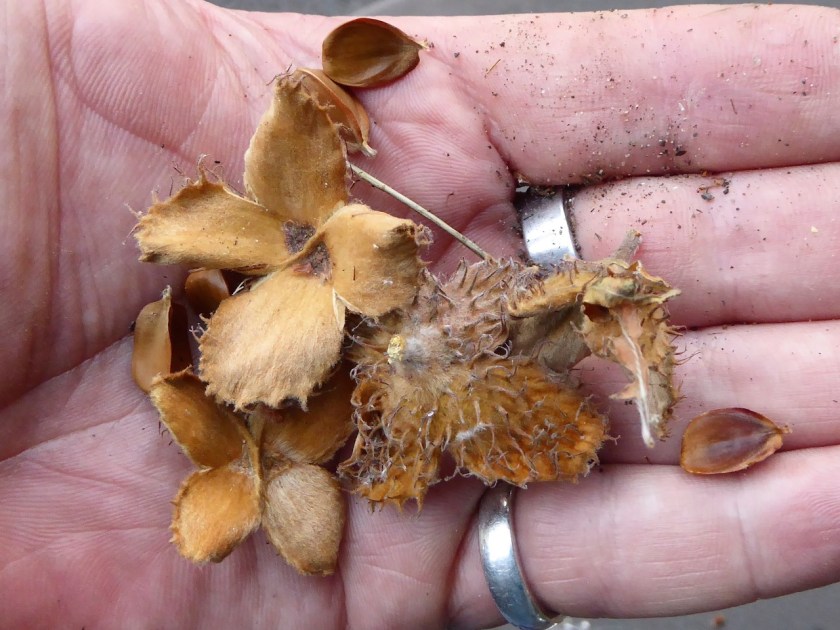
September 23rd – Labouring up Shire Oak Hill at Sandhills, a familiar crunch crackles under my tyres. The beech mast is thick this year, and it’s been a good year for beech nuts.

The husks are hard, prickly and dry as old bones; the little brown nuts shiny and hard. Some years, the nuts are fatter and more oily than others, and this is part of the growing cycle of the tree, not a factor of the weather. Edible but harsh, they were used as a substitute for coffee in wartime and gave their name to a chewing gum.

I collect a few, split them open with a pocket blade, and suck out the kernel, and chew them determinedly for the remainder of my journey. 

A palatable taste, not unlike a slightly sharp hazelnut. But it’s hard work to get a decent mouthful!

May 5th – Only a short spin around Brownhills as I’d had a bunch of unexpected work crop up. It was pleasant enough though, and decent weather for a bank holiday, to boot. 

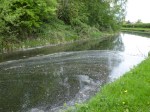
It’s time for the annual warning – this scum on the canal isn’t pollution. Yes, it looks horrendous, but it’s natural – it’s wind-born debris from some shrub or other (never worked out which). It drifts over the surface of the canal and forms in scummy, oil-like ripples.

Nothing to be concerned about, it’s perfectly natural and soon disappears.

October 11th – One of the odder fruits of autumn is beech mast. Beech nuts have a pleasant flavour if chewed, with a green, dark and astringent taste; they grow in a prickly, hard rough burr husk that falls from the tree after opening. Since a mature beech is of a considerable size, the mast litter under such a tree is often deep, and has a distinct crackle when you walk or ride over it.

There isn’t a hint of moisture in the husks, which are hard, and they put one in mind of something prehistoric, perhaps the scales of some long-extinct dinosaur.

This example, along with several others is growing along the Lichfield Road at Sandhills. They are lovely trees.

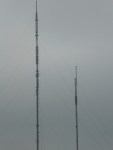
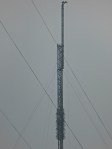
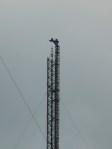
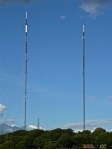
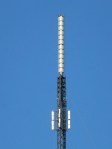
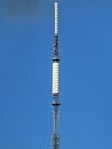
July 10th – Slowly, but surely, the temporary mast at Sutton Coldfield is being dismantled. I explained a month ago how a crane was fixed to the upper stages, and the structure was dropped carefully, piece by piece. 

Today I noticed the DAB antenna were in the process of being stripped. These are the spiky structures clustered around the main mast in one spot, for about a 6th of the total height. If you look carefully at the bottom picture, you can see where cables, once connected to the elements are now hanging free.

It was a dull, overcast day, and I was hoping to catch a team at work up there, but have still yet to see one. 

This is remarkable, painstaking work by very, very uniquely skilled people.

June 11th – What goes up… must come down. It’s been a few years now that we’ve had two TV masts at Sutton Coldfield. Normally just one, the second was erected before the digital switchover, to act as a temporary stand-in while the main one was increased in height and re-equipped for the digital age. The upgraded transmitter has now been functional for 12 months or so, and the substitute – built on the foundation of an older one – is being dismantled.

To achieve this, a crane beam is bolted to the penultimate section, the upper being unbolted. When it’s free, the upper part is lifted clear, swung around 90 degrees, and lowered to the ground.The technicians who work up there have balls of steel, and very large pay packets.  they deserve every penny.

June 9th – Sad to note that like other towers in the backbone microwave network, Turner’s Hill mast in Rowley Regis is looking very bare now. The BT Tower in Birmingham now has next to no antenna on it, and No Man’s Heath and Pye Green are also looking sparse too. Turner’s Hill has only a few left, and like the others, are symbolic monuments to a past communications era, a lapsed cold war and the increasing ubiquity of the internet. I loved these installations, they fascinate and haunt me, but like so much cold war technology, their time has now gone.

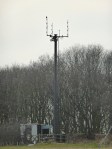
April 9th – Hiding in plain sight on the treeline of a small copse on Sandhills, near Shire Oak, is a Tetra mast. Painted matt brown to blend in with the background, it’s not a mobile phone cell tower, but one of the nodes of the emergency services radio communications and telemetry network for the UK.

Erected in the last decade, Tetra is a secure system designed for use specifically with emergency services in mind. Working at a lower frequency than normal mobile GSM, it’s more efficient structurally, provides secure, encrypted communications and provides all the features required for modern operations.

The network wasn’t without controversy, as the earliest systems interfered with TV transmissions in some instances, and it has proven very expensive to implement, although the system is in use now in much of the developed world.

There are a fair few of these installations around. Look out for them – like this one, they can be hard to spot, but mostly share the same, three-element design.

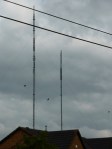
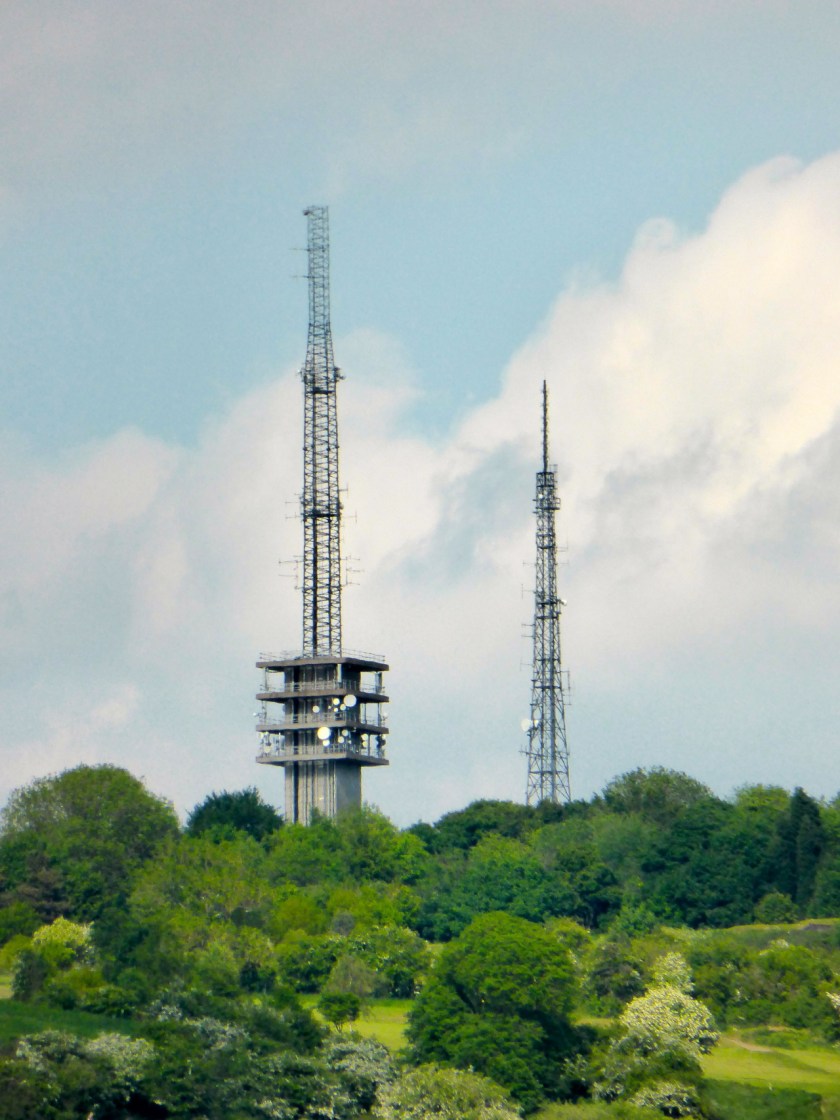
September 11th – For the hell of it, today I got off the train at Four Oaks and rode back from there. On my way back through a sunny Little Aston, I noted the TV transmitters at Hill Hook. Having recently converted to digital, there are currently two masts – the taller one was first, then the one on the right was erected to substitute for it when the original was upgraded for digital. Now the switchover has taken place, I’m looking for signs of the temporary mast coming down, but nothing yet. 

I love these structures. So elegant, so beautifully engineered. Visible for miles around.

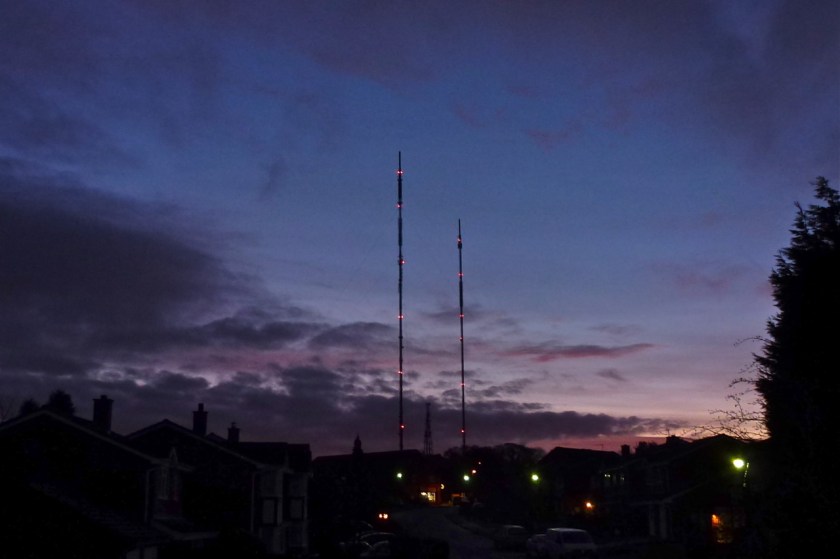
November 23rd – The rain had gone this morning, and it was the first truly clear morning for a week or more. There was a hint of frost, but the breeze and air were oddly warm, yet hard and clear. The lights of Lichfield and Shenstone sparkled in the distance as I poured myself liquid down the Chester Road to Blake Street. There were many good photos I could have taken of this dawn, but sadly, I was running late and had a train to catch, so I settled for a dawn shot of the twin Sutton Masts and Hill Hook from the station platform. The sky really was like this, is was gorgeous. Now the digital switchover is done, wonder when they’ll take down the temporary transmitter?