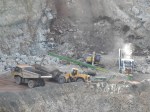
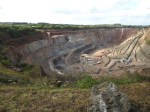
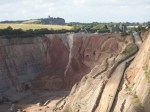
September 2nd – Pleased to see the vegetation has been cut back, restoring the fascinating view of Cloud Quarry from the Cloud Trail, near Worthingdon on the Leicestershire/Derbyshire border.

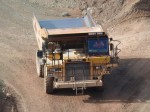
It seems like a well run quarry, mining limestone for a variety of industry. Everywhere you look machines are busy moving, breaking or grading stone, and some of the driving on the shelves and roads is very impressive.

I could watch this for hours.

April 5th – At Chasewater, a sinkhole has opened up in the car park, yards from the M6 Toll. Possibly an old shallow bell pit, it could just the same be an old drain or other cavity.

Site notices say experts from the Coal Authority are looking into it. As they do.

Never, ever trust the ground beneath your feet.

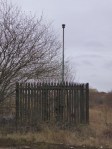
February 27th – I had to pop into Aldridge on my way home and had ridden up Coppice Lane; not far from the gas turbine and leechate plant, another sign of a dirty underground secret from the past. This square compound on wind and mud-blasted wasteland, just off the rear entrance to the Ibstock Brick plant, is a breather for the mines underneath the area that were used as a dumping receptacle for millions of gallons of industrial toxic waste a couple of decades ago.

Inside this well-locked square palisade fence, a bulkhead is fitted to a borehole that goes hundreds of feet underground and allows gasses to vent to the atmosphere from the sludge within. The breather itself is from a tall pipe, well above human head height, up where the wind can quickly disperse anything nasty.

It’s sobering, and a bit chilling; and indicator that beneath this area there is an unknown quantity still requiring monitoring and care. But the ground it is in is surrounded in clay and favourable, and as time passes, the content should settle.

There are several of these installations in the local area – finding them is an interesting, if slightly unnerving challenge.
April 29th – A late afternoon escape found me spinning round Brownhills Common in a fruitless hunt for deer. I pottered on up to Engine Lane, and remembered the shaft located on a small mound by the old level crossing. Brick-lined, capped about six feet down with old railway sleepers, I think it must have been an air shaft for a nearby colliery. It’s not really wide enough to be a working shaft, and it’s termination at a considerable height above surrounding ground level suggests that the constructors wanted to avoid surface water draining down it. 

A conundrum indeed.