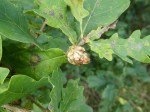
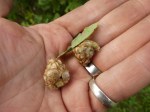
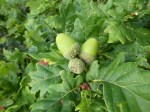
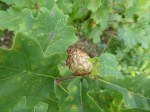
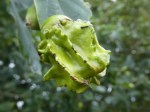
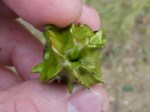
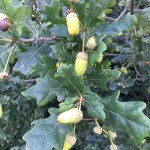
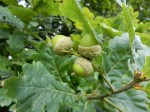
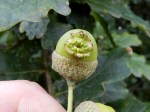
September 26th – On my way home in the road in the backstreets of Walsall, I spotted these large acorns in unusually hairy cups. Not having seen the like before, I assumed there were some kind f insect gall.

Looking it up when I got home, these are actually the acorns f a turkey oak, and quite normal for the species. I’ve never seen them before, and they’re quite alien after the familiar gnarled, knobbly normal acorn cup one usually sees.

An interesting oddity.

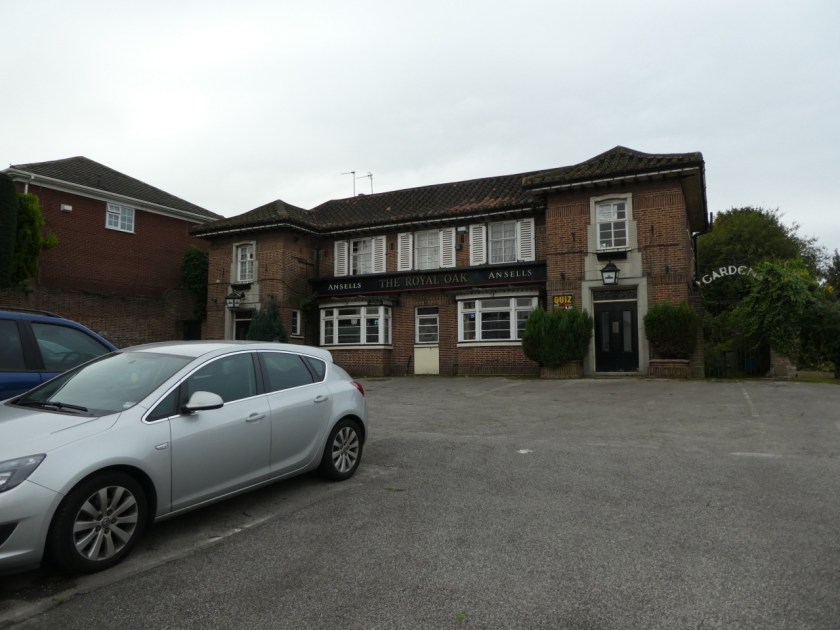
September 19th – Freewheeling down Shire Oak Hill into Brownhills, I stopped to look at the sad hulk of the Rosa – or ‘Middle’ Oak, closed a couple of years ago, and once a popular, award-winning pub. Sold privately, no planning applications have ever been submitted for another use, and the building continues to fall quite into decay. The only use it sees these days if neighbours using the car park.

Nobody seems to know what, if anything, the owners have planned.

A sad end to a once fine community pub.

September 4th – This is an interesting find. I’m fascinated by insect galls – the aberrations caused mainly to oak trees by parasitic insects who lay their eggs in leaf and acorn buds and cause them to mutate into safe enclosures for their larvae to hatch and grow.

We mostly know oak apples, the round globes top right – often, like these, with a little hole bored in their surface where the wasp that grew within emerged. Also, I’ve featured a few pictures in the past of the gnarly, fascinating knapper and marble galls. But these are new to me.

This tree at the new pond in Clayhanger was covered in fruits that looked like hops, or alder fruit, as well as healthy, plump acorns. I’ve never seen anything like it, and so asked twitter. My old mate Posh Dave, @tringonometry came to my aid.

These are artichoke galls, yet another variety of insect parasitisation on oaks. You can read about them here.

Both nature, and the usefulness of social media are astounding. Thanks, Dave.

August 22nd – I note a fair crop of acorns this year, and like last, I was caught by false memory with the knopper galls.

I tend to think these parasite-created growths happen earlier in the year than they actually do, and always assume we’re not going to see any when they’ve not appeared by late July. Since they’re caused by a wasp larva hatching in the acorn bud, they can’t occur earlier than the fruit, can they?

The tiny wasp that drills it’s egg in to the fruit bud earlier in the year – coated in a secretion that will corrupt the bud’s growth plan into these curious galls – is pretty unremarkable. But the distorted, knobbly knopper galls are glossy, leathery and fascinating.

Nature can be very weird sometimes.

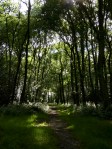
July 5th – Coppice Woods, or to give this small copse it’s proper name, Goblins Pit Wood is what I believe to be the last remnant of the holly and oak woodlands that used to cover our area before the industrial revolution. Quite why it survived, I don’t know, but now part of the Jockey Meadows SSSI, the future of this woodland seems secure.

There’s still plenty of oak and holly, but other deciduous trees make for a variety of habitats for bats, mustelids, rodents, birds and insects.

On this sunny evening ride home, Coppice Woods were a peaceful, sleepy sanctuary from the rush-hour traffic on Green Lane.

July 4th – A first for the year, an oak gall. I don’t know if I’m too early or if it’s just been a bad year for the tiny wasp that creates these galls on oak trees by depositing an egg coated in a chemical which causes leaf or acorn buds to mutate and grow into a gall, inside which a tiny hatched larvae feeds, before drilling it’s way out and flying away.

I normally see a variety from mid summer on – the smooth green type shown here, marble gables which are also globular, but veined with white and pink, and knoppers which mutate gnarly growths from acorns themselves.

It’ll be fun to see if I’m early or if the yield this year is indeed quite poor.

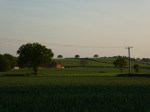
May 12th – It was such a gorgeous evening I couldn’t resist going for a spin around the lanes of Stonnall. Everything was suffused in a gorgeous golden light, and the countryside is looking wonderfully green and mellow at the moment. 

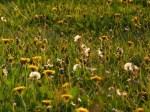
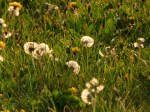
At Fighting Cocks, the dandelion meadow is just wonderful. It would be nice if this weather could stay awhile.

September 4th – And then, there are the oaks I was concerned were lost. All the galls and nasties seem to have appeared long before the acorn crop I thought would not appear – there is now a stunning crop of tiny acorns growing well all along the canal at Clayhanger.

It’s good to see, and when they start to fall, I’ll gather them and spread the acorn love.

Never lose faith.

August 18th – The poor acorns are really hampered this year – the gall wasps really seem to have affected them. These seem very like knopper galls, which are caused by the wasp injecting a chemical encased egg into the acorn bud when it’s forming. The chemical causes the acorn to mutate, and inside, the wasp larvae hates and feeds.

There are now a good few healthy acorns, though, so perhaps it’s not as bad as I feared, but I do wonder why it just seems to be oaks that are tortured so.

August 7th – This oak tree was spotted by the cycle way in Pelsall, and seems to be afflicted by the same ills befalling similar trees everywhere I go. The poor oaks this year seem to have few acorns, leaves dying off early and tiny, deformed acorns.
I hope this is an aberrant year and in seasons to come are better.