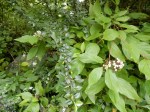
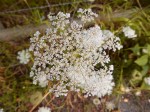
July 29th – I’m not entirely sure what this plant is spotted growing near Wednesbury. It’s like cow parsley, with a flat flowerhead made of many tiny little flowers, but it’s way too short, and with a curious seed head.

There’s absolutely loads of it along the fences and verges here. Can anyone identify it?

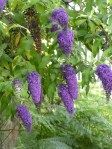
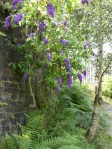
July 20th – People seem to think I’m negative about buddleia, but I’m not really. It’s a beautiful purple shrub that lights up late summer wonderfully, and it’s not known as the butterfly bush for nothing – the Lepidoptera love the huge flowerhead composed of tiny, individual blooms. 

My problem with this plant – if it’s a problem at all – is that for me, it’s a harbinger of urban decay. It’s so successful in urban environments that it’ll grow well in a patch of soot in vertical brickwork. At this time of year, throughout the urban expanses of the UK you can see buddleia sprouting and flowering from derelict buildings, bridges and rail lines. Seemingly one of the first signs that nobody cares for a place anymore is that it starts flowering in purple at high summer.

You can’t blame the plant for that… 

July 15th – As a good pal said to me a few days ago, some plants would be really cherished if they were harder to grow, and I believe this to be the case with ragwort. Deep yellow and orange, this dweller of scrubs, verges, hedgerows and fallow ground flowers profusely throughout the summer, largely ignored because it’s so common.

Scourge of horse-owners due to the toxic effect on their steeds, it’s not a well liked plant.

Which is a shame, because when you stop to look at it, it’s rather beautiful.

August 17th – Between Darlaston and Pleck on the Walsall Canal, near James Bridge, the old turnover bridge for the defunct Anson Branch. It’s just as well the line is truncated now, as that huge pipe renders the turnover aspect of the crossing pointless. 

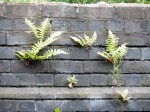
It’s fascinating to see the bracken, buddleia and other weeds gradually dismantling the blue bricks. Gentle, oh so gentle hydraulic pressure gradually and steadily cleaving mortar from brick, using any crack or fissure where a scrap of nourishment can be found.

Nature is remarkable in it’s determination.

September 8th – I hit Birmingham again mid afternoon. I was drained, and feeling a bit groggy, but couldn’t waste the good weather. I rode out of town on the canal to Spaghetti Junction, then eastwards to Castle Vale and hopped on the Plantsbrook/New Hall Valley cycleway. It was gorgeous, and well worth what seemed like a Herculean effort. 

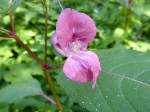
The Himalayan balsam is thick by the brook for almost the entire cycleway, making the air smell of hot tin, but for all the damage it causes, it is rather beautiful.

When I got to Sutton, I was beaten, and hopped on the train to Shenstone. IBS can be a pain sometimes.

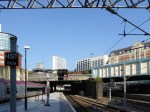
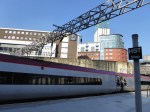
July 1st – New Street Station is still a mess, still barely functional, and mostly, I think, now beyond reclamation. But on an early summer sunny morning, there’s something about the concrete, steel and surrounding architecture that renders it if not impressive, then rather fascinating. Architectural styles and textures clash. Machinery grinds and rumbles. Rails screech and clatter. Overhead wires buzz and crackle.

In the midst of this, the most unnatural, built environment that one would consider utterly hostile – signs of life. Shrubs and weeds, their seeds deposited by birds or wind, by luck find a little moisture, a sheltered fissure and just a little nutrition.

If only human design had such bare-faced tenacity, audacity and beauty.
May 23rd – I noticed something today I’d not spotted before. Cycling back up the Chester Road from Mill Green, as the land rises and undulates (from about 130m AOD to about 175m AOD) the plant life on the grass verges and in the hedgerows changes. At the low end, there’s birds foot trefoil, ragwort, ox-eye daises and clover in abundance in lush green grass. Higher up, these plants peter out to campion, dandelions and spiky grasses. Wonder if it’s changing soil or height?

The trefoil – called egg and bacon by us as kids – is lovely this year, and always looks nice after rain.

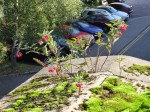
October 30th – I spotted this yesterday, but it’s surprisingly hard to photograph. Growing from the thinnest of fissures in a capstone 20ft above Park Street in Birmingham, a small shrub. I’m not sure what it is, but it’s bearing the most beautiful red berries. It’s way out of reach beyond the platform fence of Moor Street Station, where the line crosses the street below. Here, the parapets and abutments of the bridge ramble and cross, and this small plant is clearly thriving, unseen, unchecked and unappreciated, presumably seeded by the local birdlife.

Give nature half a chance and it’s in like Flynn. Wonderful.