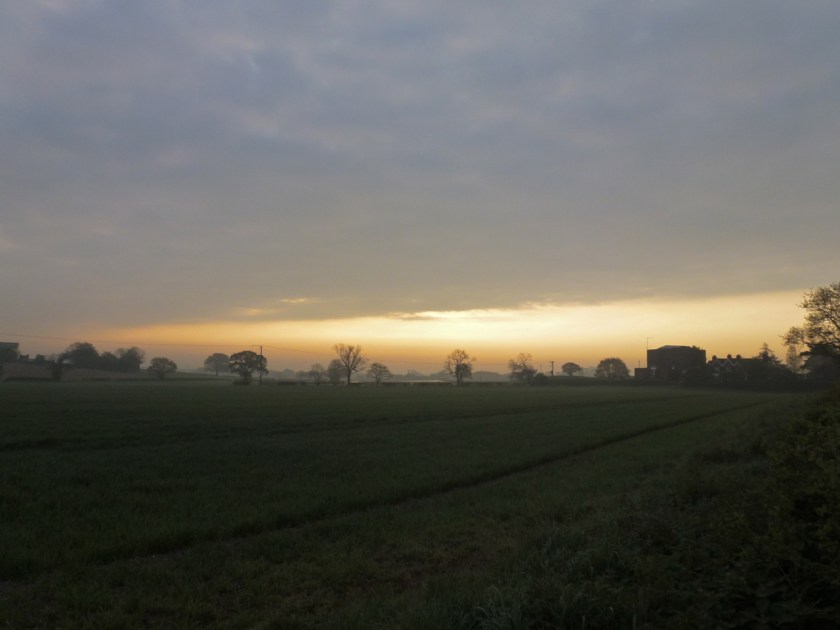
June 16th – Summer is finally on her throne, and how glorious her reign. I slipped out after work on a circuit of the backlanes of Shenstone, and took in all the overcast but warm day offered. The hedgerows and fields are green, flowers are out (including the curious ones I found at Summerhill I can’t identify) and the view of Wall Church from Hiton was gorgeous.

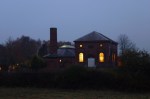
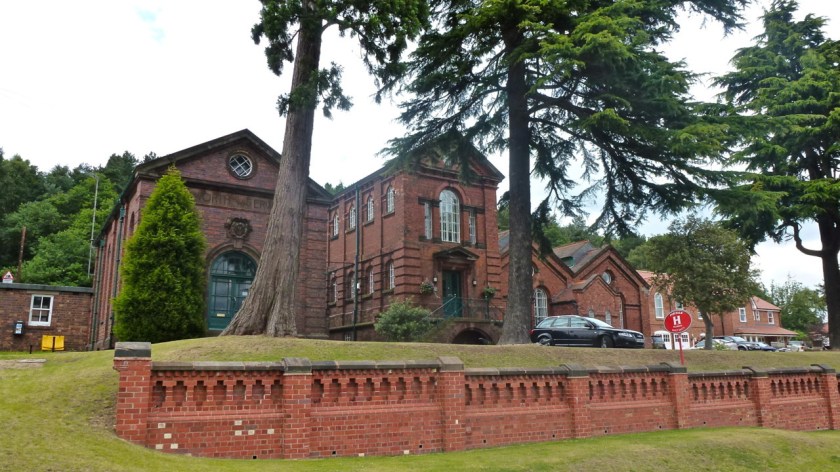
Even the Victorian and decidedly austere pumping station at Shenstone looked incredible surrounded by lush pasture.

This is the time I love.

April 17th – The minutiae of drainage engineering are wonderful. I’ve been passing this array of manholes for a couple of weeks now, and noticed that new bars had been installed across the covers. It’s taken me ages to work out what they’re for. It’s not what one may imagine.

Opposite a small, automatic sewer pumping station on Green Lane at Bullings Heath, Walsall Wood, there is the concrete cap to what must be a storm buffer. A storm buffer is a large underground tank that, in time of heavy rainfall, collects drainage water and fills up, storing it and allowing slower discharge into the main network to prevent overload. There are lots around and they work well; you can tell this is one due to the large circular ‘cap’ evident with the access covers.

Recently, bars were mounted over the covers. Initially, I assumed they were to prevent access by drainers – a type of Urban Explorer that goes into sewers and storm drains to explore – but they aren’t actually secure. They’re secured with normal nuts and bolts, not locks. A couple of covers in front (not shown), which I think house pumps of valves – are not so protected.

They have actually been fitted to prevent internal pressure from blowing the access covers out. If the buffer filled to capacity due to a storm event, water pressure would increase against the hatches, and lift them out. That would then expose anyone walking through the subsequent flood liable to fall into a very deep, open manhole.

The bars are therefore a safety feature.

I wonder what has occurred, and where, to make this risk suddenly appreciated?
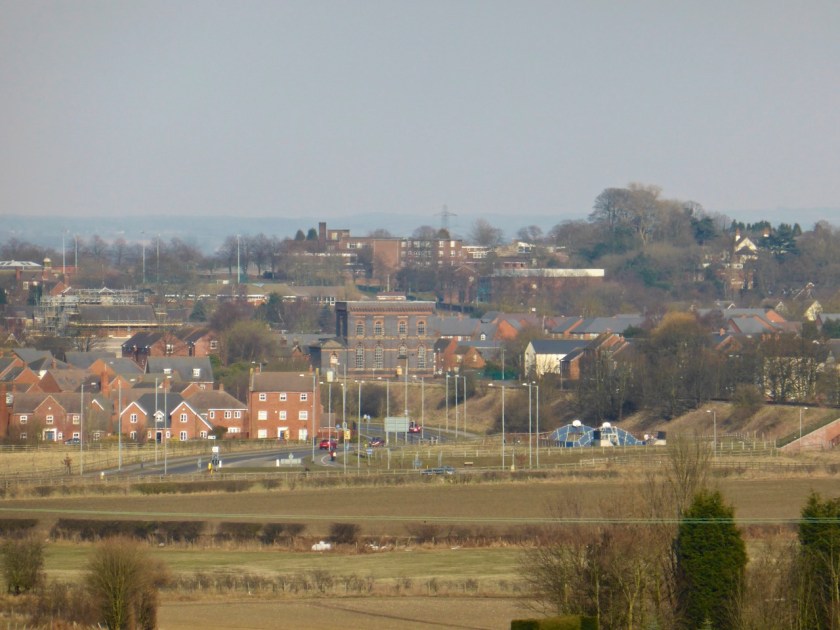
April 6th – From Pipehill, on a reasonable day, the view of south Lichfield is wonderful. Modern, new build housing and a bypass have converted what was once a mostly rural view into urban sprawl reminiscent of Yate or Stoke Gifford in Bristol. In the middle, like some fallen baroness in a closing-time bar, sits the once noble Sandfields Pumping Station. This remarkable building once supplied water to the Black Country, but now languishes idle in a sea of buildings whose architectural and structural benchmark are set considerably lower. A pedigree hound surrounded by mongrels.

The campaign to save the pumping station and the remarkable engine it contains is gearing up. Visit Dave Moore’s blog to find out more.

August 4th – Barely time for a ride today, but I snatched one in the dying light of the evening. It was a grim evening, and we’d had heavy rainstorms throughout the afternoon. The sky was alternately light and dark, threatening another deluge with bands of bright blue coming through. At Coppice Lane, the small, automated pumping station in Birch Coppice was clearly swamped and unable to cope; the access hatch in front had water gushing up through it. It was flowing back down the lane and forming a large flood.The weather this summer really has been lousy.

November 20th – The daylight, such as it managed on this grim, mist-sodden day, gave up early and headed for the pub. At 4:15, it was nearly dark, and at Shenstone, the pumping station lights were on full blast – someone must have been working in there, they aren’t normally on. It’s nice to know that even on grim, grey, lightless Sundays, the essential services are working to keep things flowing smoothly.

June 10th – Returning for a while up the challenging hill from the Tame crossing at Hopwas up the A51 to Packington, I stopped to admire the former Tamworth Waterworks pumping station. Sitting in red-brick splendour in the lee of Hopwas Hays Wood, the former pump house has been converted into attractive dwellings. I love it when old buildings are repurposed in such a sensitive manner.

May 17th – Shenstone Pumping Station, one of the earlier examples of the great South Staffordshire Waterworks tradition, is a dark red, victorian edifice, originally designed for a steam pump. Brought into use in 1892, it pumps water to this day from a 131 feet deep, 12 foot diameter well, with a 597 foot heading. The steam pump was retired in 1957, and now a 60 horsepower submersible well pump tops up a 10,000 gallon tank under the pumphouse.

After treatment there, water is pumped by 200 horsepower pumps up to Barr Beacon reservoir for distribution. These pumps can supply 1,500,000 gallons per day, and are backed up by emergency generators.

Shame about the hideous air intake grafted into the front doors.

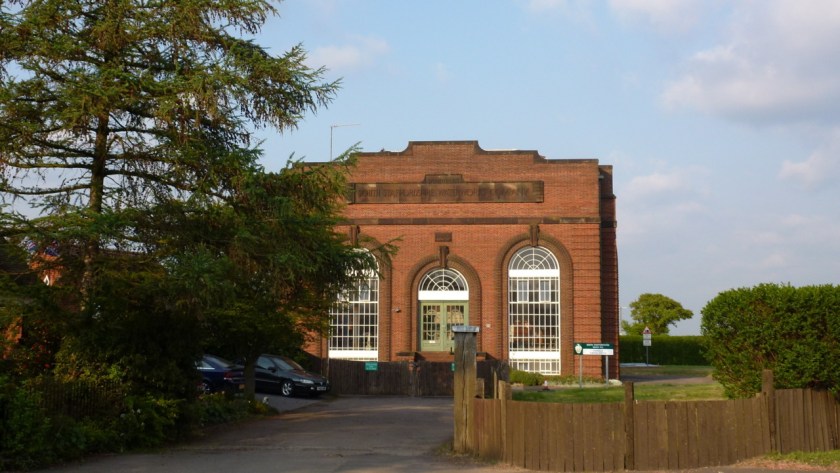
April 28th – The Sandhills Pumping Station – built by the private concern of The South Staffordshire Waterworks Company in 1935 – still pumps fresh water to this day from two 400 foot deep boreholes drilled into the bunter pebble beds under Springhill. This station – and others like it dotted throughout our area – are handsome period pieces of civic architecture that speak of a better, more socially aware time, when the supply of basic services like clean water was seen as a noble activity and not a purely profit driven enterprise.