June 12th – Following isolation of the leak at Little Bloxwich, the canal level has continued to rise and is now about 20-25mm off maximum (ie. the weir bar at Clayhanger overflow), so more or less back to normal.

It took a while, with problems at Chasewater and with balancing pumps having to be installed at the leak site, but thankfully, apart from the fact that there’s a large repair required in Little Bloxwhich which will prevent passage from Brownhills to Wolverhampton and vice versa by boat for a bit, it’s good to see the waterway back to normal health.

This could have been so much worse.

February 16th – Chasewater: the suspense is killing me. Last week, 33cm from full. Thanks to a week of snow and heavy rains, now 14cm from full. A gain of 19cm – nearly 8 inches since last Sunday evening. Considering the huge surface are of the reservoir, that’s astounding.

I noted these teenagers running along the top of the weir, trying to demonstrate their bravado to their female companions. Nothing changes. When I was their age, I’d have been doing the same thing. Bet at least one of them ended up squelching home, dejected.

January 11th – Chasewater was also peaceful, but there were plenty of dog walkers, runners and cyclists about. The sunset wasn’t as spectacular as I’d hoped, but it wasn’t poor, either. I noted a massive gull roost, a welcome side effect of the increased water levels. Thousands of birds drifted gently on an otherwise millpond-like reservoir. I watched the dusk close in. It was gorgeous.
The water level seems to be stabilising right now; we’ve had a largely rain-free week, and it’s gained around 4cm, about an inch and a half since Sunday. 

December 28th – Another grey, wet day. I’ve never known the weather quite so bad. I almost feel cheated out of my holiday – haven’t been on a single long, decent ride yet…

I spent a lot of time at Chasewater this afternoon. The weather was windy and squally, and the water level still increases. The last time I looked – Tuesday, Christmas day, it stood at 8cm on the lower scale. Since then, it’s recede 98cm on the upper scale. That’s a 10cm increase, another four inches. Just to tot that up, that’s 18 inches in 8 days and 24 inches – 2 feet – since december 16th, 12 days ago. That is one huge volume of water pouring into the feeders and watercourses that top up Chasewater. That’s one hell of a lot of rain. I’d say there’s only a couple of feet to go now, maybe less: The main lake is only an inch or so from joining with the Nine-foot through the new bridge.

Sorry to keep harping on, but this is historic stuff. I have never, ever experienced a season this wet.

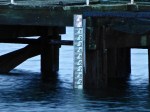
September 29th – It’s finally happened. We’ve had so much rain in recent months, the Chasewater has refilled to an unthought of degree. Now, the water level is registering on the scale on the pier; just 20 days ago it was well below it. The scale starts at 148.35m AOD, having risen from it’s low point of 143.7m AOD last September. A huge gain, nobody thought this was really possible. 

Mind you, the price of this restoration has been a bloody awful summer…

August 18th – I left the house in the early evening to get some shopping in and pick up a takeaway. On my return, I crossed Chasewater. It’s really filling up now, and the recovery continues. The depth gauge on the pier now is only about 500mm clear of the water, and slowly, inexorably, the water is reclaiming the reed-beds and willows that populated the dry bed. I’d forgotten the joy of seeing a fine sunset reflected in the lake surface. Majestic.

July 7th – It seems incredible, but Chasewater is slowly returning to normal. I don’t think Graham Evans, of Chasewater Wildlife Group, thought his rain dances would be so successful. The lake is now clearly at 1976 levels, so recovery to full capacity is possible by the end of next year – but only if it rains a hell of a lot. I noted that the pier now has its toes in the water, and the little beach at the north end of the dam won’t be too reminiscent of Weston Super Mare for much longer. Contributing to all this are the land drains, creeks and issues that feed the reservoir. A fine thing indeed, but I fear my feet are developing webs between the toes.

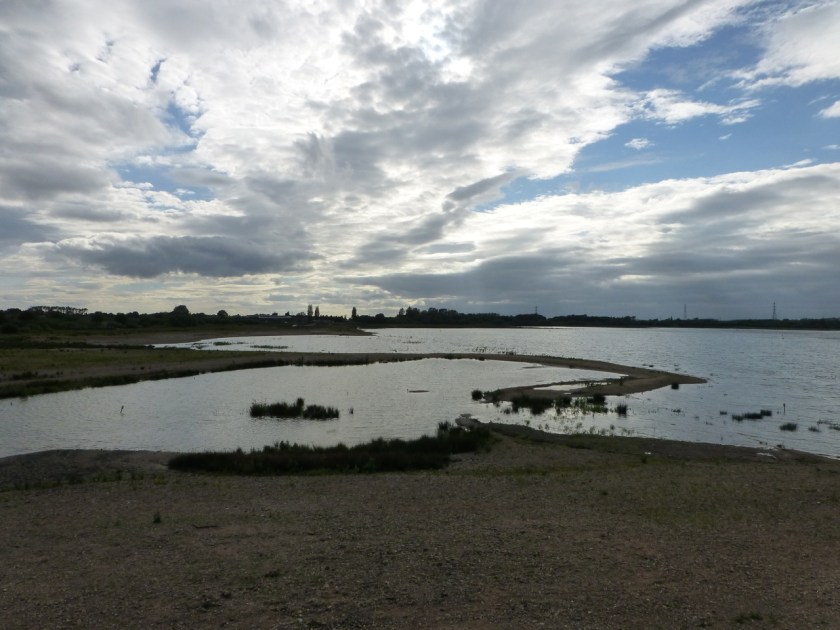
June 9th – Chasewater is rising. In all the rain, the only benefit is that the waterline is slowly, almost imperceptibly enlarging. A landmark occurred this week; the ‘pier pool’ left stranded from the main lake, has rejoined it once more. Curious spits and islands have developed. You can see the ecology shifting day by day. But don’t be fooled. The next meter in depth will increase the surface area of the reservoir hugely, and take a massive amount of water. That, sadly, means a very, very wet summer. A terrible dilemma…

May 5th – Chasewater’s refilling has slowed up with the cessation in rain, but my, how it’s changing. All the land drains and streams are flowing well, with water also coming in from the new culvert in the railway causeway, under Turner’s Hill. The secondary outlet culvert is nearly submerged now, and sailing or windsurfing is clearly on the menu as new marker bouys have been laid around it to warn of the hazard. Grass growing on the formerly dry lake bed is now submerged, and looks like reed beds from afar. Many of the smaller pools are steadily linking together.

A fantastic thing to witness, for sure.

February 4th – I noticed as I passed through Chasewater that Jeffrey’s Swag, the north-eastern body of Chasewater bordering the railway causeway, had now refilled. Lowered considerably last year to construct a new spillway between it and Chasewater itself, it has now refilled to such a level that water is flowing from the Swag into Chasewater. This is really positive news and means that Chasewater is now being effectively fed by local streams that run into the Swag, so hopefully it will refill a tad quicker. It’s also good news for the frogs and toads that spawn in the creek between the two come spring.