Sunday March 7th 2021 – Sometimes when your bike ails you, the only thing you can do is pack a big bag of tools, and ride it with an ear attuned to the sounds it may make in complaint.
I set off for a ride over to Hopwas, Syerscote, Clifton and Lullington, returning via Whitemoor Haye. Fortunately I nailed the problem with the bike at Hopwas.
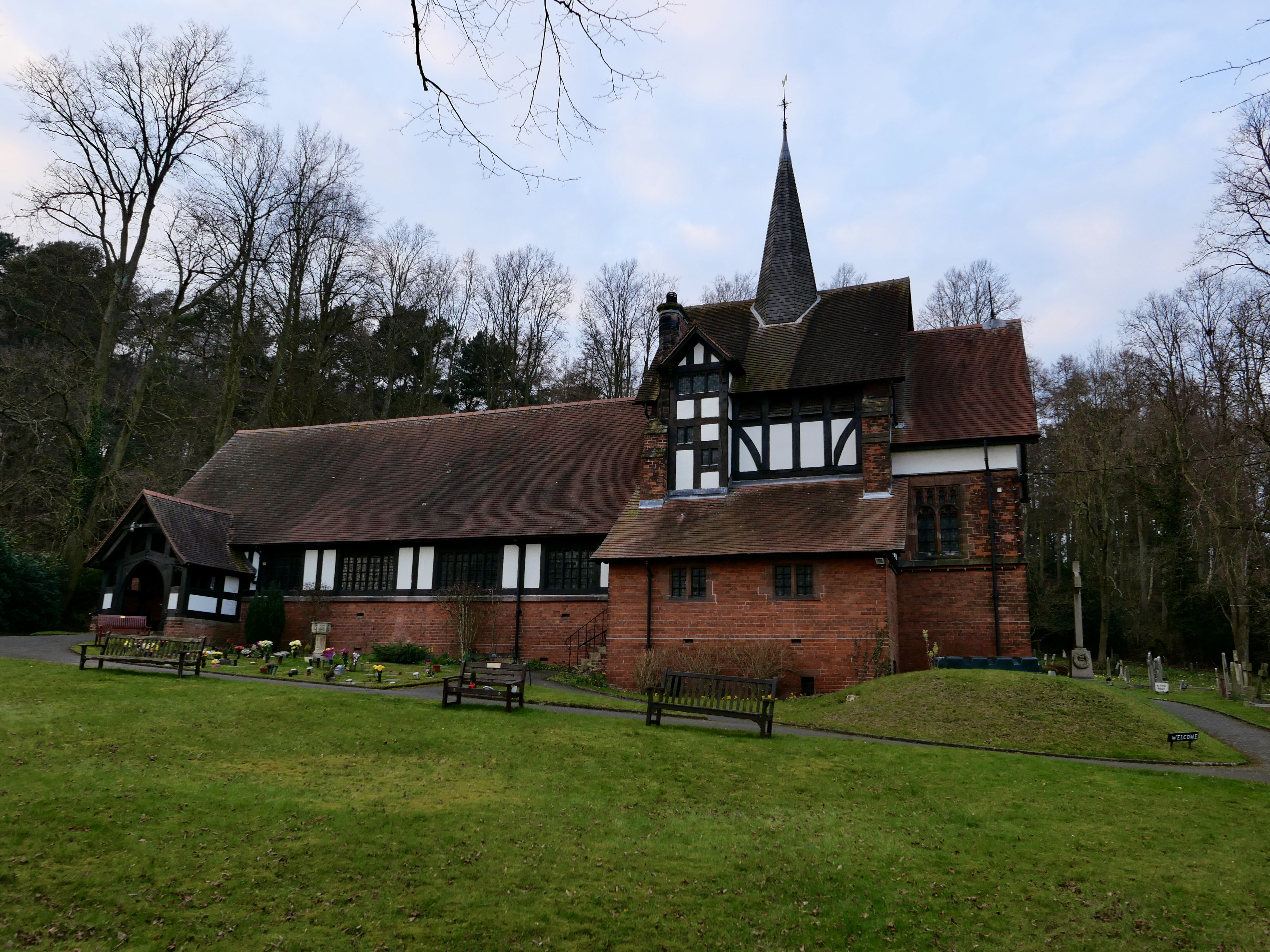
In the shadow of that farmhouse-like, remarkable church, I found my rubs and rattles were due to a slightly loose brake calliper, which was mobile when braking but not loose enough to be obvious.
Secured and adjusted, I rode out with renewed vigour. After all, newly fixed up bikes always go faster.
Sadly, the light wasn’t with me, and spring still hadn’t kissed Syerscote or that gorgeous view back to Clifton from the hill to Lullington, where the Mease Valley separates you from it.
But it will.
In these strange times I am impatient for the comfort and openness of better days, as are we all. But for now, we must just press on.
Sunday December 20th 2020 – As usual at Christmas, a few people have asked me to look over bikes before they gift them. On a wet, miserable Sunday I set about my charges with gentle precision.
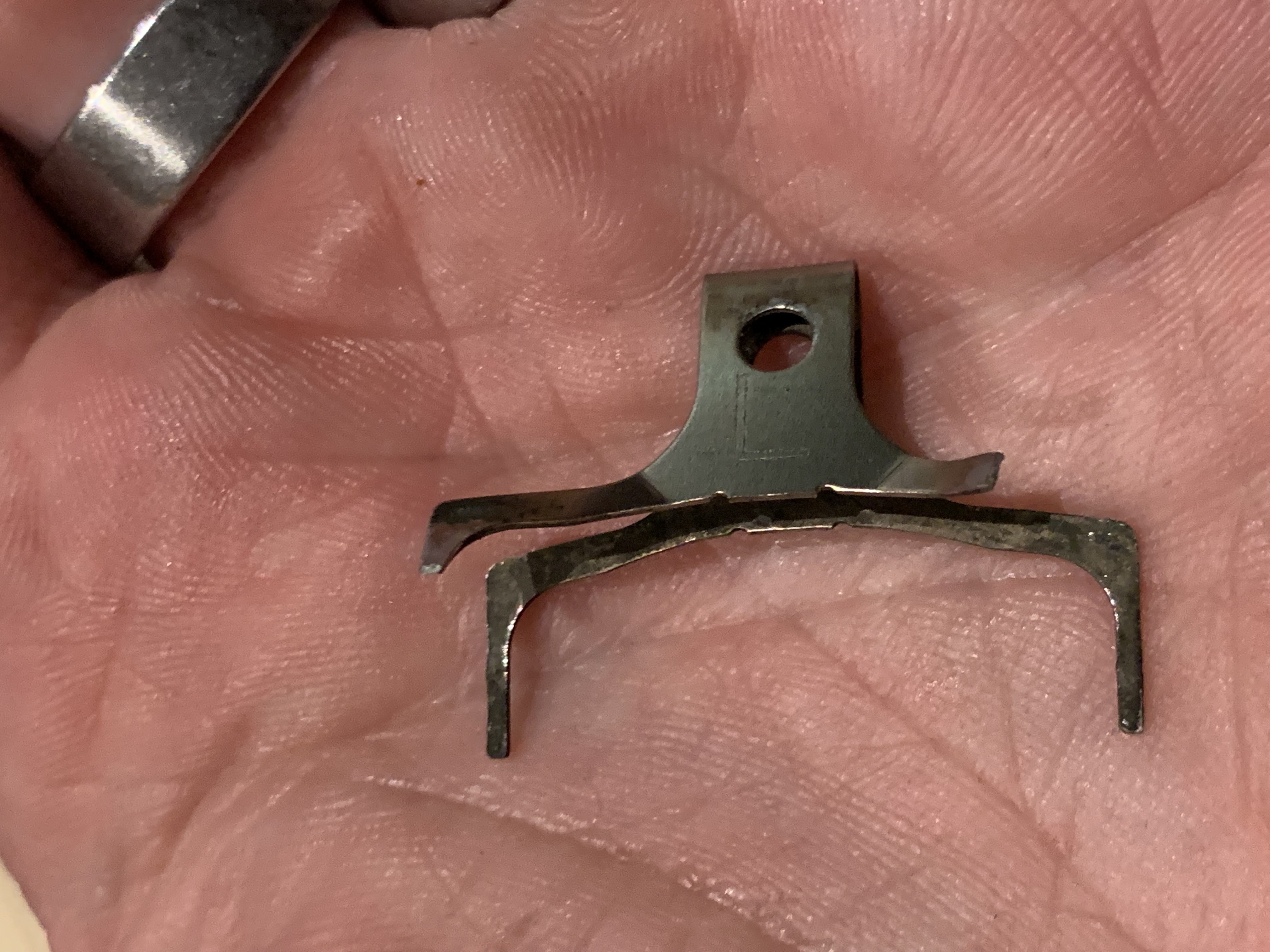
A particularly fiddly job involved a bike in otherwise great condition on which the previous owner had badly threaded the chain through the rear derailleur: This had worn the side plate out and caused it to distort. A new plate was about a tenner, but no chance before Christmas. I removed the old one, cleaned it up and straightened it, sanded it smooth and sprayed it black.
It wasn’t perfect, but the new owner wouldn’t spot it until the one I ordered arrived from eBay after Christmas.
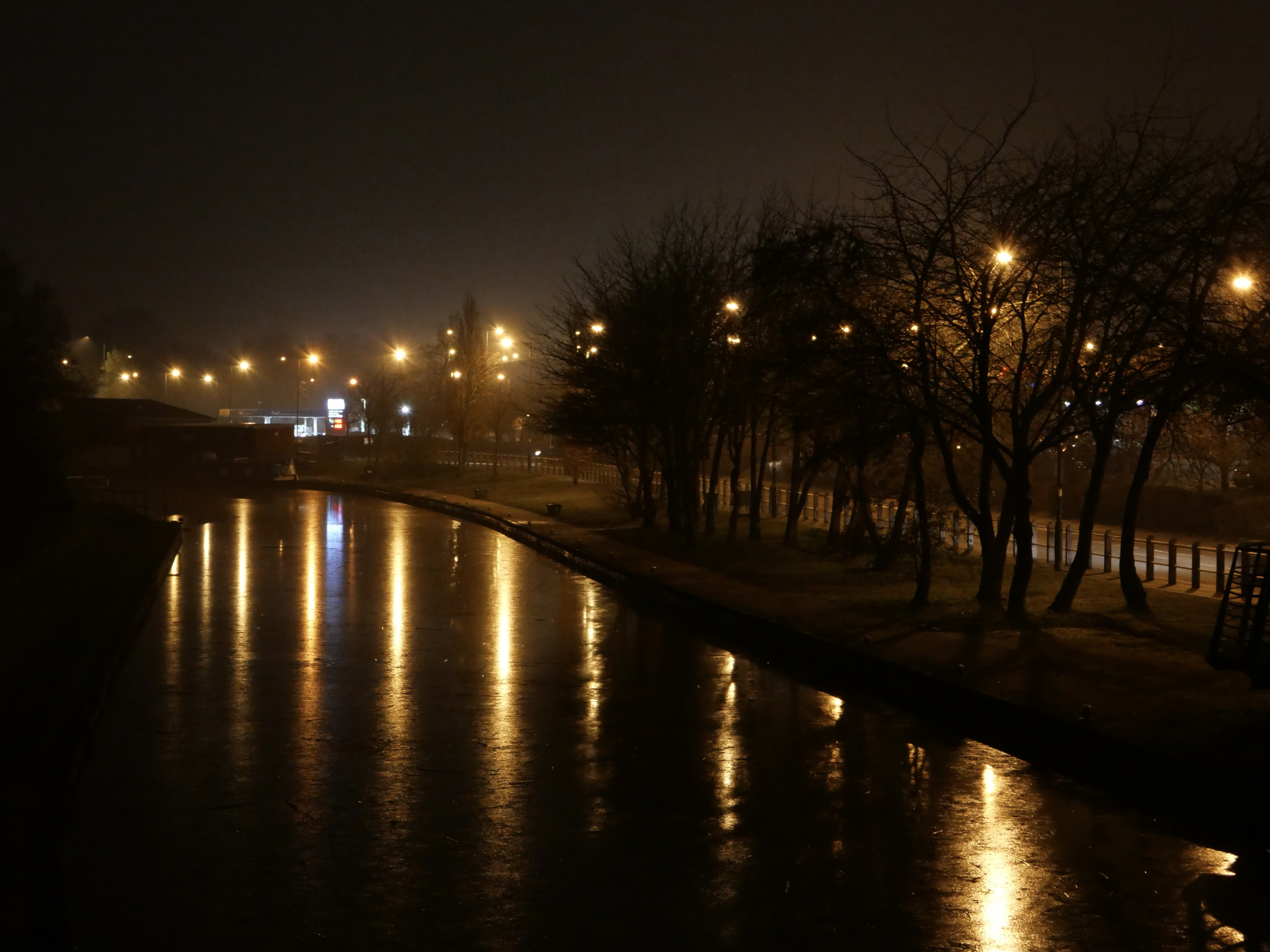
A bleak test ride up the canal with an adjustment stop on Silver Street Bridge proved the repair, but did necessitate another cleaning session…
Friday November 21st 2020 – One here for Bob’s big book of bizarre mechanical failures – specifically the ‘This is not my circus, and those are most definitely not my monkeys’ chapter.
This is not my bike. I was asked by an old family friend to change their tyres, as they didn’t feel comfortable to do so themselves. ‘No problem!’ I assured them as they wheeled the bike into the garage.
First step, remove rear wheel and let air out of the old tyre. Simple enough. Since the tubes would be too big for the new tyres, I removed the valve for a full deflation – and the telltale green ooze of tyre sealant – slime brand – bubbled out.
This would be no problem, usually, except the local bike shop who originally fitted these tyres made a mistake.
What I found was only half of the tyre went down – the other half opposite the valve state inflated. That I was astounded and somewhat bemused is an understatement.
Never, ever had seen that before, and it took me a few minutes to work out – with the help of a mate by text – to diagnose that the tube had been twisted when fitted, under inflation the pressure had compressed the two twists, and the sealant blocked them creating an effective seal.
Great. But how do you release the trapped air?
I didn’t want to try puncturing it. Friend suggested a sharp tap with a blunt, soft object on the inflated section, or bouncing it off the floor. I grabbed an offcut of 2×2 and rapped the tire sharply.
There was a loud bang, and a volcanic ejaculation of green sealant.
Everywhere.It went everywhere. It’s just possible there’s an object in the workshop that doesn’t have green slime on it somewhere, but as yet I’ve not found one. A total mess. I was dripping.
The areas where the tube had twisted had clearly worn tissue-thin against the tyre, and the tap with the wood was the straw that broke it’s back.There was no patching THAT tube.
I have never seen this before, and probably never will do again, but it was a messy, if perplexing adventure.
That was a blowout on the road waiting to happen, and the bike shop deserve a slap.
Fixing other people’s bikes is never as simple as you think…
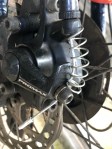
September 13th – Spotted in a customer’s bike shed, and improvised, clever repair to a brake calliper with a broken return spring.
The return spring – present in some form in nearly every type of brake – forces the brake off once the lever is released.
Since the brake cable pulls the yoke awards the cable end stop to engage the disc brake fitted here, forcing the two apart will duplicate the effect of releasing the brake as performed normally by a return spring. The spring has clearly broken and instead of replacing the whole calliper, the owner has released the cable, threaded on a very stiff spring and re-assembled the cable. The cable retains the spring and the brake operates as normal.
Clever. I’m impressed.
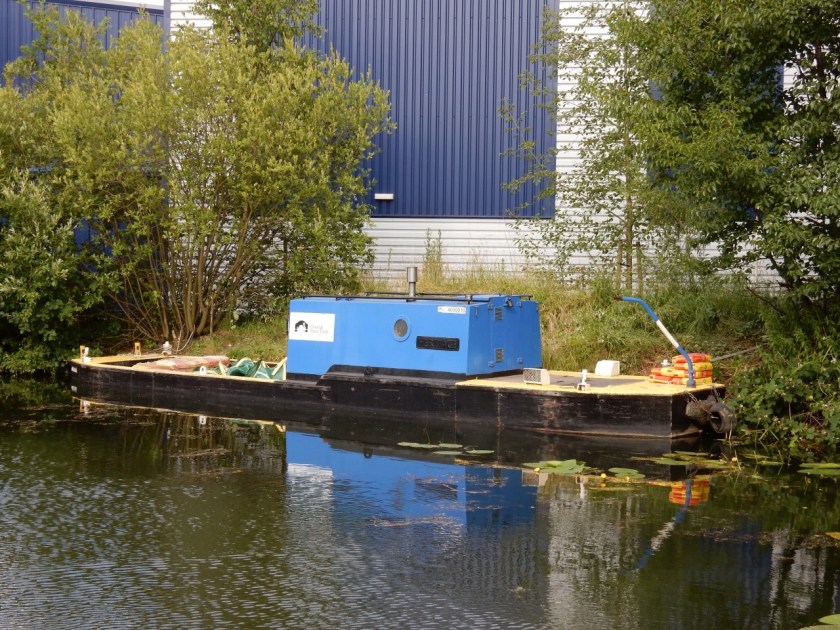
July 10 – Up near Clayhanger on the canal, I noticed a Canal and River Trust workboat, moored and laden with building materials. Wonder what that’s here for? Hopefully repairing some of the brickwork falling away for the banks… we can always hope.
June 16th – Bottom brackets are a pain in the arse. I can’t believe that after more than a century of cycling technological innovation, they’re still so rubbish.
The bottom bracket is the spindle that the cranks mount on through the bottom of the frame, which spins freely allowing your pedals to rotate. As a mechanical component, the bottom bracket experiences the worst abuse – epicentric, unbalanced point loading, muck, water and corrosion. My bottom brackets take my full weight, plus that of the bike and load. They work hard.
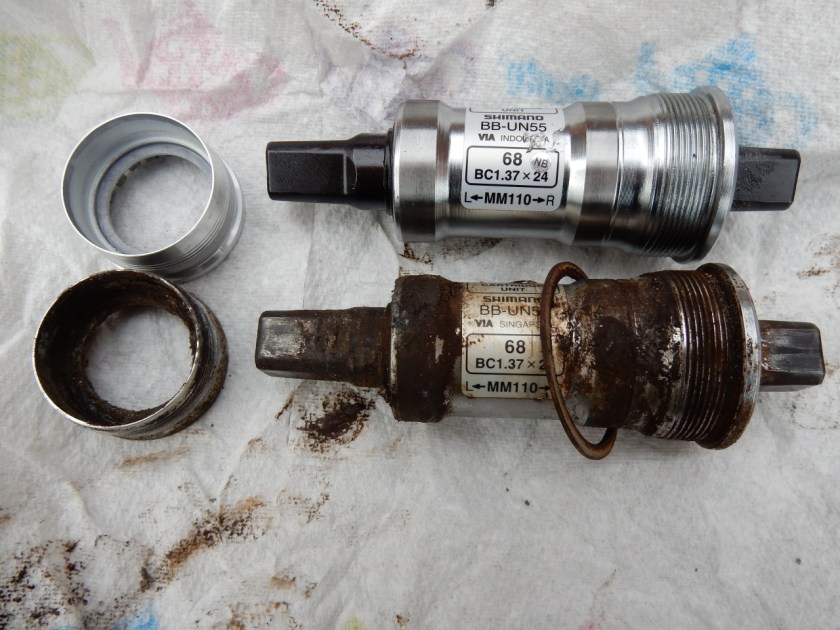
Several solutions exist for bottom brackets – the component axle and loose bearings – the old way and fiddly to adjust and maintain; the ‘sealed cartridge’ (above) – a disposable insert designed for easy changing; the external – a frankly daft idea that’s gained traction in the last five years; the thoroughly insane press fit, preferred by the weekend Wigginses with plastic bikes.
All are rubbish, really.
On Sunday, I noticed the cranks on my bike had alarming play within the frame. The non-drive side bearing had collapsed in the cartridge. It’s done about 20,000 miles. Removing it is easy if you have the right tools and the person who fitted the last one did it properly.
Cranks are removed with a special extractor, and the cartridge is removed with a special socket tool from the DRIVE SIDE. It is a left hand thread, meaning the unit is turned clockwise to unscrew it. That fact escapes many, and has led to loads of skinned knuckles and damaged frames.
The cartridge is left hand threaded to prevent it loosening in use due to precession.
There is a support bush on the other side that unscrews normally using the same tool. The threads are cleaned with a small wire brush and degreaser, dried, greased with anti-seize paste and the new one fitted. Half an hour tops.
If the threads are not greased, the unit will be very, very hard to remove in future.
A replacement is about £15-£20. I’ve tried expensive alternatives – they make no difference.
See you again in another 15-20,000 miles.
April 18th – Not far today, I was busy and weary with a rough throat. I busied myself with spannering the bikes, which are still suffering from the winter. A little wheel truing; further brake tweaks and creak-hunting. Soon be top-notch again.
It was windy but warm as I headed into Brownhills for shopping, and as I passed the canal at Silver Street, I noticed that some embankment work was finally going on, and it’s be interesting to see if they do some of the really bad bits towards Catshill Junction and Clayhanger Bridge.
The gorse was flowering strongly, and the trees along the canal edge are just in blossom. The canoe centre was a hive of activity, which the swans nesting nearby kept a watchful eye on; although there was no need – the canoeists were giving the nest and patrolling dad plenty of space…
December 9th – Walsall Council’s road repair contractors, Tarmac, have a new toy: a velocity patcher. This hi-tech bit of road repair kit cleans out potholes, then blows in a grit and fill mixture, which has a finishing coat of grit applied afterwards. It does a good job.
They’ve been using such a machine in South Staffordshire for ages, and the repairs are long-lasting and good for what they are. They certainly take the nasty surprise out of potholes.
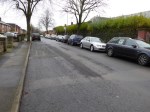
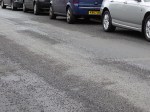
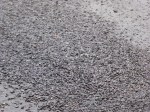
However, just a wee complaint. The crew in Walsall clearly aren’t quite as proficient as those in Staffs, and in the otherwise nicely repaired Scarborough Road in Pleck is awash with loose grit. It’s like Chesil Beach, and very unsafe for cyclists and anyone braking suddenly.
The repair is great, much better – but that loose stuff is going to cause, or exacerbate an accident. Please sort it out.
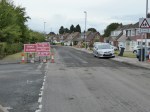
August 9th – Green Lane in Shelfield is being, at long last, resrfaced. I came down there tonight, and It’s officially closed, but was ridable with care. Despite the numerous ‘No Parking’ signs and leaflets, I noticed this vehicle, around which road workers clearly had to plane.
These folk may have gone on holiday I guess, and not known about the works, so one shouldn’t be too harsh.
But it would be ironic if they ever moaned about the council never fixing the potholes…






 BrownhillsBob's #365daysofbiking