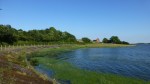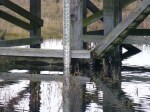
November 4th – I was at Chasewater for the Vintage Event at the railway, but took in a loop of the rapidly refilling lake when I left. I noted that the water level had now reached 5.4 on the scale, whereas on October 19th, it was at 6.5. Since the scale is graduated in decimetres, that tells us the waterline has risen 11cm. That’s 110m in 16 days, making the height of the water now around 148.71m AOD. There’s now about a metre to go until Chasewater is full – however, there’s and awful lot of surface area to cover in that short height gain. At dusk, the gull roost was massive, and with little sunset, the night came on in shades of blue.

August 3rd – Chasewater was as stunning as ever, and I thought I’d do another level update for @xswardy, who’s desperate to get back to waterskiing here. I can’t get over how much things are improving. There are no longer separate pools, and the level is only about half a metre from the bottom of the gauge on the pier. Trouble is now, with every added centimetre, the volume to fill is increasing hugely. Whilst the north of the lakebed is filling up, the shallows here are massive and will take a lot of rain to fill. Still, it’s going much better than expected.

July 22nd – Can there be anything finer than to be in England, in Staffordshire, on a sunny, warm Sunday Evening? I shot over the Chase again, this time over the ancient hill fort of Castle Ring, then dropped into Stonepit Green, and descended to Colton via Stile Cop. Heading out via Blithfield Reservoir, I called in at Hoar Cross, Scotch Hills and Dunstall, returning via Walton on Trent, Croxall and Lichfield. A great ride, and a great way to spend a Sunday evening. A lovely day.

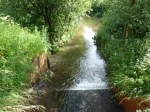
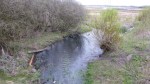
July 7th – It seems incredible, but Chasewater is slowly returning to normal. I don’t think Graham Evans, of Chasewater Wildlife Group, thought his rain dances would be so successful. The lake is now clearly at 1976 levels, so recovery to full capacity is possible by the end of next year – but only if it rains a hell of a lot. I noted that the pier now has its toes in the water, and the little beach at the north end of the dam won’t be too reminiscent of Weston Super Mare for much longer. Contributing to all this are the land drains, creeks and issues that feed the reservoir. A fine thing indeed, but I fear my feet are developing webs between the toes.

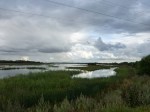
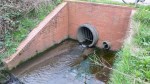
May 5th – Chasewater’s refilling has slowed up with the cessation in rain, but my, how it’s changing. All the land drains and streams are flowing well, with water also coming in from the new culvert in the railway causeway, under Turner’s Hill. The secondary outlet culvert is nearly submerged now, and sailing or windsurfing is clearly on the menu as new marker bouys have been laid around it to warn of the hazard. Grass growing on the formerly dry lake bed is now submerged, and looks like reed beds from afar. Many of the smaller pools are steadily linking together.

A fantastic thing to witness, for sure.

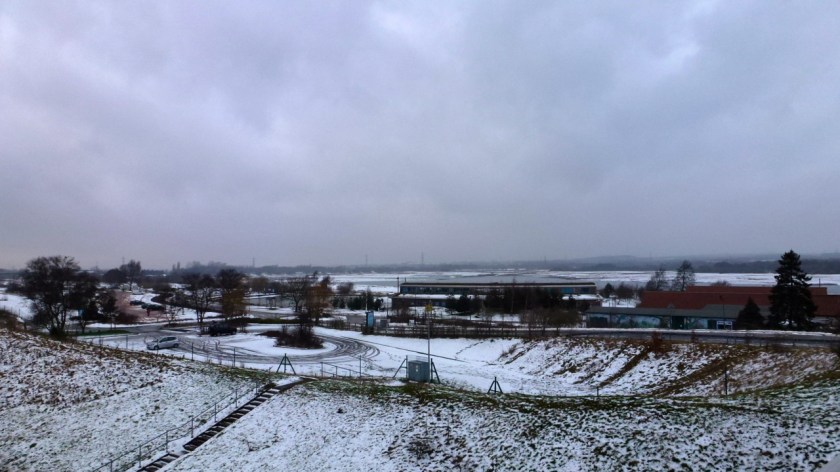
February 5th – I popped to Chasewater, but the day was horrible. The snow was melting heavily, I was loaded with about 20 kilos of shopping and the day was grey and foul. Crossing back over the M6 Toll bridge on Pool Road, I noticed that Chasewater still looked quite snowy. I could also see that, beyond the innovation centre, the reservoir was beginning to refill at long last.

October 23rd -This is a remarkably dry season, yet not many people – least of all the media – seem to be mentioning the fact, which is causing me some concern. Blithfield Reservoir, north of Rugeley, is only 50% full, and ponds, lakes and streams are drying to a trickle. As a cyclist is pains me, but we really do need a good spell of rain, otherwise we’re in for serious trouble.