#365daysofbiking A case of scurvy

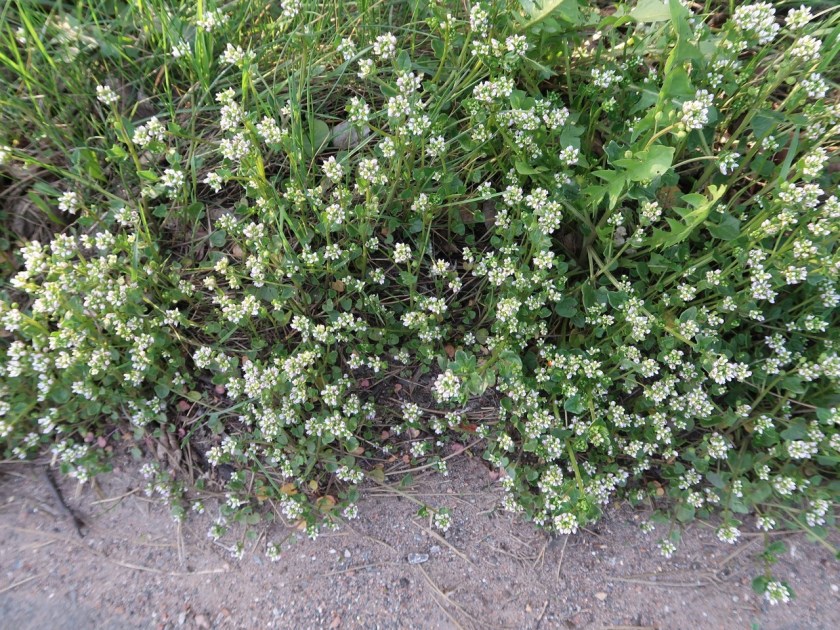
April 11th – One of the odder ecological phenomena of urban Britain is the proliferation of Danish scurvy grass. This salt loving plant is what gives verges and roadsides the white fringe right now, with this hardly, pollution resistant little plant flowering.

Danish Scurvy Grass likes salt, and thrives in the ‘burn zone’ beside roads that are gritted in winter, where the roadways splashes brine onto the verge. One of the few plants not top be hindered by these hostile conditions, its white flowers can be seen by many urban roads this time of year.

There really is a place for everything it seems.

This journal is moving home. Please find out more by clicking here.

from Tumblr http://bit.ly/2UupJ8Z
via IFTTT

#365daysofbiking Salt beef

January 29th – The cold weather for this winter has finally arrived, and the roads are icy. I’m fairly OK on the ice tyres, but it still takes time to build confidence back up when hitting black ice.

Thankfully, everywhere I’ve been, the major routes are well gritted, even though many motorists swear they haven’t been.

Road salt is not magic. It won’t work instantly, won’t de-ice the whole troad, and won’t allow you to drive like Sterling Moss in cold weather.

Tae care and take it easy, folks.

This journal is moving home. Please find out more by clicking here.

from Tumblr http://bit.ly/2HIAFcU
via IFTTT

April 19th – I note there’s a good display this year of a curious little flower, that of Danish scurvy grass. A tiny white bloom, this plant loves salty soil and has colonised main road and lane verges in what’s known as the ‘burn zone’ – the area generally devoid of life where road salt spray and backwash makes life inhospitable for other plants.

In this salty environment, Danish scurvy grass thrives and blooms, giving lovely withe fringes to the kerbside.

A remarkable thing.

February 27th – The coldest early evening commute I’ve known for a long time, I battled a vile headwind and sporadic black ice and made my way home carefully.

My ice tyres worked well, and the roads – like the Green Lane here at the Black Cock Bridge – have been very well gritted. But pavements, backroads and car parks were deadly and I made careful, slow progress.

It’ll be interesting to see how bad this gets.

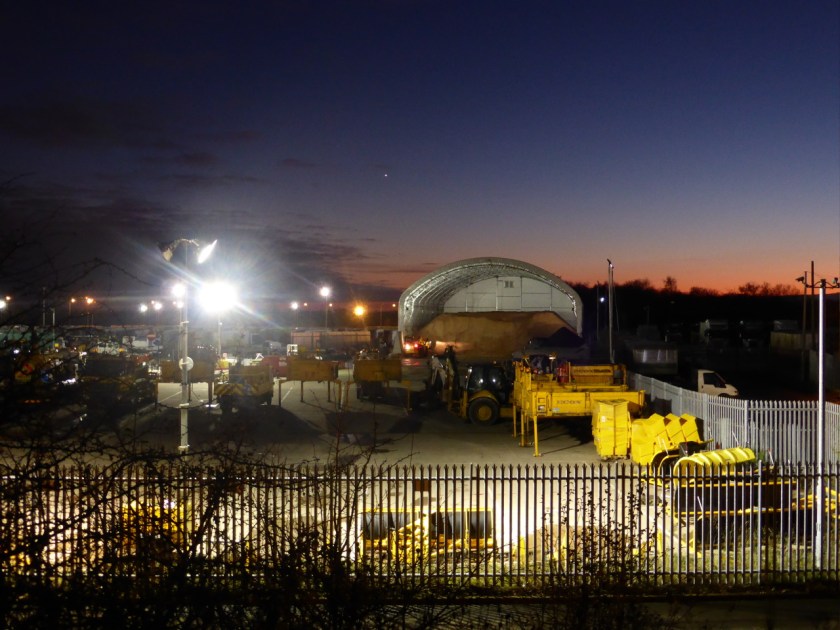
December 10th – I continued from Chasewater up around Engine Lane and down to old railway trail to the old cement works bridge overlooking the council depot, where gritters and ploughs were coming and going in a constant stream.

There was a lot of angst on social media about grit, road treatment and ploughing, and as ever, I felt particularly for the poor folk doing this hard, almost thankless task.

Elsewhere, the swans weren’t bother by the cold from what I could tell, and Morris seemed happy with his new white mantel.

Temperatures were dropping as it got dark and it would be interesting to see what happened next day as the freeze deepened.

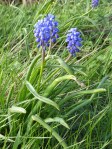
April 4th – Passing through Lichfield and back later in the day, spring really was in the air. The sun shone patchily on the rolling landscape between the canal and Hammerwich, whereas Minster Pool was dark and broody. On my return, I noticed gorgeous colour as the weeping willows are in bud in Festival Gardens, and grape hyacinths are growing well on the verges of the main roads.

One odd thing is the white plant flowering at the edge of the verges; this tiny flower is Danish scurvy grass, a formerly coastal flower that thrives beside main roads in the salty soil caused by winter gritting.

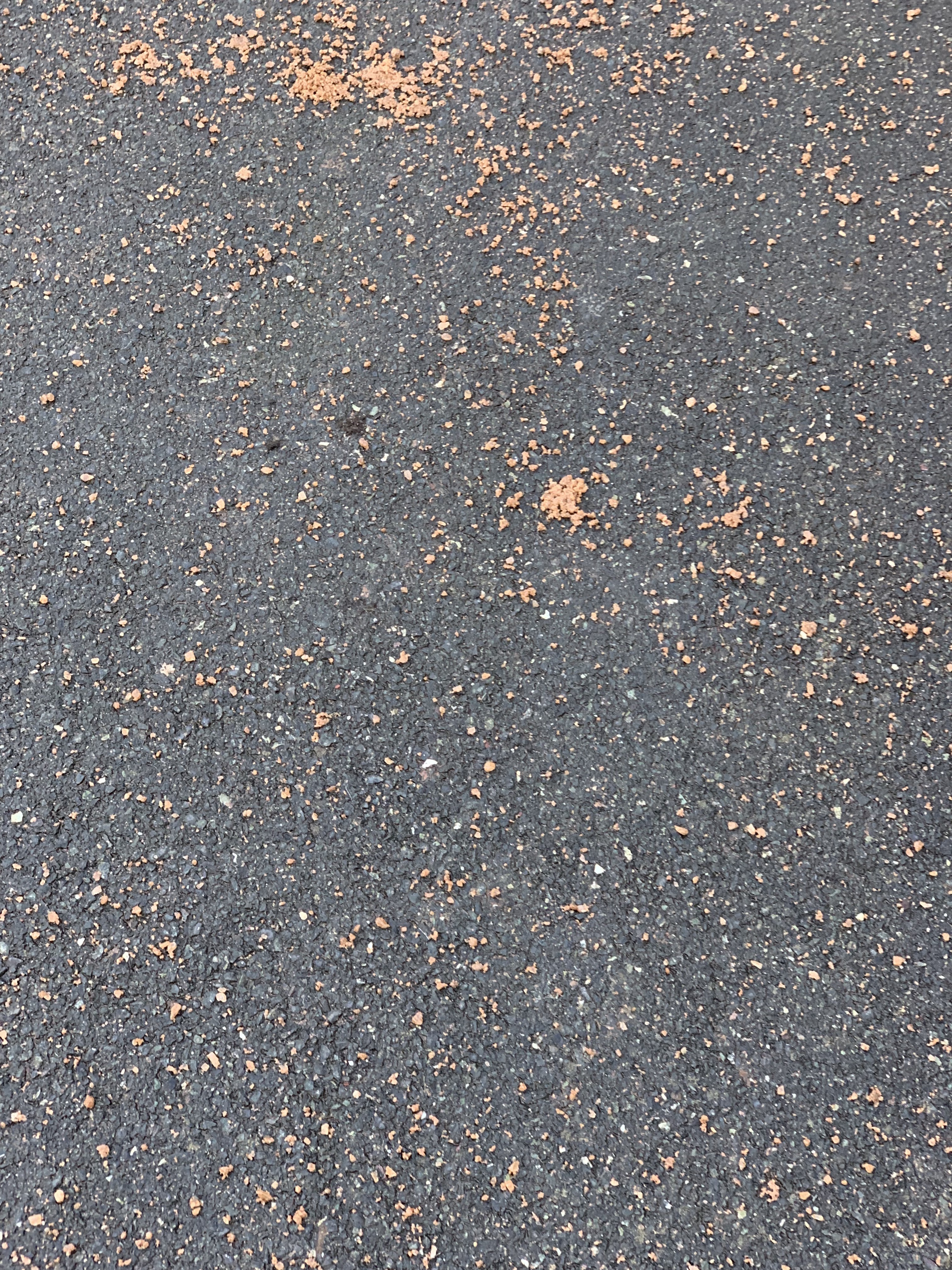
November 23rd – I was passed by a grit lorry on the Chester Road, and winced as the rocksalt tinkled off my bike. It is winter now in all but name, and I’ll get used to it. The cold was bitter, and frost was on the way, so it was good to see Walsall Council teams out on a Saturday treating the roads. As I passed the back of the depot at Apex Road, the yard was busy loading lorries as they came in, and I noted that the salt barn was pretty much full, all set for the winter ahead. A sobering thought.

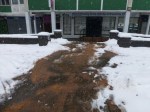
January 23rd – The little camera seems to really struggle with light on snowy nights. I’m not enough of a photographer to make it work quite the way I want. But these two shots show something. When I was banging on about gritting a couple of days ago, I was unaware of what a wide and generally welcome reception the piece would get. A good demonstration of my point – that road salt isn’t the magic solution folk think it is – is illustrated in the upper photo, taken at Shelfield lights. I’d been passed by gritters here several times the previous week. With the lack of rain, the brine strength on the road surface must be very high, yet the triangle of slush in the foreground remains. The reason is because the salt isn’t ground in that part by passing traffic, so although it’s been coated in salt numerous times, because there’s no meltwater, the ice remains. There’s a similar band of virgin snow on the centre of the Chester Road that’s been there since last Friday. it must get coated in grit nearly every day.

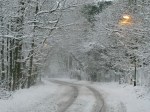
Returning via Green Lane, I was interested in how the snow lit up the normally dark, wooded road. This road was very clear, and as I came through, a grittier came past in a shower of sharp crystals. In some respects, this road was clearer that the Lichfield Road, and I struggled to understand why. Then I realised – this is a low point. What meltwater does exist, gathers in this lowland. That lane must be like a brine bath.

Must remember to regrease the wheel bearings when the weather warms up… the bike will need to be washed well, too. All this salt will be eating the metalwork…

January 20th – People seem to have their own realities, and nothing has brought out the selfishness and plain nastiness in some people as profoundly as the bad weather.

Ever since the snow came, people have been complaining about, and to, Walsall Council on social media. Horrified that they’ve been delayed, or that driving conditions are bad, they attack the local authority for not gritting, for being unprepared, or lazy. Time and time again I have seen people berate council employees because things aren’t as they expect and that’s what they apparently pay council tax for.

Sadly, the truth is a little more difficult. As a cyclist, I travel slowly. I intersect with gritters on the roads with startling (and often painful) frequency, because they move about twice as fast as me. I have seen them around Brownhills and on all major routes I use frequently, since just before the cold snap started. They have spread whatever the conditions, and pretty much continuously over the weekend. That’s good folk, working hard, in very difficult road conditions, to try and ameliorate the problems caused by the snow.

There is clearly a fundamental misunderstanding about how roadsalt works. It can take hours or even days to take effect, and relies on moisture and the passage of traffic to disperse it. Temperature severely affects it’s efficacy. It cannot deal with fast settling snow. A gritted road may take 24 hours to clear properly, even with continuous application. Road salt is not fairy dust. It doesn’t magically remove ice and snow. It’s a deicer, a slow one, and it’s an aid, not a total solution.

Walsall’s gritting operation costs each household about £2.50 per year.

The thing about using the roads in bad weather is to develop, and hone the skills required. It’s our responsibility to ensure we’re as safe as possible. We can’t abrogate that responsibility totally to a third party just because it snows. The man I watched slide round a corner into a kerb in Little Aston on Friday Morning probably now understands this. A £60,000 Range Rover is only as good as the driver’s skills.

Walsall Council does many things badly. Some things, a few, it does really well. They’ve always been among the best at gritting, and have worked hard to communicate their activities on social media. When met with abuse, petulance or idiocy, the public facing employees have been stoical, polite and workmanlike, often in unpaid, out of hours time.

When I see people being stupid, unpleasant or misguided on this, I will always step in to defend the council and it’s employees wherever I can. So far this weekend I’ve had hate mail, nearly had my Facebook account pulled in an infantile spite attack and been roundly abused by a noted local journalist. None of these people have shown a shred of humility towards those who are actually charged with the job they are expecting to be done.

There’s a widely held belief that gritters are not being sent out; that roads have gone untreated. That the powers that be cannot grit every inch of every road has been met with incredulity. It seems beyond many that the weather currently has control, and whilst we can mitigate it’s effects, nobody can actually make it go away.

This afternoon, at 4pm, on Anchor Bridge, I was passed by the grittier that, on social media 3 hours later, Walsall were being attacked for not sending to treat Brownhills High Street. Further down the road, at Silver Court, a team of council workmen had cleared the snow by hand from the frontage and steps, and then gritted it. At the other end of Brownhills, lorries were returning to the depot for refilling, before leaving again in series. 

Meanwhile, people are fretting on Facebook already as to weather their bins will be emptied tomorrow. As far as I’m aware, nobody has died in Walsall yet for the want of an empty dustbin. 

It’s bad weather, folks. We used to get it a lot. It’s not the end of days. The mark of humanity should be be grace under pressure, from all of us. Not just those there to serve us. 

December 2nd – As I cycled down the bank and onto Apex Road, I noticed the council depot was silent. The roads had clearly already been gritted today, and there didn’t seem to be anyone about. The depot here is where all the gritting operations now take place from, and there’s a huge shelter here full of road salt. Walsall are generally very good at gritting the roads, and getting pebble dashed on the way home from work is now a nightly risk. The amount of machinery stored here to process and spread the deicer is startling, and makes you realise just what a huge operation this seemingly simple task actually is.