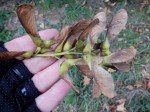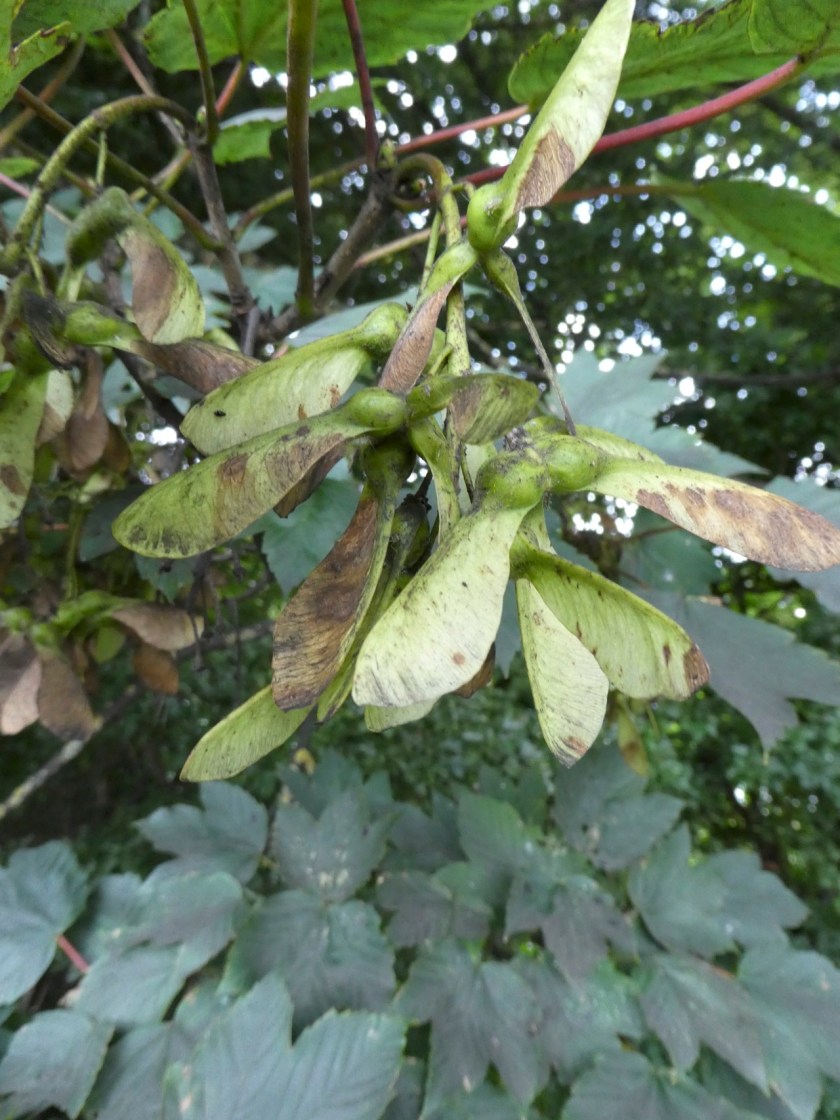
August 5th – Interesting to note the fruits doing well this year and those that aren’t. We seem to have bounteous quantities of blackberries, acorns and here, sycamore seeds. Beech also seems to be fairly prodigious.

Not doing so well at all are the horse chestnut, hazel and pear trees.

It’s curious how the years cycle. As my Grandad used to say ‘It’s always a good year for something’.

November 20th – I passed these pine cones on a roadside path on an industrial estate in Great Bridge. They are the largest I’ve ever seen – almost two inches in diameter and seven to eight inches long, they seem untouched by birds and squirrels. They feel quite heave and dense and wonder if they’re ripe or just premature windfalls from the recent storms.

Fascinating fruits that look almost prehistoric.

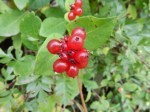
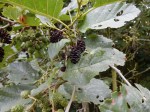
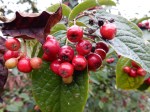
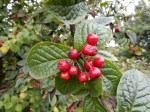
September 3rd – I took to the canal on the way home, and observed that red appears to be the colour of choice for the season – a whole host of red berries, from honeysuckle, to ripening blackberries, to haws and hips are all doing well. I did wonder, however, what the very glossy red berries were – the ones with the very leathery leaves. There’s about twice the size of a pea, and look like haws but are too large, glossy and red. Any ideas?

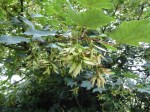
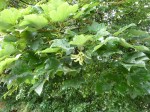
I’m also wondering about the hop-like fruit of the broad leaved tree, centre. Something is telling me white birch, but I’m not sure.

Looks like there will be a good crop of helicopter seeds from the sycamores this year, too.

Any help welcome, thanks!

July 7th – Working late, I returned at sundown and winched my way up Shire Oak Hill from Sandhills. I noticed that lots of trees along here are laden with developing fruits – beach nuts, acorns, pine cones and these, unusually abundant sycamore seeds, or ‘helicopters’ as we used to call them as kids.

They seem to be already ripening – but this is only just the beginning of July. 

Am I imagining it, or are we heading for an early autumn?

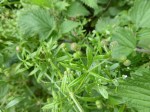
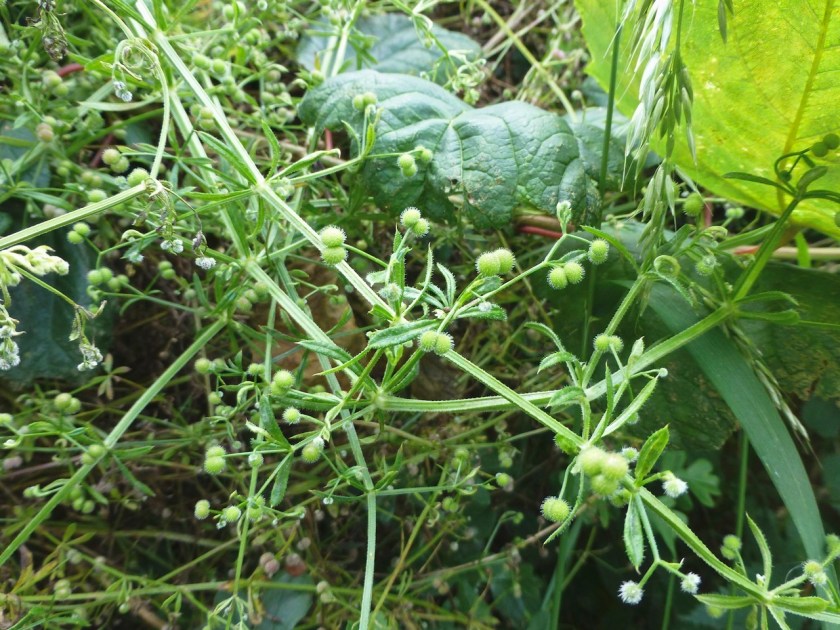
July 3rd – Cleavers, or sweethearts as they’re colloquially known hereabouts are fascinating little things. A creeping, grippy weed, it elevates itself from the ground by hooking on to other plants with it’s spiny, sticky hairs. The seeds themselves employ the same mechanism of almost velcro-like attachment, adhering well to clothing, feathers and animal fir. 

The owners of dogs and cats with longer coats will know well the hours spent picking these devilish little balls out of their animal’s hair… but as a seed dispersal tactic, it’s brilliant, as animals preen the seeds out, and they germinate where they land.

Natural engineering is damned clever.

I’ve no idea what the bug is, but he’s an interesting wee thing.

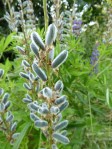
June 30th – With the passage of the early summer, we move from the flowering to the fruiting. Most fruits and seeds will be weeks in development, and not become of anything until late summer and autumn, but many flowers and trees seed early. The lupins by the canal at Clayhanger have long passed their best, but the seed pods they’ve formed, resplendent with downy fur, are a treat in themselves.

The dandelions, of course, such masters of natural engineering, seed all summer through. Such common flowers, rarely studied, but so gorgeous in their perfection.

August 5th – I returned in heavy rain and the photography was lousy. I did notice, however, that may trees seem to be fruiting better than the hazels of yesterday. This Sycamore at Sandhills has fine, plump seeds, already turning brown in preparation for what is, in their case, genuinely a fall, all be it a blade-moderated one. In my childhood, these seeds were called ‘Helicopters’, for their notorious (and I think, unique) spinning action as they fell.

Hips and haws are also doing well in the hedgerows right now, but the photos were terrible, sorry.

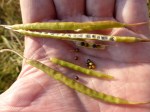
August 1st – Passing Grove Hill near Stonnall in the late afternoon sun, I noted that it was surrounded by a fine crop of oilseed rape. Where this had been a sea of vivid yellow in spring, it was now going a soft, golden colour. 

The plant is harvested by special equipment, which flays the pod from the tiny, tiny seeds which are black when ripe. These then go for crushing to extract the oil, both for biofuel and cooking.

There’s gold in those tiny, spherical seeds.

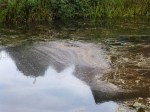
August 11th – An afternoon recovery ride around Chasewater and Lichfield to keep my legs moving. At the canal by Catshill, there appears to be a film on the water. It always concerns me when I see this, as folk tend to think it’s pollution: it is, and it isn’t. It’s perfectly natural, and not man-made. The film is fibrous seed matter from thistles, willowherbs and other wind-seeding plants. 

An odd phenomena that soon passes.

August 7th – Can’t find the proper name for this stuff – I’m sure one of you guys will know it. We call it sweethearts. Anyone who’s ever owned a cat or dog with longish hair will know these troublesome seeds. They stick like velcro to fabric and fur alike. I’ve spent hours removing them from animal’s coats. It’s a very neat seed dispersal method, and this year, the prolific weed that bears them seems to be doing really, really well. A fascinating pain in the arse.