June 28th – Taking a shortcut through Wall to the A5… a little-known byway called Back Lane runs from Wall Lane to Market lane. Normally clear, an irrigation pipe now crosses it barring normal traffic. It’s now beautifully overgrown with grass nearly 3 feet high. On my right is a field of broad beans. On Market Lane, I gently pass the parked car blocking the top of Roman Walk and into Wall Butts. A lovely summer run on a fully loaded bike that rolls downhill well….

The soundtrack is the beautiful ‘Letter to Bowie Knife’ by Calexico.

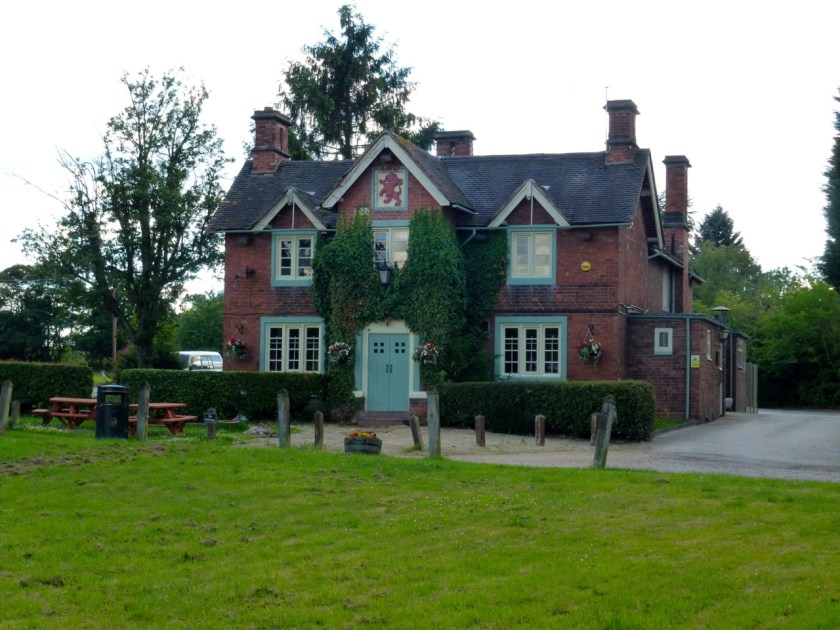
June 26th – Sad to see the Red Lion at Longdon Green closed up and up for lease. This has the potential to be a fine country pub. Sat overlooking a gorgeous village green, I used to love a pint here. Sadly another victim of the social shift away from the pub. I hope it can find a loving owner, it’s a gorgeous building.

Edit 30th June: I’ve heard since posting that the Red Lion has been saved and is likely to be open again at the weekend. This is excellent news and I welcome the new landlords and wish them all the best. It’s a great pub.

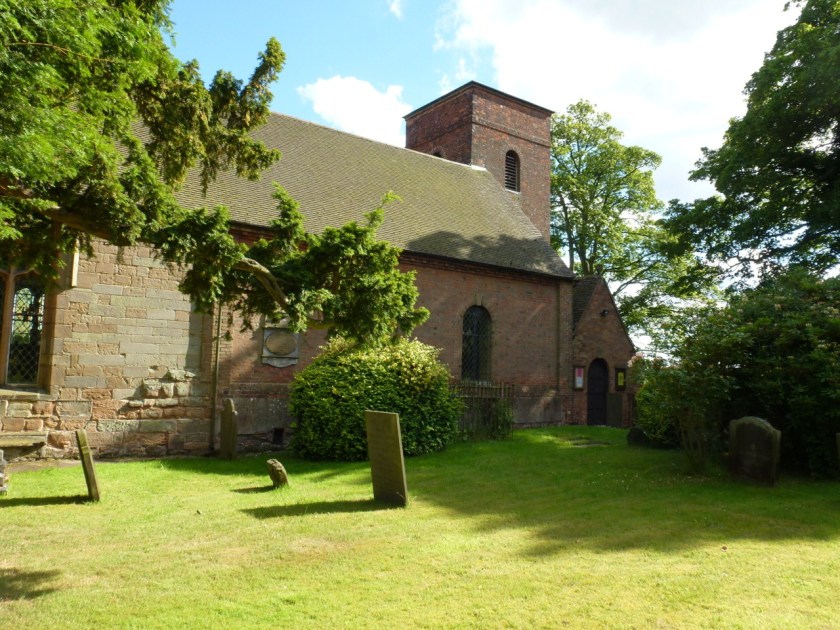
June26th – Farewell church is so secluded, one might not realise it existed at all. There has been a religious presence here since 1140, and this is a very old place, the current St. Bartholomew’s church was built in 1745, and hides down a narrow, leafy track that dives sharply from Stonywell Lane. Here one is truly far from the madding crowd, the shady churchyard being a favourite haunt of cyclists and ramblers alike.

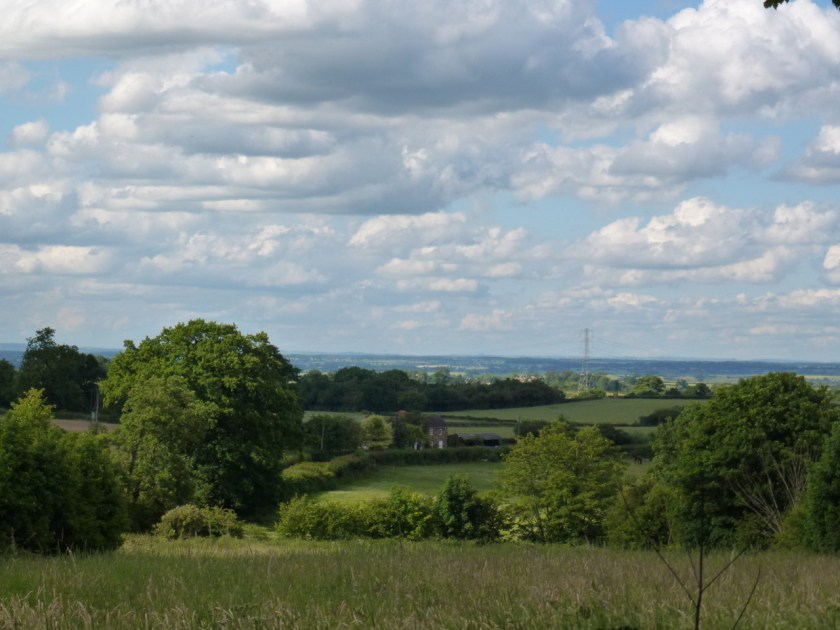
June 26th – After the Canal Festival at Brownhills I took a lazy, hot ride up over Longdon Edge. Climbing Shute Hill near Burntwood is always a challenge, but is rewarded by excellent views and the most wonderful sequence of tumbling, twisting lanes. From the top of hill, the view northwards over the plains is stunning and green. Is there anywhere finer than Staffordshire on her summer throne?

May 30th – Rabbits don’t do clever, but this one at Farewell, Staffordshire was quite unique. Taking a suicide run out of the hedge on the left, he doubled back when he realised the danger and ran straight ahead, in the same direction as me, for about a quarter of a mile. The camera loses him for a bit, before I catch him up again and he jumps into the hedge. Never seen that before.

The video quality is quite poor. I’ve had to zoom in quite a bit, and you may need to turn the quality setting up on youtube.

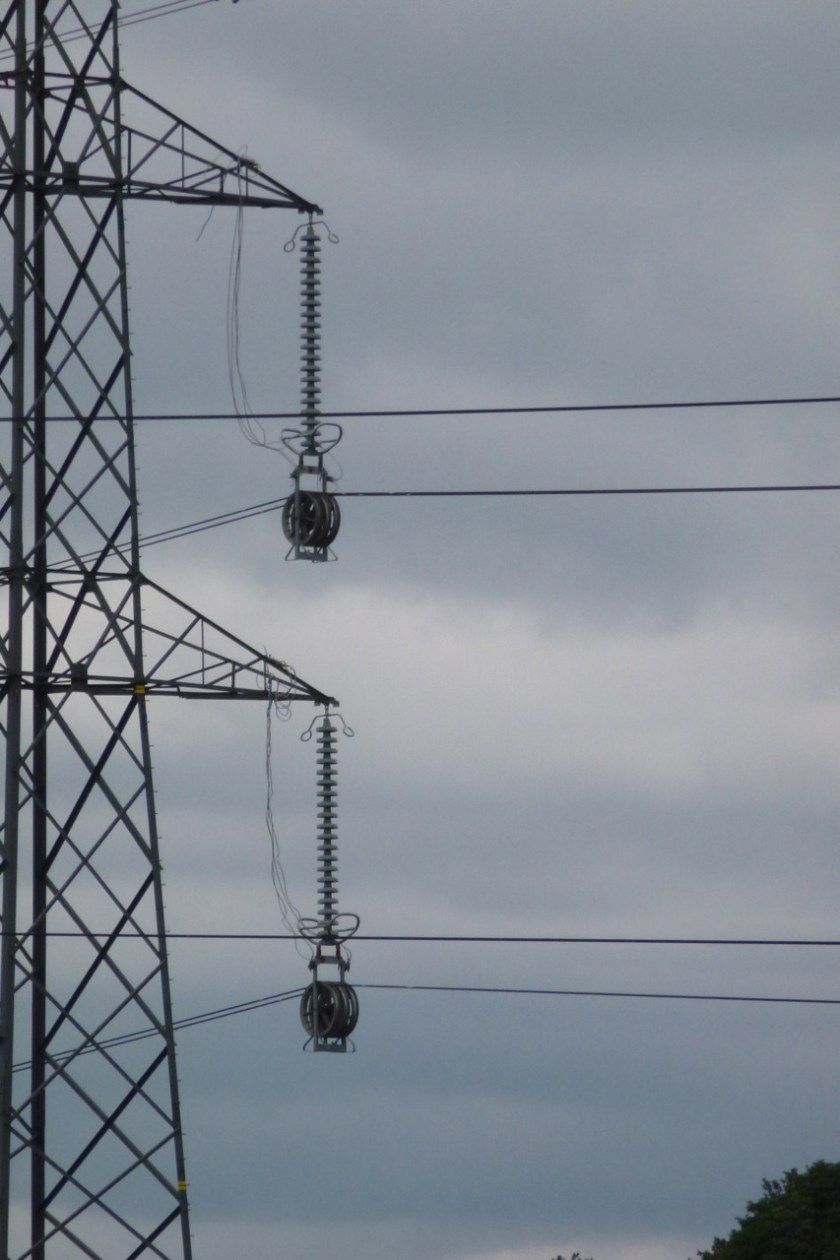
May 29th – I wondered how they replaced high-voltage lines with minimal disruption, one look at the pylons near Stockfields, between Hints and Canwell, answered my question.

I pointed out a couple of weeks ago that this transmission line was undergoing maintenance, and I noted today that there are now pulleys fitted under the insulators on the cable hangers. Presumably, the old line will be attached to the new and pulled through by a power winch. Slow, but steady. I’d love to see that in action.

May 15th – Further into the same ride, I dropped through the lovely village of Weeford. It’s proximity to, and isolation caused by the nearby A38 puts many cyclists off coming this way. A new cycle & equestrian bridge and cycle route were constructed in 2005, yet few realise as it’s not on many maps yet. It really is a dream, and you never have to deal with the dreaded dual carriageway.

May 4th – Wordsley House, grade II listed building, sits on Main Street, Stonnall, as it has done since at least the late seventeenth century; one roof purlin was found to be inscribed ’S.I.E. 1677’. It has an interesting history as the former Welsh Harp Inn. 

Julian Ward-Davies, in his excellent Stonnall Mysteries thesis, notes the following:

As we continue down Old Chester Road, we pass by Wordsley House on the left, which embodies our next mystery. This is now a private residence, but once it had a very different function. This house was once nationally famous as the now almost legendary Welsh Harp.

Now we may ask, how it was that an inn in the English Midlands took such a name. The explanation is, as I see it, the same as it is for the naming of the Irish Harp at Chester Road, Mill Green near Little Aston. As we have already noted, Chester Road was a major route between London and North Wales. Thus many of the people en route were not only Welsh, but there was also a very high proportion of travellers who were Irish people on their way to and from Holyhead, where there has always been a major connection to Ireland. Thus the Welsh Harp and the irish Harp provided, supposedly, a home-from-home ambience for the straightforward commercial purpose of attracting more customers.
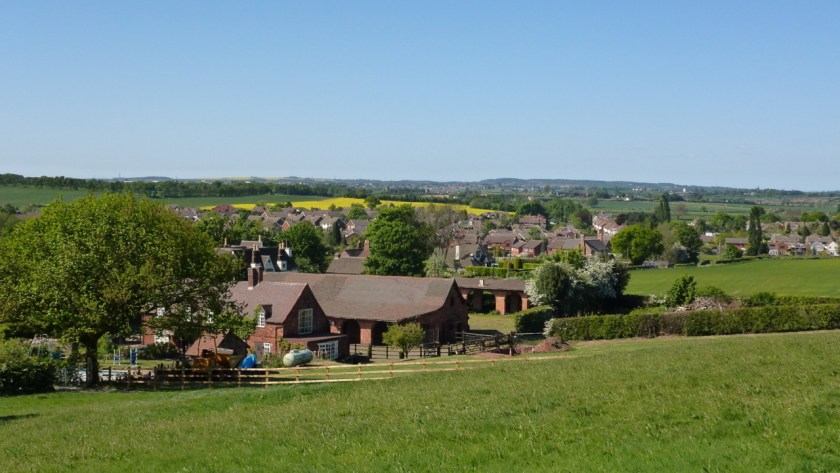
May 2nd – another beautiful day made difficult by a rapacious wind. A ride out through Stonnall and Shenstone to Canwell, Hints and Hopwas was very hard going indeed. I found plenty of opportunities to stop, for when I did, it was the only time that the sun’s warmth could be felt. This unusual view of Stonnall was taken from the corner of Stonnall churchyard, an available vista I’d not spotted previously.