
December 25th – Must get the hosepipe out. Reckon the bike would be at least 5lb lighter without the accumulated mud, trail crud and vegetation…
December 25th – Must get the hosepipe out. Reckon the bike would be at least 5lb lighter without the accumulated mud, trail crud and vegetation…


December 17th – In the dark nights and half-light days of winter, decent lights are needed. Searching, bold white in front, and strong red at the back.
In the darkness of the footbridge at Ogley Junction, I noticed how effective they were. Wouldn’t be without them.
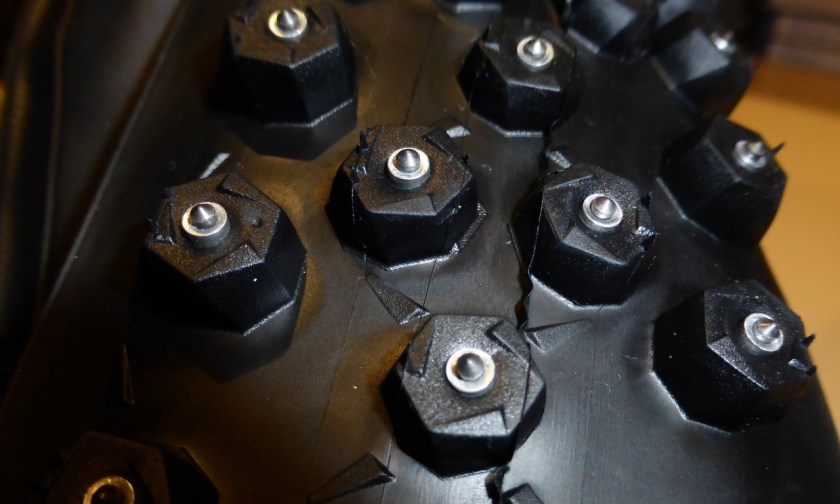
November 25th – Ladies and gentlemen, I can make an announcement. This coming winter will be warm, without much snow or ice.
I have guaranteed this by purchasing new snow tyres for this season. Therefore, fate dictates that I won’t need them. Which will probably be a shame, as they look like they mean serious business.
This has been a public service announcement to 365daysofbiking readers.

November 13th – Heading home from work late again, I hit the canal for a bit of a mental challenge. It’s been a hard couple of days, and night riding in a darker than usual environment is really good for clearing the head. I wait until I get to a dark spot, then kill the lights for a bit. It’s great fun.
This image is taken without flash, and this is how it looks from the bike.
The front light I’m using at the moment – a Hope Technology Vision R4 – is great, and bright enough to stun a badger. Here, it’s on the lowest of three ‘trail’ settings, and it’s more than adequate for tiding in woodland at night.
As soon as the weather clears, going to try it out on the Chase one evening…


October 27th – I’m not one for religiously washing bikes, preferring the patina of grime that shows a bike is well used, and also makes it less attractive to thieves. However, the mud gathered on my bike over the past couple of days is loaded with pine needles and grit. These, over time, will get into moving parts and for a sticky, resinous paste that will accelerate wear and attack paint and metal. As soon as the weather clears it’ll be out with the Muc Off spray and a hosepipe.


October 21st – Time for a techy bit. Disc brakes are my favourite kind of bicycle brake – resilient, reliable and good in the wet, they need care if they’re to maintain performance. The brakes on the current commuting bike are hydraulic, and very powerful; they eat brake pads, especially in wet weather. In the wet, the grit from roadwash and grindings from the pads and disc combine to make an abrasive paste that makes the brakes noisy in use and causes wear to all braking surfaces. After a wet ride, wherever possible, I flush the discs in clean water to clear any residue off. If this is ignored, larger particles become embedded in the pads and score the disc surface, impeding performance and causing high-pitched noise.
I’ve also noticed with these appreciable wear on the discs. These were changed 3,000 miles ago and I can feel now feel quite a step between the surface and unworn part of the disc.
If your bike has disc brakes, look after them, and they’ll be there when you need them. It’s especially important in weather like this.
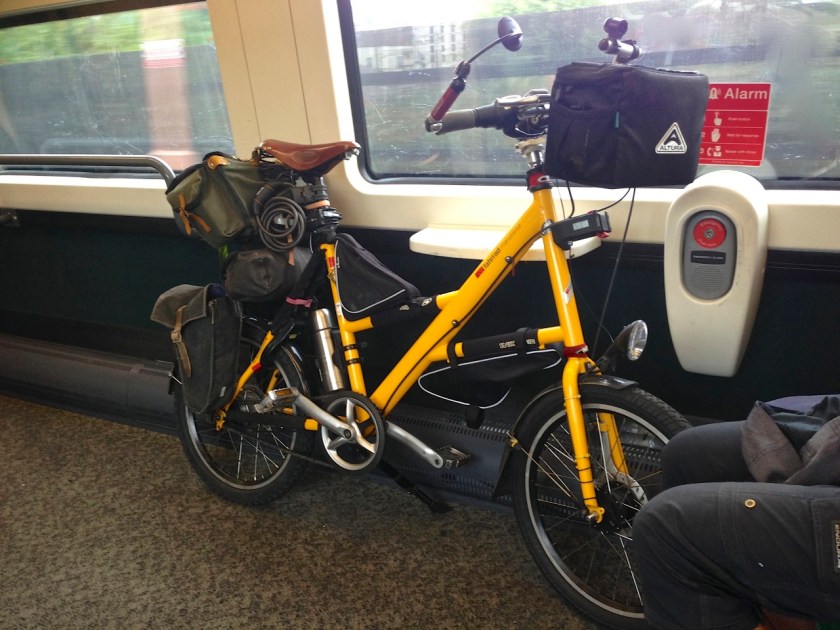
September 30th – This is incredible – bike geeks will love this. A Fahrrad Manufaktur small wheel bike, spotted on a Solihull bound train. The owner – a beardy, leathery old cycle tourer – said it was one of only 3 in the country. I certainly can’t find any details of this model online. It seems to combine all the disadvantages of a folding bike with the disadvantages of a larger one, but look at the way this is loaded. That’s a remarkable loading technique – note the tea-flask and pannier.
I guess this appeals to the Moulton crowd, and it is a unique, fascinating bike – dynamo lights come on automatically in low light, and it’s rocking a 14 speed Rohlhoff hub, with a Brooks saddle. This is no cheap machine.
Sadly, the owner alighted at Small Heath, and I didn’t get long enough to chat to him about it. But it’s a remarkable steed. I hope I meet him again.

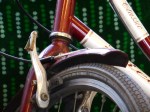
April 24th – It never ceases to amaze me, the state of bikes some people ride. But this is also an argument about rubbish components.
This is a Real ladies step through (Real is a brand unique to Halfords) – a cheap, functional, popular utility bike. It’s mostly OK quality, like the majority of Halfords cycles, but the brakes are rubbish. V-brakes like this crept in on cheap bikes about 10 years ago, and replaced superior cantilever versions. They replaced them not because they offer mechanical or user benefits, but because they’re much easier to fit in production. They are a benefit not to the customer, but to the manufacturer. To put it bluntly, unless you’ve got a really good, high end set, they’re shit.
Their ease of assembly tends to make them likely to disassemble, as the arms and cable pop apart easily when snagged – for instance when getting on and off a train.
The chap(!) riding this bike – spotted on a morning train into Birmingham – is riding with no front brake, and has been for a while. I’ve seen him a few times, and doesn’t seem bothered about it.
I wouldn’t dream of riding a bike without a decent braking system… mystifying.

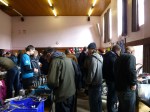
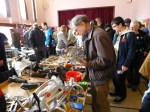


March 2nd – Erdington Bike Jumble. A regular fixture every year – loads of buried treasure and junk, and the chance to meet old friends and acquaintances and shoot the breeze. Most of the cycling tribes are here – tourers, city cyclists, vintage buffs, fixie kids, even bike polo guys. Busier than ever before, it was nice to see lots of youngsters here for a change, and it’s also nice to check out other folk’s steeds. I was particularly taken with the lovely refurb of the Carlton, parked out front.
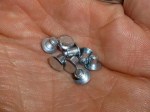
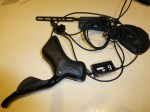
February 20th – Talking about making a bike your own, bike fettling experiments continue, and the maintenance jobs stack up. First off is replacement studs for the winter tyres. The metal inserts do come out, particularly if you skid, they tend to tear from their sockets. One thing the manufacturers – Schwalbe – pride themselves on, is that if you give them a call (They’re only in Telford), they’ll send you a large bag full of the carbide rivet-like spikes in the post by return. With the air out of the tyre and warm water, it’s easy to pop in the replacements with pliers. I try to do this towards the end of the season every year.
On the higher tech side, I’m experimenting with some swanky mechanised gearing kit, but it’s been a bit of a challenge to get working, as the components all need updating to get them functioning together. Having got everything talking to everything else now, the mechanical experimentation can begin.
Fun times.
 BrownhillsBob's #365daysofbiking