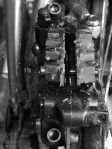
November 27th – Been a while since I discussed brakes here, but the glazing issue of the rear pads I had – I think I’ve cracked it. And built Frankenbrake as a result.

I, like many utility and commuter cyclists, like to ride a bike that’s essentially a tourer. I like the bars, the variety of positions, and I like that Shimano finally made hydraulic brakes for road and cyclocross bikes with the same bars.

The trouble with tourers for years has been that they’re mongrels. No one groupset (ie. drivetrain with brakes and controls) is wholly suitable. Tourers carry load, don’t mind a heavier bike as it’s sturdy and stable. They like a wide gear range – preferably a triple front ring. And solid wheels with damn good brakes. 

So a good tourer may have utlegra, SLX, XT and 105 series parts all working together.

Brake options have traditionally been anything you want as long as it’s canti, but since road discs and suitable frames appeared – first cable, then hydraulic – our braking options have improved. 

My rear brake – A Shimano R785 lever with a BR785 calliper – has been eating pads. They appear to glaze, loose all friction, and no matter how well cleaned, filed or surface ground, never regain bite. Pads are not cheap. I thought I’d cracked it using Uberbike pads – but the last two sets have gone really quickly.

The last set went a week after fitting, and without the same happening on the front, I decided to solve the issue. I’ve been using a primitive parking brake on trains – I use a rubber loop to keep the back brake on to stop the bike rolling about. It turns out that the brakes aren’t designed for continual operation like that, and the vibration from rocking was weeping fluid out of the piston seals, on to the back of the pad plate, and dropping the odd drip of fluid onto the rotors.

I’ll stop using the band. But that left me with a possibly faulty rear calliper, which has never been quite as snappy as I’d like. And Shimano are transferring to flat mount – a format incompatible with my frame – for their 785 replacements.

I knew the 785 was a variant of the XT mountain bike, 2 piston brake with slight design changes in shape. Reading about, I found people who’d put Shimano 4 piston callipers on XT levers for mountain bike use, so I figured a 4 piston Saint calliper should therefore work with a 785 road lever, as the same oil volume was being moved as the XT model, if you see what I mean. They all use the same hoses and fluid, a light mineral oil.

So I ordered a saint calliper, got the bleed kit out, and got oily. The result is that the Saint calliper works really well, has a much bigger pad friction area, and is nice and firm, yet progressive. It’s a bit more fiddly to set up as the piston stroke isn’t as large, but it’s working well with patience.

To any home mechanic who’s thinking about this, it’s an excellent upgrade – but as with any brake fluid operation, remove pads and keep well away from the disc as you will spill oil everywhere.

Meanwhile, a slow handclap for Halfords. When on the off chance I called in for a bottle of Shimano mineral oil brake fluid, the twit behind the counter said ‘Use Dot 4 – it’s all the same stuff.’ – it so isn’t. Dot 4 is Glycol, not oil, and will swell and perish Shimano seals and cause premature failure. Urrrghh.

Now, let’s see how well these pads last…

November 21st – In a familiar bike shed at a client’s premises, a neat illustration that the common or garden bicycle, whilst being a marvel of engineering in many ways, is still riddled with design conflicts and the whiff of mechanical compromise.

Here, a well-used and muddy mountain bike, not a cheap one by any stretch. The lack of mud and water shielding means and mud and detritus carried on the back tyre ends up not just as a skunk-stripe on the rider’s back, but also on the front gear mechanism and transmission.

In areas of hard grit like the Peak District, this continual spray works like grinding paste, gradually eating your wearing surfaces.

All for the want of some shielding.

Still, if you were a designer today, and proposed the derailleur system of gears – relying on forcing a flimsy roller chain between gears using side play as a conformal drag factor – you’d be laughed out of industry.

Except there’s nothing much better.

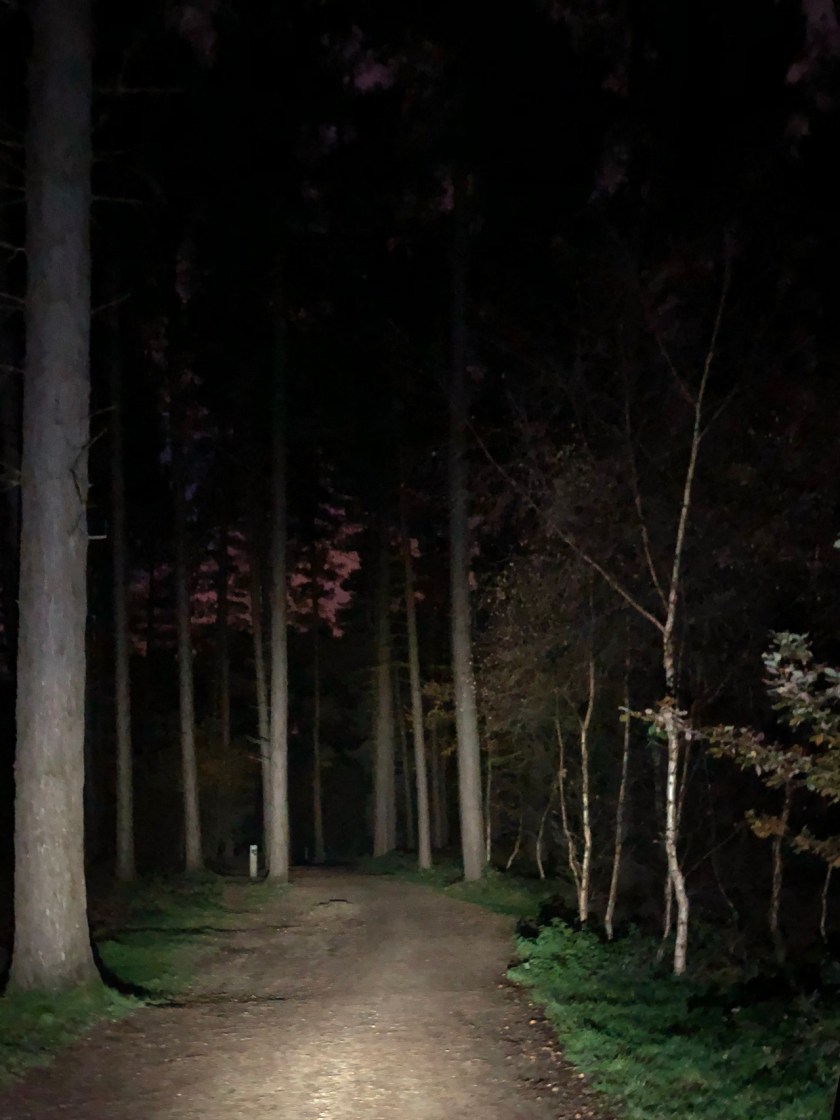
November 20th – One of the joys of winter is riding in the forest at night. On the trail between Birches Valley and Fairoak, there wasn’t a soul around and I listened intently to the wildlife. In the undergrowth, mustelids and rodents scampered and scurried. A robin sang. Owls hooted and shrieked. Somewhere off in the distance, a deer stag was bellowing.

The forest at night isn’t scary or spooky – it’s beautiful and fascinating.

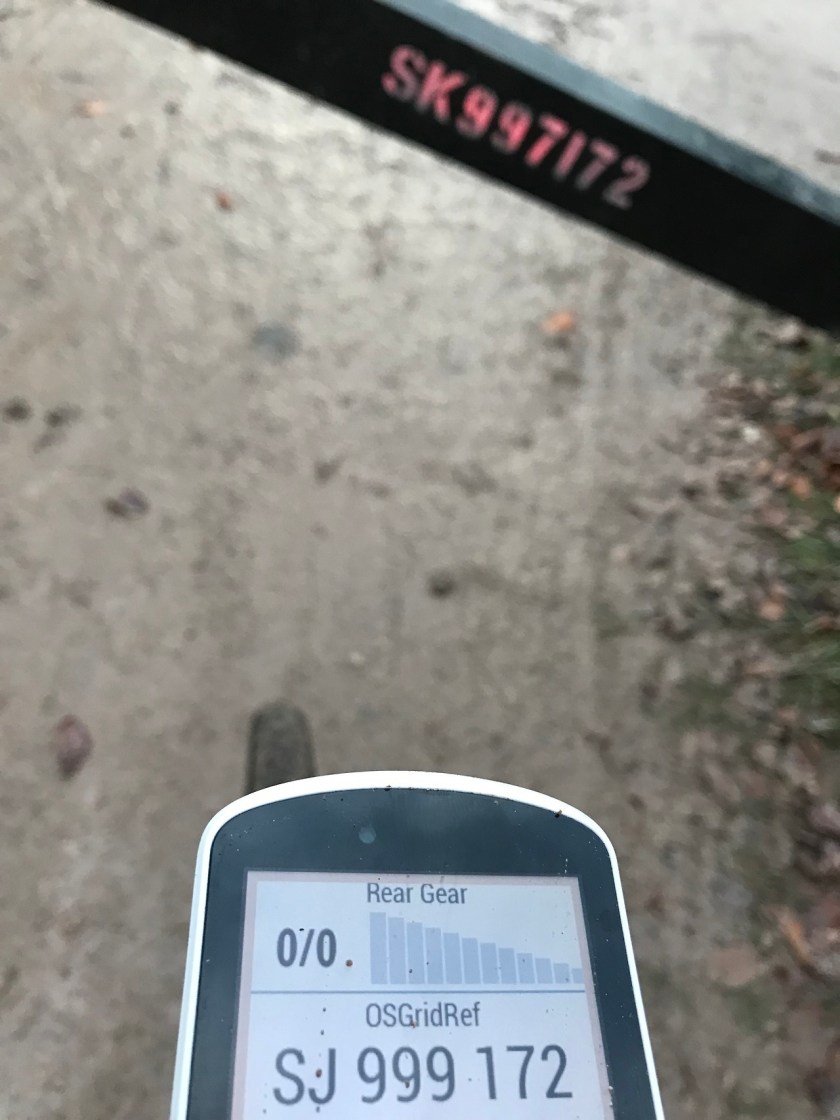
November 5th – Oh, and this. Up on the Chase at Rifle Range Corner, a wee accuracy error.

Most of the fire gates on the chase have their OS grid reference stencilled upon them. Helpfully, my bike GPS also give me a grid reference. 

Checking with a paper map, they’re wrong, not the computer.

That’s a bit regrettable…

October 11th – Again returning as darkness fell, I caught sight of the Walsall skyline from North Street Bridge, and gave it a shot in a different mode.

The TZ90 is streets ahead of the TZ80 for night shots – and it needed to be; the last decent poor light performance from this range of camera was two generations back in the TZ70. This seems a lot better.

And Walsall, with the modernist buildings of the risibly named Gigaport, was a good subject.

October 9th – Darkness is now frequently impinging on my commutes – both early in the morning and in the early evening. This marks a shift now to night photography and the return to some old muses. I’ve not used the TZ90 in night conditions much yet, and I’m hoping it’s better than the TZ80.

Passing Clayhanger Bridge on a dark evening, I gave it a try. Not too shabby I think.

I’m pleased with those. 

October 7th – Time for a seasonal warning, I guess. Along the canal from Anchor Bridge to around Wharf Lane Bridge, the hedge flail has been out and the towpath is covered in cut foliage debris and thorns from the hawthorn that constitutes the hedge here. This thorns are just lying, waiting to be picked up in soft tyres where they’ll quickly cause a period of deflation.

If your rubber is a bit thin, best avoid this route for a couple of weeks until the thorny problem has passed.

September 3rd – It’s been a while since I bored you with disc brake pads, so it’s your lucky day – or maybe not.

I favour a hydraulic disc brake on all my bikes, road or off-road. On road bikes, I think the Shimano 785 based callipers are the bees knees; combined with a decent disc and pads, they control my resplendent girth down the steepest of inclines and without snatching.

The only issue I have – and I’ve covered this before – is the mystery of what exactly happens to rear pads in particular when they overheat. Sometimes, despite the best care, pads will develop a sheen, lose the nice grip and squeal horridly. I’ve been trialling aftermarket alternatives all summer to see if other manufacturer’s inserts are better.

I tried Kool Stop, an expensive brand. They were nothing special, and glazed out. Clarks performance was tepid, but lasted well. My best results have been with Uberbike sintered and semi-metallic. These are an interesting design – 785 road pads normally have a backplate with cooling heatsink fins. Uberbike have separated the two, so you can re-use the cooling fins on a slightly thinner pad, which are only £6 a set instead of the £20 for a set from Shimano. And they work a dream.I had one set glaze out near the end of life, but other than that, great.

I thought the front set had taken the same dive while winding down from the Roaches the day before, becoming squeaky and losing friction, so swapped them in the workshop the next day, to find the pads had worn to the spring, and that was the wail.

I really do recommend Uberbike pads.

May 27th – I was busy all day and escaped after nightfall for a spin around Brownhills in the dark; it had been squally all day with a strong wind, and the weather was finally calming. 

It’s new camera time again and I’ve been loaned a new Canon SX730 to try out – for a brand new model 40x zoom compact I’m not terribly impressed. It loves bright sunlight, but as these images show, the night performance on automatic is woeful. There are not many helpful scene modes either like the Panasonics or Nikons I’m used to. For a £400 camera I’m not terrifically impressed, if I’m honest. The user interface is horrific, too.

Build quality is decent, though, it has to be said, but again, I think I find myself leaning to the new Lumix even though it has less zoom.

Cameras, like bicycles, are never quite just what you want.

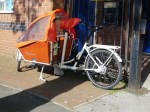
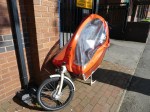
May 23rd – Spotted in Walsall late this afternoon, parked up outside the Saddlers Health Centre – this Dutch box bike, clearly used for transporting a child.

This one is made by Workcycles of Amsterdam, and features roller hub brakes, a nexus hub gear and small wheels. 

I’d imagine it weighs a tonne and rides like a tank. Majestic and stately come to mind – but what a wonderful thing.

My compliments to the pilot!