#365daysofbiking Light work:

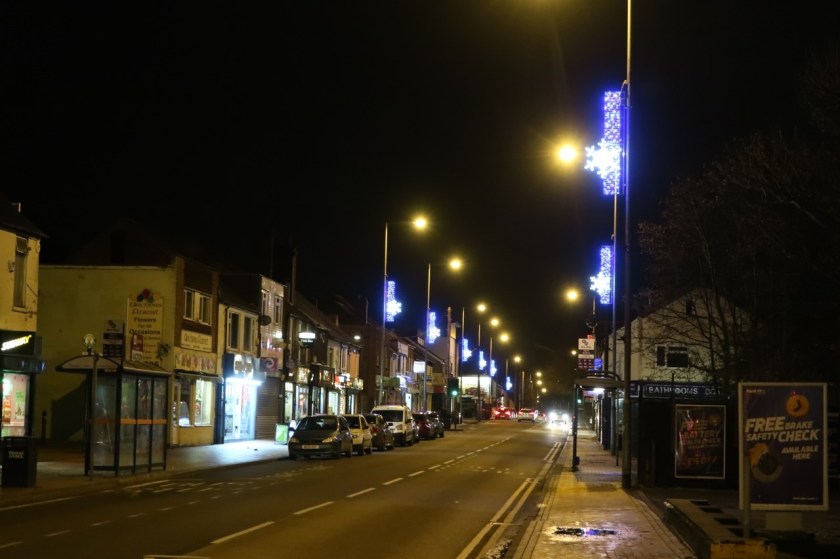
December 10th – Christmas means it’s time for the annual Christmas light inadequacy moaning game.

They’re never enough. Not Christmassy enough. Where’s the tree? and other festive traditions.

In reality, we haven’t had a tree in Brownhills for years, and actually, I think this year’s lights – which appear to be new – look pretty nice.

I think it’s coming on Christmas, folks.

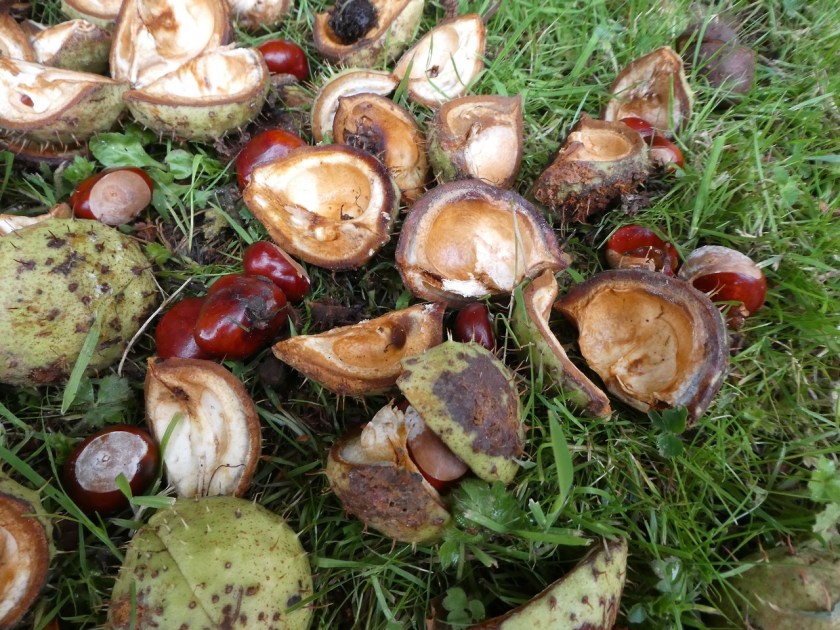
September 20th – The conker (or horse chestnut to be formal for non-UK readers) harvest this year is ample, which is excellent to see considering so many of these marvellous, noble trees are having their foliage ravaged by leaf  miners and cankers.

Here at Darlaston, the nuts are so copious, even though the kids gather around, there are loads of them left on the verge, a bounty I could only ever dream of as a kid.

I’ve said it many times but I do think there’s a real primitive instinct with British men and conkers. We’re programmed to collect and admire them from an early age.

September 14th – A real sign of autumn, my first conker finds of the season, and this year it looks like there’s a large, voluminous crop waiting to fall to earth.

This tree, spotted in the backlanes of Stonnall was laden, and the fruit fresh from the husk as beautiful and shiny as ever one could wish, despite the tree being hard-hit by leaf miner.

Like most men, there is an inbuilt genetic urge to collect fallen conkers and I still can’t pass them in the road without popping a few in my pocket.

August 16th – Riding to work down Green Lane, Shelfield on a bright sunny morning, and something gently reminded me of my grandfather.

The harvest at Grange Farm has been ongoing, and the road had been treated to a generous sprinkling of spilled cereal kernels – probably wheat. This grain, spilled by machinery and trailers as they lurch from field to barn is a feature of rural and peri-rural areas at this time of year, and is what the old man called ‘gleanings’.

Locally, ordinary folk were allowed to collect the seed lost on the roads and lanes for their own use. Few would use it for food, but many fed it to pets and livestock. Grandad said that you traditionally fed pets you kept for pleasure, not profit on the gleanings, fancy birds like guineafowl. 

Guineafowl were locally called Gleanies from this practice.

I well remember the farm opposite where the old man lived until a ripe old age having guineafowl, which are noisy, shrieking birds. ‘Gleanies am off again, the buggers!’ he’d curse every morning.

On a side note, watch out for the gleanings as they’re slippery and soapy, and steal wheels and grip, particularly when wet.

A warm memory on a warm, late summer morning.
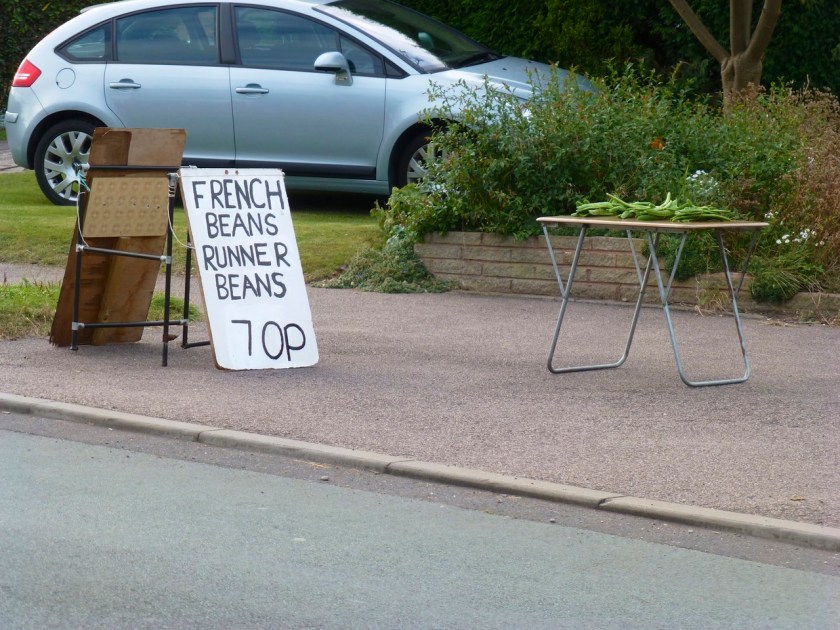
September 17th – This is a summer tradition that’s been hit by the weather. All through the growing season (and into autumn, usually), throughout rural Britain the traveller will see trestle tables of surplus fruit or veg, with an honesty box for payment. I’ve seen very few this year, which is sad, as they’re a lovely tradition. I’ve purchased everything from these roadside stalls, from cucumbers to windfallen cooking apples, from tomatoes to plums. With the weather badly affecting the growing this year, the only stall I’ve seen has been this one of runner beans, in Main Street, Stonnall. Here’s to a better year in 2013.