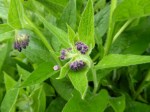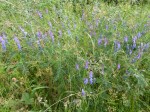
June 24th – The wildflowers have peaked now – as summer draws on, only the old familiars will really remain as the more showy specimens fade. One of my favourite long lasting flowers – up there with birds foot trefoil – is this vetch, an electric blue/violet delight. It’s growing in abundance on Clayhanger Common and near the Pier Street Bridge in Brownhills, and is really rather splendid. 

It always seems alive with bugs, too, so it serves a useful purpose to boot.

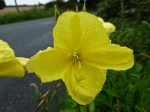
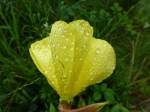
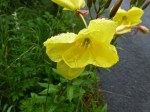
June 4th – I’m seeing a lot of this plant at the moment – there’s loads on Clayhanger Common, where these photos were taken – but also lots along the canal banks around Tamworth and around the moat at Middleton Hall.

Please put me out of my misery – what is it?

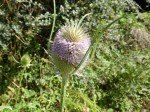
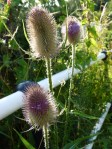
August 12th – The teasel, or dipsacus – is a great plant. Alien-looking, spiky, provider of food for finches and small birds, it grows in meadows, scrubs and hedgerows. Once used for teasing out cloth (hence the name), it’s now spread as a wildflower. These examples have matured beautifully on the wild embankment at South Wigston station, and were, unusually, the only colour there today to speak of, yet by the look of the rosebushes, we’re due an excellent crop of hips in all their red-orange glory.

August 9th – Teasels are a relatively new addition to the flora of Brownhills, I never used to see them as a kid. I think when Clayhanger Common was seeded after landscaping, teasels – in this case common or Fuller’s – spread from there to the immediate commons. Here at the old cement works bridge, over the Wyrley & Essington canal at The Slough, they’re growing on the trail edges of the former railway line in abundance. They derive their name from their use – as a comb in fabric processing, used to tease or raise the nap or fluffiness of materials like felt and wool.

They’re a lovely, fascinating wildflower. It’s good to see them spread.

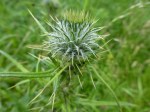
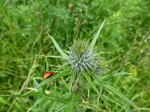
June 20th – Some plants have interesting buds, as well as the blooms themselves. Amongst this set I’d venture the thistle to be king. Prickly and prolific, they aren’t yet in flower on the verges of Stonnall, but it won’t be long now. This hardly, very British plant, beloved delicacy of donkeys, is changeless and a stalwart of the ecology of our country, yet somehow alien; what other plant maches it in the UK for sheer tactile hostility? Only the stinging nettle, I guess…