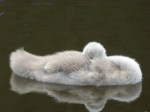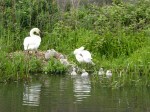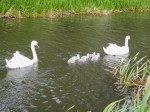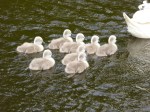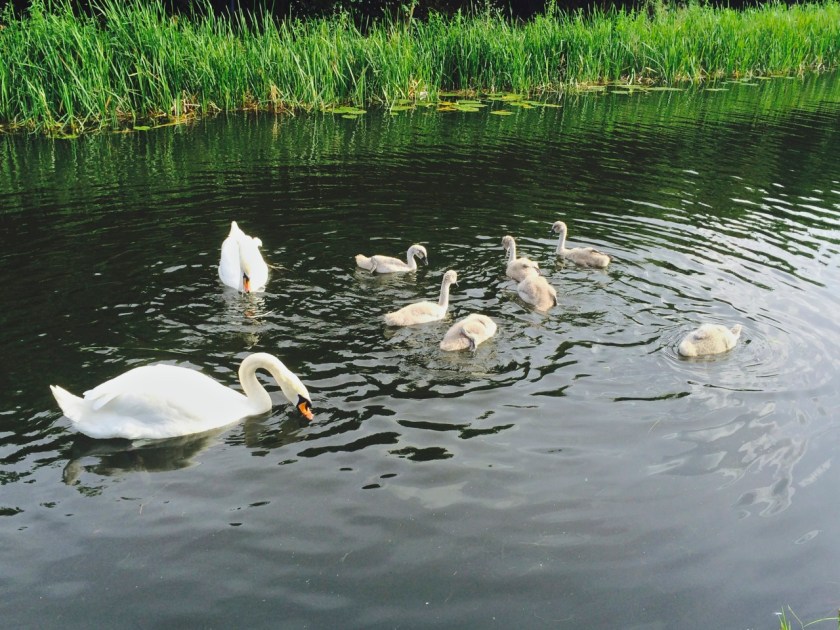
June 11th – The swan family are definitely down to seven from the original eight, but that’s still a large family, and they all look healthy. now four or five times the size they were just a few weeks ago, the cygnets are now around the size of an adult coot or moorhen.

They’d been loafing on the opposite bank of the canal from the towpath, near Clayhanger Bridge, where they seem to have a hidey hole. Obligingly, they all came out when I showed an interest. If they’ve been roosting there overnight, I’m surprised they’ve only lost one cygnet; that area is a busy thoroughfare for Brer Fox, who at this time of year, wouldwelcome of the easy pickings for the cubs’ lunch.

As they get older, they get harder to take and more worldly wise, so hopefully the remaining offspring will survive. They were certainly very relaxed today, preening, grazing and just scudding around with mum and dad.

I was glad to see them, I’m starting to feel an attachment to these grey balls of fluff…
June 7th – Bad news, I’m afraid, but not totally unexpected. 

I dived out in the rain, got something to eat, and as I left, the sun came out. As the landscape gently steamed, I headed to Chasewater along the canal. I saw the swan family, who had numbered 8 cygnets with mum and dad, were now down to 7. The lost one could have been predated by a fox, stoat or mink, or could have died of illness or other cause. 

One of the reasons swans have large broods is due to the loss that’s somewhat inevitable. It’s very sad, but an unfortunate fact of nature. 

The remaining family seemed happy and well enough.

Don’t be too alarmed, but it is sobering and a reminder that nature is red in tooth and claw.

June 2nd – Growing steadily, the swan family of mum, dad and 8 cygnets seem happy and contented, and the little ones are larger every time I see them.`Today I spotted them under the pedestrian bridge in Brownhills, and were clearly hoping I had some titbits for them. 

This is a large brood and I’m surprised they’ve all survived. The proud parents have clearly been doing an excellent job, and I notice the locals have really taken this family to their hearts.

A fantastic thing to see.

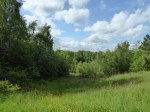
June 2nd – Coming home on a pleasant summer afternoon, I came around  the new pond then cut over Clayhanger Common. I don’t normally go that way, but it’s beautifully verdant at the moment, so it’s worth putting up with the anti-vehicle gates that are so irritating here. In the three decades since it was created, this place has matured beautifully, and it’s a real asset for the local area, and a testament to a period when local authorities were allowed space to take on large environmental projects – a period that has sadly now passed.

It does suffer a degree of antisocial behaviour, but is generally peaceful and well looked after. I know deer like to come around here, and was hoping to spot some but sadly, they were elsewhere today…

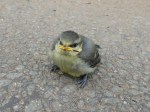
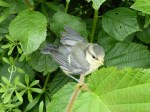
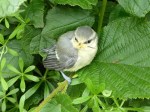
May 31st – He was in the middle of a busy lane at Shenstone Woodend, just sitting there. I spotted him by chance, and just swerved to miss him. I screeched to a halt and thought what to do.

He could fly short distances, but was clearly exhausted, and I couldn’t get him out of the road for love nor money. I know you’re not supposed to touch fledging chicks, but he was going to get squished under the wheels of the many vehicles that come this way.

I gently picked him up, and popped in in the hedge right next to where I found him. I hope he survived.

Anyone know what he is? I think he’s a tit of some sort.

Edit: Thanks to Fatuoussunbeams – he’s a blue tit. Thought he was, but after my recent dire attempts at botany I’m hedging my bets! Cheers…

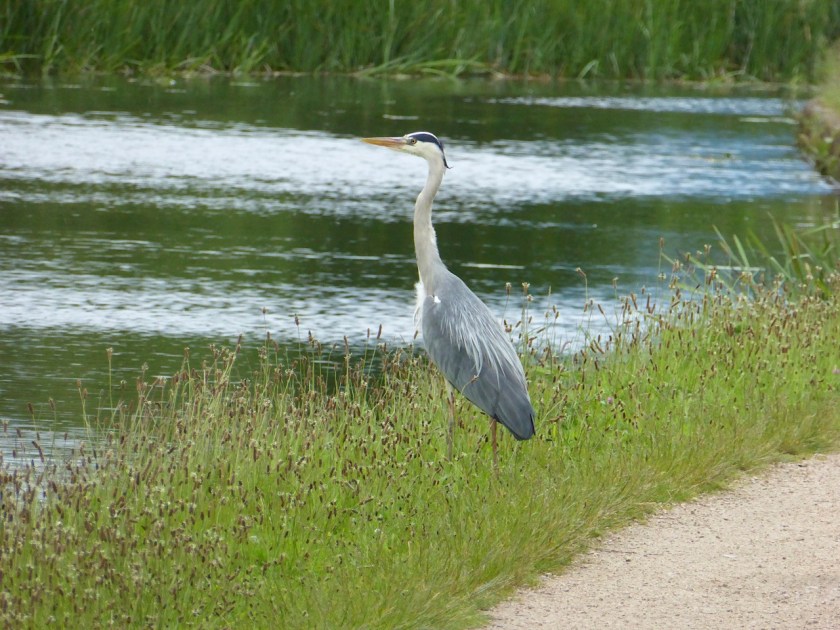
May 27th – Just on the canal in Aldridge, this skittish fellow. I gently placed the bike down to take a better picture. By the time I raised the camera again, he’d flown off.

This journal can never have too many herons. I adore these gangling, shabby and patient fishers. To me, they’re a symbol of the cleanliness of todays canals, and how far they’ve come. When I was a kid, you’d never, ever see this.

It’s a thing to treasure.

May 26th – After not seeing them for two weeks, my swan magnet was finally on again as I headed up the canal at Brownhills. On this warm but generally overcast afternoon, it was clearly time for the family ablutions and the whole family of 2 adults and 8 cygnets were preening and bathing. They’ve approximately doubled in size since I last saw them, and look healthy and contented.

So pleased the couple finally got a brood after all these years.

Please though – if you see them, and want to feed them – give them seed, not bread. Bread has no nutritional value to wildfowl like swans and ducks, and can kill the little ones.

May 12th – That cheeky squirrel. I was cruising around the canal looking for the swan family – still nowhere to be found – on my way home from work. I stopped at the hazel thicket on the bend by the Watermead Eastate to answer a call. All the time I felt I was being watched. 

It seems Nutkin wants me to move along now, and not make a fuss….

Yet another example of why I’ll never make a wildlife photographer…

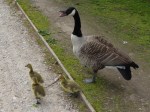
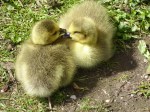
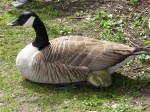
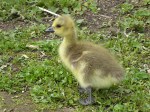
May 9th – Also introducing their offspring to the big, wide world were Birmingham’s Canada geese. I saw a couple of families on the canal in central Birmingham, each with 3 goslings. These charming yellow chicks are gorgeous, but fiercely guarded by mum and dad who hiss and head-bob at me while I take pictures.

Late spring – multiplication, it’s the name of the game. Delightful to witness.

May 9th – They’ve finally done it – and what a brood! The swans that nest every year at Catshill, Brownhills (yes, it’s the same pair), who for years have not had cygnets have just hatched eight grey balls of fluff.

I saw them this afternoon – the nest was empty, and mum and dad were further up the canal, showing the chicks their world. As Warren Parry pointed out after I posted yesterday, it’s eight, not seven little birds. Eight is a fairly large family, and they all look healthy. I feel quite emotional over it.

Please, if you go to see them, don’t be tempted to feed them bread. It has no nutritional value for the birds and can be fatal for the wee cygnets. If you want to feed them, a little wild bird seed will do.