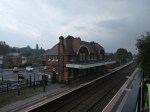
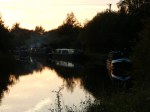
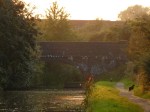
ISeptember 22nd – It was a pleasant but slightly chilly evening as I slipped out for a test circuit of Brownhills after a little bike maintenance. I’d forgotten my camera when I went to work, and was still without it, so I gave the phone lens a polish and had a go.

Cameras on phones haven’t half come on in the past few years.

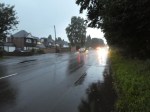
September 21st – I’d had to nip to Birmingham late, and came back to Shenstone. There had been heavy weather about, but I’d managed to evade it al day.

When it caught me in the lanes on the way home, it wasn’t messing about. I was like a drowned rat.

Still, like summer rain tends to be, once I was wet through, it was quite enjoyable and not cold. And it hasn’t rained much of late, after all.

Lets hope it’s just a blip.

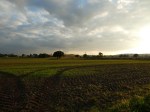
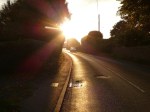
September 20th – It was so beautiful on the way home that I decided to take a spin around Stonnall and Shenstone, just to catch the golden hour.

Although Autumn’s feet are well under the table now, there’s still plenty of green with freshly planted crops in the fields and leaves not yet turning.

But oh, it gets dark so early now…

September 20th – Spotted in a customer’s cycle shed, two bikes side by side that illustrate something that annoys me.

Shimano, the Japanese industrial giant that revolutionised cycling are not what many people imagine them to be. They are essentially production engineering experts, probably more than they are bicycle technology or fishing equipment manufacturers.

Shimano make loads and loads of great, well thought out products that I love. their work to refine the derailleur gear system in the 80s and 90s, their clipless pedal systems and electronic gear technology have changed cycling for the better immensely. But something more than these innovations has had a massive influence.

Shimano sell innovative kit to bike manufacturers. That means they also sell and produce the tooling to manufacture bikes en masse. Shimano often market products to manufacturers because they’re cheaper or easier to assemble on a production line, but sometimes of little discernible end-user benefit.

Shimano pioneered the external bottom bracket, a frankly piss-poor idea that is hated by lots of cyclists for it’s increased wear and susceptibility to corrosion. Shimano invented it to make assembly of bikes from one side far easier. It shifted to producers in large numbers and is now, sadly, ubiquitous.

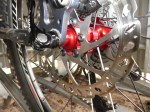
Similarly, for years, bicycle disk brakes – which I love as a technology – had their rotors attached to the wheel hubs by six M5 screws, like the bike in the top picture. This ‘6 bolt’ design has been a standard for more than a decade, and works well. You can feel if there’s a securing issue without the loose disc being dangerous, and the rotors are light and easy to replace with standard workshop tools – usually an Allen or Torx driver.

Shimano recognised that a big cost in disc brake adoption to mainstream bikes was assembly of the disc onto the wheel – six screws require either a complex, mutispindle head or an operator repeating the same action 12 times per product. So they invented Centerlock(sic).

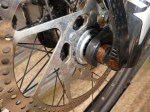
The lower picture shows a bike with a Centerlock rotor.

Centerlock uses a splined male dog on the hub, and a special brake disc with a mating female recess. The rotor slides onto the splines, and is held in place by the same type, thread and tooled ring that holds the gear cassette on a rear wheel, thus requiring one tool to fit the cassette and two brake rotors, a huge cost saving in production.

Centerlock rotors are heavier, and you need a special tool to fit or remove them. If the ring comes loose, there’s nothing else to hold it.They limit consumer choice of aftermarket replacements.

There’s a whole industry sprung up around centre lock to 6 bolt adaptors.

This change in technology was introduced purely for the benefit of bike manufactures, arguably to the detriment of consumers and to me, is inferior.

Rant over.

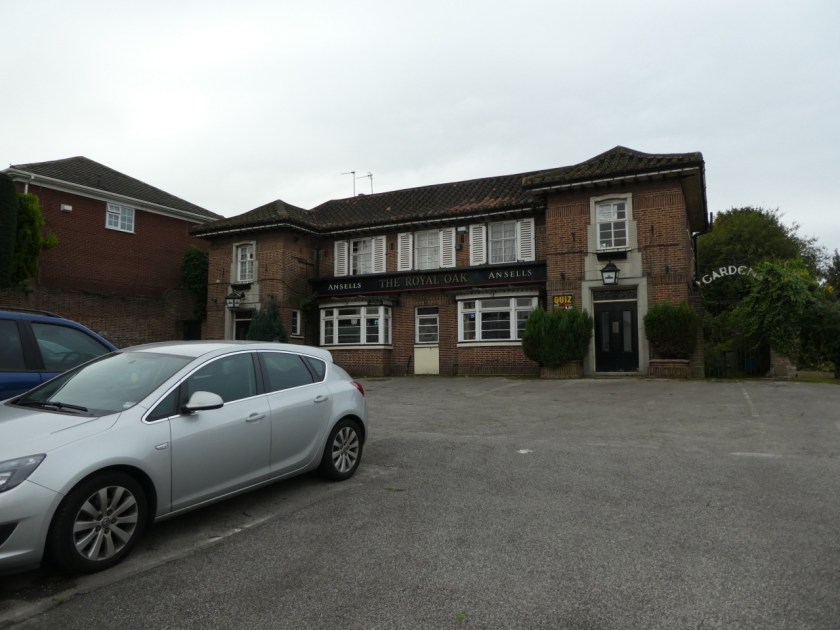
September 19th – Freewheeling down Shire Oak Hill into Brownhills, I stopped to look at the sad hulk of the Rosa – or ‘Middle’ Oak, closed a couple of years ago, and once a popular, award-winning pub. Sold privately, no planning applications have ever been submitted for another use, and the building continues to fall quite into decay. The only use it sees these days if neighbours using the car park.

Nobody seems to know what, if anything, the owners have planned.

A sad end to a once fine community pub.

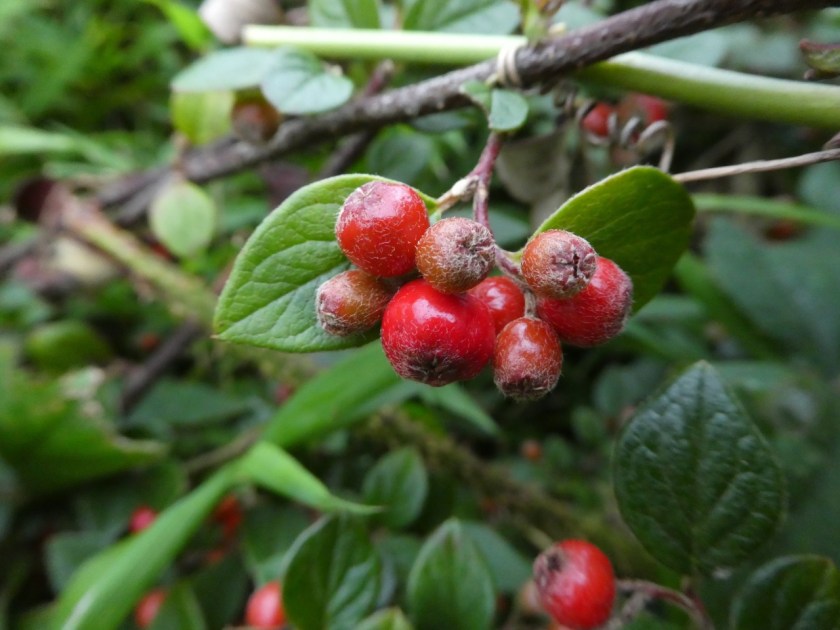
September 19th – Yet another abundance this year of bright orange-red cotoneasters, so beloved of blackbirds, who upon finding a bush, will fight off challengers, usually while another steals the sugary berries.

These bright fruits – another clear sign of autumn – line hedgerows, cycleways and towpaths, and seem a very popular bush to plant on industrial estate verges, which is good for birds and bees alike.

September 18th – I have no idea about this, as I’m no meteorologist and I know even less about cloud formations, but I can’t recall ever seeing stripy cloud like this before.

It persisted for some time around 5pm over east Staffordshire, and was quite beautiful – when most pronounced, it had a very shard ‘edge’ to it which was fascinating in itself.

Can anyone tell me what this is all about, please? How rare is it? Does it have a name?

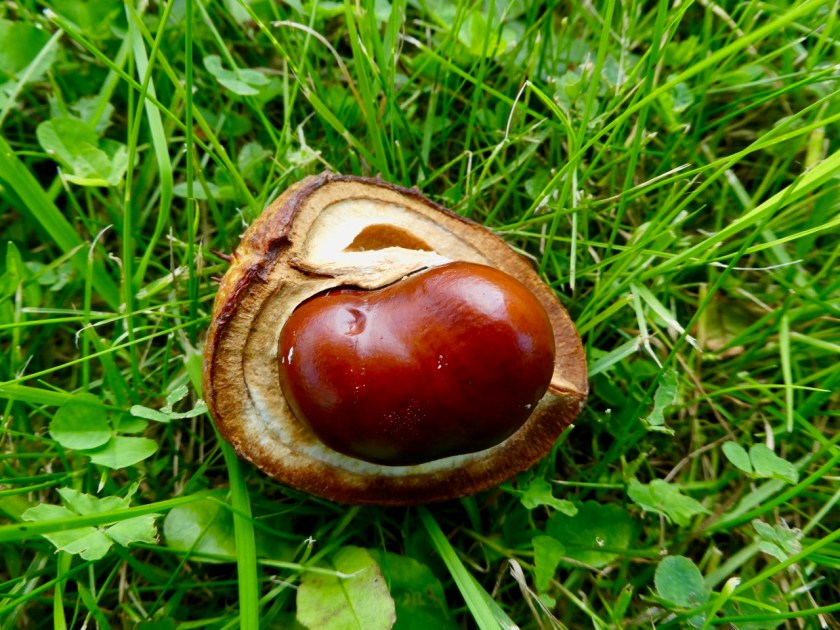
September 18th – Ah, the season of the conker.

Every year, I point out the same truism: that few men can pass a conker lying on the ground and not pop it into their pocket. It’s a primal instinct from childhood, when they were seemingly so rare, and highly prized. 

Despite the leaf-miners and cankers, the horse chestnuts have had a fruitful year and the beautifully shiny, leathery nuts lie in their split spiky husks on the ground beneath many a rural tree. This one, spotted near Burntwood, ended up in my pocket too.

It’s be rude not to.

September 17th – The sunset was gorgeous at Chasewater, the calm before the chaos. A lone lady practised her wake boarding to a small audience, birders checked out the gull roost, and those lucky enough to catch this spectacle – very few, sadly – basked in the light and beauty of the dying day.

Sometimes all you need for peace and beauty are a couple of cyclists, a couple of cameras and a beautiful evening.

September 17th – A bad day in lots of ways, but a sunset ride to sort the head out worked wonders. Heading up the canal to Chasewater the scenery was beautiful and the light golden. My favourite tree at Home Farm, Sandhills is laden with conkers and just showing signs of autumn, and the view to Hammerwich was gorgeous.

On the canal at Newtown, the Newtown one minded her own business, unconcerned by the stalking black cat, who seemed a bit peeved at my appearance.

If autumn promises more of this, it can stay around…