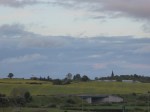
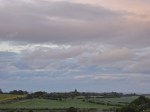
May 11th – I’d really not been well. My stomach was bad, and my body ached, so it was just as well the weather during the day was poor, as I didn’t feel like I’d missed much. I got out at dusk, and took in the sunset, spinning up a wet canal towpath to check up on the swan family. Sadly, I didn’t catch them – once the cygnets hatch, they tend to move around a lot so I’m not overly concerned – but I did catch an impressive sky. 

In the distance, I could see it was raining still out towards Tamworth. A fitting end to a pretty horrible day.

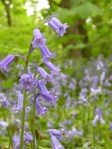
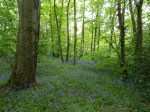
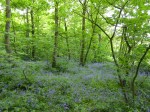
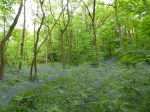
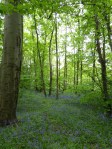
May 10th – Fishpond Wood just off the Chester Road at Stonnall is often locally referred to as Bluebell Wood, for obvious reasons. Last year the display of very delicate, native bluebells was quite poor due to the late spring, but this year they are excellent. This is a lovely quiet spot just off a main road, but when in bloom, the bluebells render it magical, even on a poor day like this.

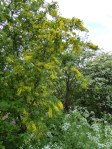
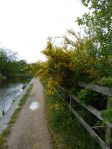
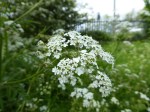
May 10th – Not a great day, blustery with rain showers, but the flowers and blossom still look good. On the local canal bands hawthorn, gorse, laburnum and cowparsley combine to leave the hedgerows a riot of yellow and white, the colours of spring and early summer.

All these are quite ordinary, overlooked blooms, but do look at the gorse and cowparsley – fantastically complex and beautiful.

May 9th – I popped into Birmingham to run a few errands and cycled in via Roman Road, Sutton Park, and then onto the North Birmingham Cycleway down past Witton Lakes. I returned via Plants Brook and Sutton, but more on that later.

I had business up at Constitution Hill, and on the way, I remembered these odd utility blockhouses marooned in the centre of the recently rebuilt St. Chad’s Circus. These substation-like buildings are the one solid remnant of the old subterranean subway complex; overlooked by the Catholic Cathedral, they are a chilling reminder of the cold war.

They are plant and ventilation installations for Anchor Exchange, a huge, sprawling, underground nuclear blast-proof telecommunications exchange beneath the streets of Birmingham. Mostly now abandoned, Anchor only exists as cable tunnels, having been rendered obsolete by the end of the communist threat and advent of the internet.

Anchor was built at the same time as Birmingham built the inner ring road, or ‘concrete collar’; the hated gyratory system that consisted of flyovers and tunnels called queensways. Birmingham City Council have spent 20 years now destroying the concrete collar, and putting traffic on the same level as the human city, but Anchor is still ever-present.

There were several entrance points to Anchor from these tunnels, and the complex was an open secret for decades. 

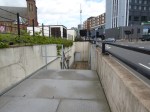
It’s telling that long after its usefulness ended, Anchor still requires maintenance and support; this closed stairwell with it’s original rails on the right and peculiar textured facing is one of the only pieces of evidence left on the surface, belying what lies beneath.

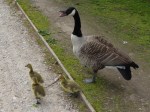
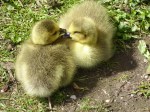
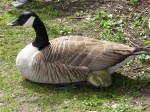
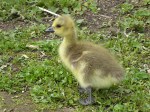
May 9th – Also introducing their offspring to the big, wide world were Birmingham’s Canada geese. I saw a couple of families on the canal in central Birmingham, each with 3 goslings. These charming yellow chicks are gorgeous, but fiercely guarded by mum and dad who hiss and head-bob at me while I take pictures.

Late spring – multiplication, it’s the name of the game. Delightful to witness.

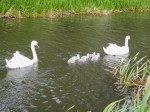
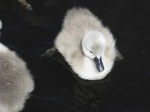
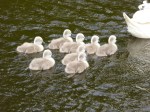
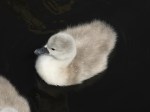
May 9th – They’ve finally done it – and what a brood! The swans that nest every year at Catshill, Brownhills (yes, it’s the same pair), who for years have not had cygnets have just hatched eight grey balls of fluff.

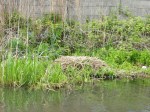
I saw them this afternoon – the nest was empty, and mum and dad were further up the canal, showing the chicks their world. As Warren Parry pointed out after I posted yesterday, it’s eight, not seven little birds. Eight is a fairly large family, and they all look healthy. I feel quite emotional over it.

Please, if you go to see them, don’t be tempted to feed them bread. It has no nutritional value for the birds and can be fatal for the wee cygnets. If you want to feed them, a little wild bird seed will do.

May 8th – I spun home after heavy rain, and had to nip to Chasetown. On the way, I was fascinated by the profusion of slugs and snails, the wet undergrowth and a really, really dramatic sky. I’m always fascinated by gastropods, as they get such a bad press, but we couldn’t really exist without them, and close up, they’re fascinating things. 

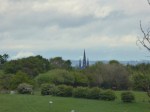
Over towards Hammerwich, the oilseed rape is going over now, but today, Lichfield Cathedral spires were clearly visible if you know where to look. I often wonder how many people realise you can see that from here, in just the right spot?

It wasn’t a great day weather wise, but still plenty of interest in Summer’s brewing cauldron.

May 8th – It’s rare that I’m too early for something, but today I was just that. At Catshill, the swans who’re sitting the nest there have been causing some speculation. I think this is the third or so nest in exactly this spot, and a pair of birds have nested on this stretch of canal for at least five years, and in that time, none have yielded cygnets.

This year, I’ve avoided overt comment, as I didn’t want to jinx the couple. I’m not convinced it’s the same pair as last year, as I haven’t caught a glimpse of the legs and the rings yet. When I passed today, what I assume to be mum was on the nest asleep, and her partner nearby, similarly in repose.

Also watching the nest carefully has been Warren ‘Ogley Dirt Farmer’ Parry. We’ve both separately seen a bird turning the eggs. Today, the scene for me was serene and undisturbed.

Warren passed this way sometime after me, and observed no less than seven newly hatched cygnets, out with mum and dad. I feel quite emotional. 

They might hiss at me and flap, but I’m very fond of that swan couple…

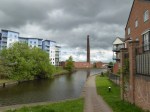
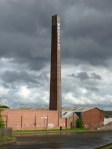
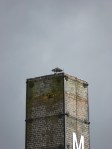
May 7th – I rode back from Darlaston under the threat of rain, but took to the canal for a change. Coming through central Walsall, I stopped to look back at the sky, and remembered the Majorfax chimney, one of the last Victorian skyline landmarks walsall has outside it’s churches. There’s something curious about it that’s barely visible until you look closely.

Someone, at some point, has erected a modern, tubular flue inside the chimney – It’s rain-cowl can just be seen poking over the top. Why would you do that? 25 metres of pipe, in a confined space designed as a flue in the first place. Why not just fit a roof vent next to the stack?

Is it a real flue, or a steeplejack’s joke? Whatever it is, it’s a curiosity.

May 7th – A snatched picture combining two of the worst hazards in cycling. One is common, the other seems unique to a particular part of Darlaston. The loose grit – marbles – I’ve discussed at length here; wheel and traction stealing, highly polished grit, it washes down during rain and snow, and gathers in junction voids and gutters, waiting to snatch your bike from under you.

The unique hazard is metal clippings, swarf and shards, and this is Heath Road in Darlaston at it’s junction with Station Street. Around Darlaston Green, all the way down to the Walsall Road this problem slices tyres and causes punctures. Open tipper wagons and skip lorries corner here to get to the scrap yards up the road, and metal drops through their tailgates, shutterboards and  from unsheeted tops. The metal lies flat in the road, where it’s gradually sharpened by the traffic dragging it against the road. 

Automatic sweepers don’t pick it up because it’s so thin, but hit it with your tyres and you’ll quickly flat. It’s a pain in the arse. Look closely here and there’s sharp spikes, wire and razor-thin plates.

Look out for it; avoid the area if you can. In a place where one has to watch the traffic carefully, it’s another hazard to watch out for.