June 20th – Out for a beer in Walsall with some very good pals, I found myself coming home in heavy, sweet, warm rain. The bike was fast and the roads slick, and I must confess I enjoyed the ride hugely. It was a great sensory experience – the dark, the sound, the smell of wet greenery, the sweep of passing traffic, the taste of fresh, clean rain on my tongue. Green Lane in Walsall Wood remains the only place I feel uneasy after dark, but the deer and badger I startled here were worth the journey alone, but also endearing were the frogs and snails, out enjoying the downpour on the pub patio as I unlocked my bike.

I’d swear that wee frog is grinning.

Bad weather isn’t all bad at all.

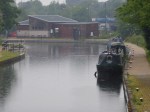
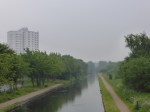
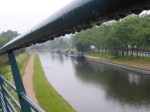
June 20th – A wet afternoon. I came back from work and headed to Brownhills for some shopping. Crossing the Pier Street bridge, Brownhills looked oddly sad, yet beautiful in the drizzle. The bunting was up for the canal festival, and with everything green it was hard not to be cheered a little by the optimism of it.

Come right on in, summer. we’ve reserved your seat…

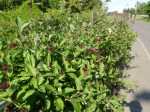
June 19th – It’s honeysuckle time again. On the southwestern flank of the Black Cock Bridge in Walsall Wood, a large scrub of the delightful climber rambles and spreads its velvet red love to passers by. In a few days, this will be alive with bees and insects, and smell divine. It’s actually huge, too, quite the largest, healthiest patch of the plant I’ve ever witnessed. 

If you can, do go check it out. It’s stunning.

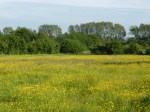
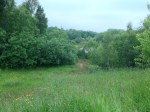
June 19th – Jockey Meadows and Bullings Heath, Walsall Wood, are beautiful right now. The water meadows are yellow – not with oilseed rape or dandelions, but millions of buttercups, clearly responding to some favourable condition they found in the dreadful spring. But what reward! Rabbits, hares, deer, all manner of birds and plants vie for attention in this gorgeous landscape, narrowly sandwiched in-between areas of huge urbanisation and industry.

I love this place, this area, my town. This, right here, is why.

June 18th – A bit of a disaster, photographically. I forgot my trusty camera, and was reduced to my phone. I’ve never used the phone for close up stuff before, and took 20-0dd pictures of wildflowers that looked OK on the screen in sunlight, but turned out to be out of focus smudges of colour.

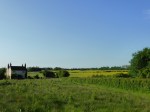
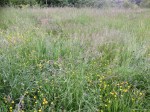
The only images any good were of the new pond in Clayhanger, and the remarkable meadow that surrounds it. Alive with buttercups, dandelions, vetches, trefoils, clover, and multiple species of grass. It’s buzzing with insects and small mammals, and really is a place to explore and take in with all the senses.

A beautiful thing, rendered rather flat by a poor camera. My apologies.

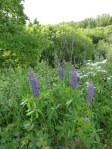
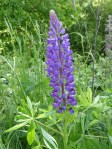
June 17th – I love lupins. These tall flowers grow wild along the canal towpaths and scrubs of Black Country canals, and set the cuts ablaze with purples, lilacs and pinks at this time of year. I don’t suppose they’re a native species, I suspect more of a  formerly cultivated feral fancy from gardens. But they seem to thrive untended on the rough embankments and thickets alongside out waterways.

When I see lupins, I know it’s summer at last.

June 17th – At Spring Road station in Birmingham, I overheard to travellers discussing the white plates visible on the the edge of the opposite platform, down beside the track. They often baffle station users, and their usage is a bit obscure, really.

These are merely a datum survey marker for when the rails are replaced and the track relayed, which happens more often than one would imagine. Before the old track is moved, a surveyor uses a laser level or theodolite to measure the exact position of the rails, and their tilt angle if they have one. The rail height – plus any required offset – is set on the sliding knob, and is used as a datum for relaying new lines.

The legend proclaims this plate no 3; it’s 1105mm to the nearest rail, on the Up Main (UM) line. The cant (or tilt between the two rails to enable safer dynamic cornering of rolling stock) is 2mm.

The (just visible) +474 above the slider indicates that the level set is 474mm above the desired rail height (vertical offset) and a green knob says this is the level the rail should be at as it was designed, and may not currently be at that level. A red knob indicates the actual track position when the plate was installed.

Geometry like this is essential to rail engineers, who obsess over it. Maintaining correct geometry is of prime concern, prevents accidents and ensures trains fit under bridges, alongside platforms and don’t foul each other on bends.

You can often see these marker plates fixed to line side structures or electricity and signal masts.
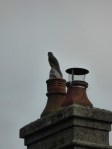
June 16th – Not sure what the deal is here, to be honest. At Peggs Row, just on the corner of Coulter Lane and Farewell Lane in Burntwood, there’s a lovely cottage with a quite ornate chimney. I’ve noticed recently – after being taken in by it – that there’s a decoy bird of prey on the chimney pot, which looks like a peregrine. I’m not sure if it’s ornamental, or serves a purpose; I was fooled by the silhouette enough a couple of weeks ago to actually go for my camera, before realising the model raptor wasn’t real. 

Nice to see it’s fixed down well. Can anyone shed any light on this?