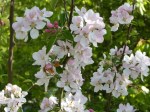
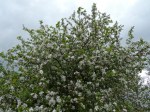
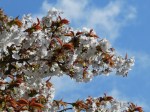
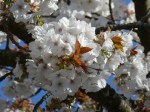
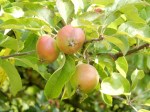
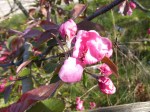
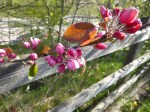
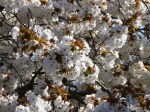
April 26th – As Spring is the (rather cold this year) warm up act for summer, the blossom phase moves to it’s endgame; the cherry is now finishing and soon, a profusion of white hawthorn will bring things to a close, but right now, that most beautiful of pink-white blossom, apple.

Such a joy to see in the sunshine.

August 27th – The rain held off while I visited the Festival of Water at Pelsall, photos of which are on my main blog here, but I caught the warm rain on the way home, and didn’t really mind.

I explored the North Common which I hadn’t done for years, and for an ex-industrial wasteland, it’s a beautiful place with great biodiversity. Rabbits, mustelids and birds are flourishing here, wild sweetpea still in flower, while willow herb and butter and eggs added additional colour. A huge crop of crab apples hangs from branches, although due to the nature of the ground, I wouldn’t prepare anything edible from them.

A rare treat and well worth exploring, even on a wet day.

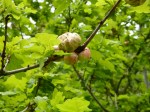
July 4th – A first for the year, an oak gall. I don’t know if I’m too early or if it’s just been a bad year for the tiny wasp that creates these galls on oak trees by depositing an egg coated in a chemical which causes leaf or acorn buds to mutate and grow into a gall, inside which a tiny hatched larvae feeds, before drilling it’s way out and flying away.

I normally see a variety from mid summer on – the smooth green type shown here, marble gables which are also globular, but veined with white and pink, and knoppers which mutate gnarly growths from acorns themselves.

It’ll be fun to see if I’m early or if the yield this year is indeed quite poor.

May 18th – Riding home along a damp canal on a grey evening commute, I noticed the apple blossom is really, really profuse this year. This crab apple tree near the Black Cock Bridge in Walsall Wood is absolutely beautiful – and the scent is wonderful.

With decent weather in the last few days, hopefully pollination will be good. Certainly plenty of bees about, even on their grey, chilly evening.

April 27th – When I left home just after dawn there was a heavy frost; I left Darlaston later in the morning for Telford in bright sunshine, which really highlighted the blossom on roadside trees. Mainly cherry, but some apple and plum, too. Absolutely beautiful.

Sadly though, this doesn’t bode well for a bumper fruit crop like last year; a frost on the blossom now will damage it and reduce the fruit yield.

With such beautiful blooms, hope the weather and sunshine pick up soon.

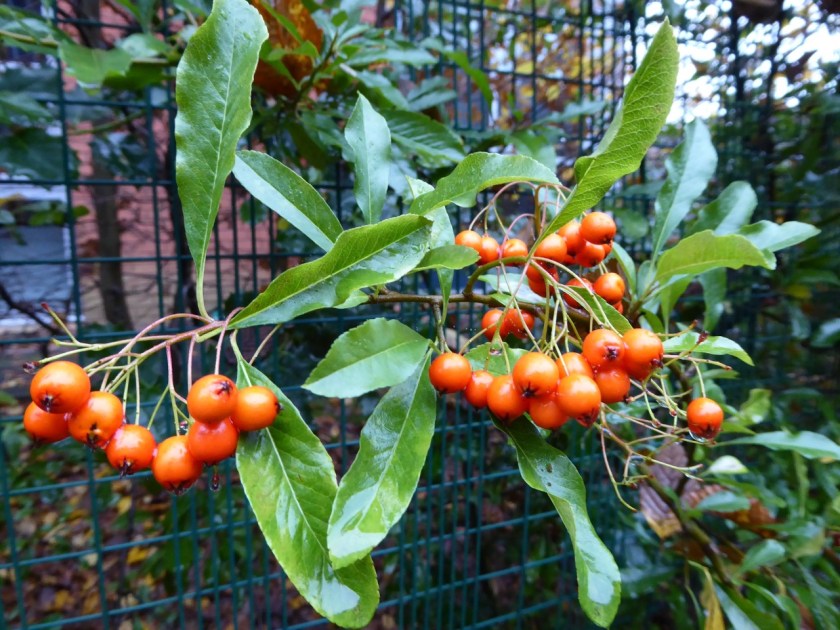
November 4th – In the afternoon, I again passed by these fascinating berries I recorded last week. Thanks to the genius of Susan Marie Ward, I can tell you that they’re actually a type of crab apple.

Yes, you read that right. A gosh-darned crab apple.

Read about this fascinating shrub here. Nature is amazing sometimes.

Thanks to Susan for that.

August 21st – It was a grey, damp Friday afternoon, and it felt more like October than August, and after a few grey, wet days I noticed the little meadow near the new pond at Clayhanger had lost all of it’s summer colour suddenly, like switching off a light.

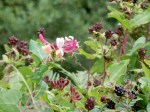
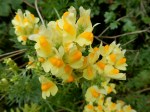
All was not lost, though, as there are still wildflowers nearby – toadflax and honeysuckle are still showing well, and damsons and apples are adding autumn colour. Even a confused lupin was bright in the gloom.

Autumn can wait just a little while, can’t it?

June 16th – I was taken to task on social media the other day for stating that Telford’s cycleways were alive with flowers and fruit; this observation was scoffed at, because it seemed inconceivable that on the byways and fringes of the new town, wildlife could flourish or be beautiful.

Well, it can; and the people who care for these fine tracks, paths and trails really should take a bow – they are a credit to them, their work and their town – a virtue shared, curiously, with Redditch.

There’s beauty in all sorts of places if one is open to find it.

May 29th – I don’t know why, but I find these oak galls a bit horrible. They are distorted leaf buds, into which a wasp injects it’s egg and a chemical which causes the tree to grown the gall instead of a leaf stalk. The larva lives within the growth, feasting on it. When mature, the wasp eats it’s way out and the life cycle continues.

This tree on Clayhanger Common is peppered with these tumour-like galls – they look like fruit. The gall doesn’t harm the tree particularly, but it’s a very visible parasite.

there are many different types of gall wasp, all with different methods and growths. I’ve not seen this one before, and am unsure what it is specifically.

Nature can be very odd sometimes.

April 20th – And in Telford, all along the cycleways from Stafford Park to Hortonwood, blossom – of all varieties. A horrid job today that I really didn’t fancy, but brightened on the way by the most beautiful spring flowers, azure sky and warm sun.
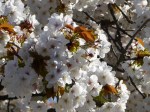
Not bad for a Monday, really.